


Municipalities
The Abelló Museum is located in a modernist building. Inaugurated on March 29, 1999, the museum houses a part of the collection that the Molleta painter Joan Abelló gave to the city. The Abelló Foundation's art fund is made up of nearly 10,000 works.
The collections of Catalan painting and sculpture from the 19th and 20th centuries, the Romanesque and Baroque carvings, as well as the collections of Asian art, black art, clothing, bullfighting, furniture, porcelain, glass and an important musical and documentary collection stand out.
Regarding the pictorial collections, we find, apart from Abelló's work, works by Picasso, Dalí, Miró, Tàpies, Brossa, Sorolla, Mir, Nonell, Casas, Gimeno, Juan Gris, Clavé, Cuixart, Boguerau, Millet, Pellicer or Fortuny. We also have a wide collection of sculptures by Manolo Hugué, Lluís Montané, Mariano Benlliure, J. Clarà, Labrador, Rebull and Navarro.
Exhibitions
 The Abelló Museum hosts two permanent exhibitions: one dedicated to the Foundation's art fund, entitled "Modern art in the Abelló collection, 19th and 20th centuries"; and the other on the work of the painter from Mollete, "Abelló, una cata". On the ground and lower floors there are two rooms where temporary exhibitions are exhibited and outside the facility, we find the Showcase, a space for the production and dissemination of the visual arts.
The Museum lobby also hosts small temporary exhibitions and a space where the work of local artists is displayed.
The House of the Painter
Located next to the Museum, it is an old house on Lluís Duran Street, where Joan Abelló was born. It is linked to the neighboring houses that the painter bought throughout his life to put the works of art and objects that he acquired as a collector. One of the annexed houses is the house where the politician and illustrious Molletano Jordi Solé Tura was born, considered one of the fathers of the Spanish Constitution.
 The House of the Painter is the house of a collector: rooms, stairs, ground floor, basement, floors... A labyrinth where the visitor discovers the complex, interesting and diverse collection of the artist. A doorway that belonged to the Los Angeles convent in Barcelona leads us to the lobby, where a large photograph of Abelló welcomes us.
From there, the visitor is immersed in Abelló's universe. Currently, a good part of Abelló's old personal quarters, overflowing with works of art and pieces from the collection, is still pending to museum. This space is called the Artist's Workshop and is closed to the public. Guided tours from Thursday to Sunday.
More information and reservations:
Abelló Museum (Berenguer III, 122. Mollet del Vallès)
Tel. 93 544 50 99
[email protected] t
www.museuabello.cat
Nearby experiences
Nearby routes
Route of the hidden Churches of Baix Vallès
Mollet del Vallès, Montcada i Reixac, Sant Fost de Campsentelles, Santa Perpètua de Mogoda
At the southern end of the Vallès hide four unique buildings of the Vallesan religious architecture, the churches of Santa María de Gallecs (Mollet del Vallès), Santa María la Antigua, Santiga (Santa Perpètua…
Route in the middle of Gallecs
Mollet del Vallès
This route, leaving from the Church of Santa María de Gallecs, proposes a light itinerary, of low difficulty, through the Gallecs Natural Area, in the municipality of Mollet del Vallés. The route has a distance of 3.5 km and a…
Bicycle axis in Gallecs
Mollet del Vallès
Do you want to know the natural area of Gallegos on two wheels? This route fits perfectly with what you are looking for! It is a bike route that covers 15 km of medium difficulty for the entire rural environment of Gallecs. The exit is in the…
The path of the Baleclers of Gallecs in Mollet del Vallés
Mollet del Vallès
Gallecs is a rural area of 733.52 hectares, located fifteen kilometers north of Barcelona, which preserves its natural and scenic values, surrounded by roads, highways and industrial estates. The main activity of the space is agriculture, an…
Related routes
Bicycle axis in Gallecs
Mollet del Vallès
Do you want to know the natural area of Gallegos on two wheels? This route fits perfectly with what you are looking for! It is a bike route that covers 15 km of medium difficulty for the entire rural environment of Gallecs. The exit is in the…
The Vesper La Gloriosa
Font-rubí, Pacs del Penedès, Santa Margarida i els Monjos, Santa Oliva
The Penedès became, during the Civil War, in the center of operations of republican aviation, Gloriosa, as settled in this territory four airfields when they had in Aragon were lost and the advance of Franco 's troops were expected to…
CIARGA route to Cal Bruna torrent
Santa Margarida i els Monjos
We propose a route through CIARGA and the Serral refuge, with a wine-growing landscape and the riverside forest.
Events
Ulldecona cultural
21 NovemberInclús Festival in Barcelona
21 NovemberEfímera in Santa Perpètua de Mogoda
21 NovemberJoc Joc, The fair of different games and toys in Tona
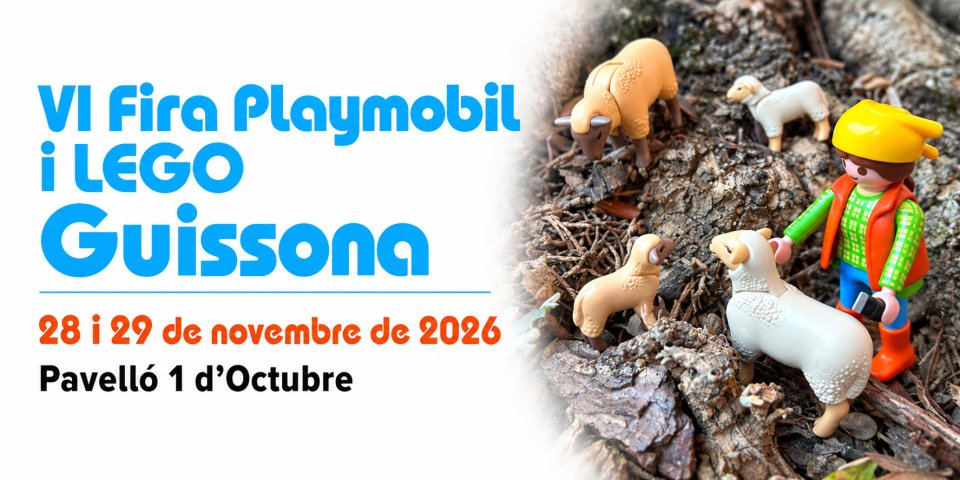
21 NovemberFun November in Guissona
21 NovemberGuided tours of the old town of Verdú
21 NovemberGuided tour - Rediscover Sant Julià de Ramis
21 November







 Sustainable turism
 Biosphere