


Restaurant el Sortidor de Filomena Pagès
Municipalities
In the heart of the Poble-sec neighborhood, this restaurant is much more than a place to eat: it is a space with soul and memory, rooted in the history of Barcelona for more than a century.
Its origins date back to 1908, when it operated as a modest tavern and ice shop, at a time when ice was essential for food preservation. A century-old icebox from those early years still remains, a silent witness to the passage of time. Later, the establishment experienced a golden age under the management of the Janiu family, who for forty years transformed it into a gastronomic landmark of the neighborhood, especially renowned for its high-quality anchovies and vermouth, which attracted both locals and visitors.
After a period of closure, the restaurant reopened in early 2015 with its current name, a tribute to Filomena Pagès, the grandmother of one of the owners. Her figure symbolizes the values of generosity and community, as she provided food aid to those most in need during the post-war period. That spirit of solidarity and warmth is still palpable in the restaurant's atmosphere today.
The space carefully preserves its modernist essence, with original elements that lend it a special charm: early 20th-century doors, marble tables, wooden chairs, and high ceilings that evoke another era. All of this creates a welcoming and authentic atmosphere, perfect for both a quiet meal and a distinctive gastronomic experience.
In the kitchen, Executive Chef David Sanmartín leads a menu that blends tradition and creativity. His menu features classic Catalan and Mediterranean recipes, reinterpreted with a contemporary and imaginative touch. The commitment to local and market-fresh produce is evident in every dish, with high-quality ingredients taking center stage.
Dining here isn't just about enjoying delicious food; it's about experiencing a complete culinary journey where history, culture, and gastronomy intertwine. It's one of those places that keeps the essence of a neighborhood alive and makes you want to return.
Nearby routes
The coronelas and their battalions in 1714
Barcelona, Tortosa
The defending army Austrian faction that fought during the War of Succession was formed by different regiments. There were some who took orders from the coronelas of cities, being the most important, the Colonel of Barcelona. Coronelas These…
Gaudí's Modernism Route
Barcelona
Modernism, the Catalan form of Art Nouveau, had Antoni Gaudí as the main representative of this style in Barcelona. On this route we will review the emblematic places of this great architect in Barcelona and the not so well known but…
Barcelona's defenders guilds in 1714 (Part I)
Barcelona
The defense of the city of Barcelona during the Bourbon's 1714 was not only carried out by the army and the military, but the people of the city that had other professions, aside to support the Austrian cause. This is the case of artisans,…
The air raid shelters in Barcelona
Barcelona
Now that is so fashionable debate about historical memory in Spain, is a good time to remember the Civil War and its impact on Barcelona. From femturisme.cat we wanted to publish a route dedicated especially to bomb shelters were built in the…
Barcelona defenders Guilds in 1714 (Part II)
Barcelona
femTurisme.cat already has a dedicated path to the guilds who defended the city of Barcelona during the siege of September 11, 1714: Supporters guilds Barcelona (Part I) . This is the second part of the route and is dedicated to those guilds…
1714 Route: History and heritage of the War of the Spanish Succession in Catalonia
Barcelona, Cardona, Cervera, Els Prats de Rei, Lleida, Moià
Since 1980, Catalonia has celebrated its National Day on September 11. This holiday commemorates the defeat suffered by the Catalan people at the hands of Philip V's troops on this very day in 1714. At that time, Catalonia lost its last Catalan…
Events
Catalonia Industrial Tourism Week 2026
From 16 to 25 OctoberSostibaix, the sustainable fortnight of Baix Llobregat
From 15 October to 1 November'La Moguda Gastronòmica' in Santa Perpètua de Mogoda
From 9 October to 8 NovemberPanoràmic Festival in Granollers, Barcelona, Terrassa and Vic
From 15 October to 27 DecemberThe Castañera in La Pedrera!
17 OctoberEfímera in Santa Perpètua de Mogoda
17 OctoberScenic programming in Gelida
17 October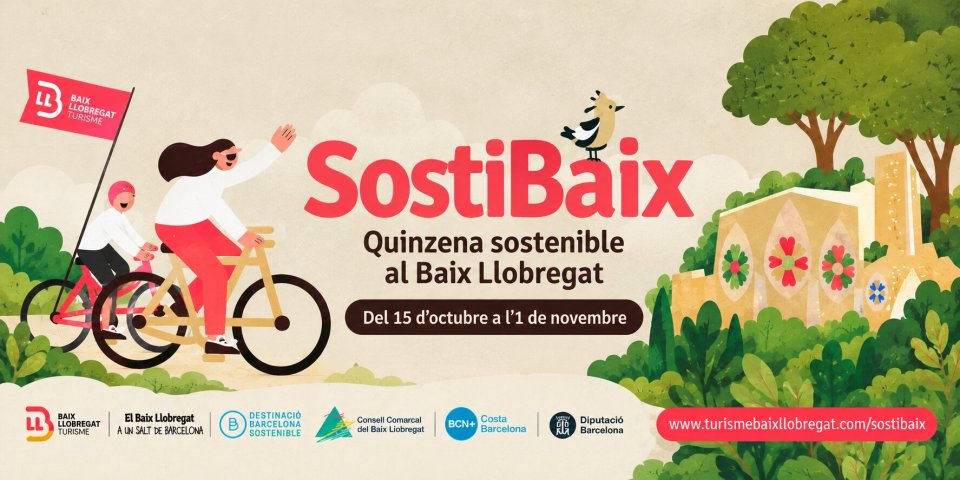
News
Iron architecture: the light and steam of industrial Catalonia
In the 19th century, the Industrial Revolution not only changed the way people worked and lived, but also profoundly transformed architecture. The arrival of new materials, such as cast iron, wrought iron, and glass, opened up possibilities…
Gothic Architecture: The light and height of medieval Catalonia
Gothic architecture marks a turning point in the history of Catalonia. It was the style that transformed cities, places of worship, and the way people built collectively. A style that changed not only the stone itself, but also the way people…








 Sustainable turism
 Biosphere