


Municipalities
On this route femTurisme.cat offers a journey through the countries that suffered the most significant battles occurred during the year 1714. These are spread throughout Catalonia and predated the city Barcelona .
This proposal follows a chronological order, but also maintains a territorial way through the various areas of the principality.
Situation at the beginning of 1714
 The central Catalan territory was defended mostly by the forces of Austria. Since the summer of 1713, the area was immersed in the war on terror. The city of Manresa had been burned, 522 homes affected. Had also burned many other Catalan towns. Castle of Cardona had been harassed and continued to hold despite the few soldiers, as he had done on other occasions. It is advisable to consult the Route 1714 .
So, the year began with a hard pulse for the future of the territory and the battles that took place are a good example.
Baix Llobregat area
On January 13, 1714 Castle Castellvi Rosanes was occupied by the Habsburg army. The ruins of this castle are on a hill 369 meters high. Its strategic location was important in the visual domain that was on the castles of Penedès. In the plain of the hill we found the chapel of Sant Jaume de Castellvi Rosanes which is also in decline.
 On 14 January, the castle was also held Corbera de Llobregat , which was recovered a week later by the Bourbon army. During the war, destroyed and are as unique testimonies and bow agencies that are near the rectory (where it is believed he had formerly Castle) which is thought to serve to access from the castle to the chapel. Males of Corbera de Llobregat were build another castle to live after its destruction and found located in the main street of the town and is Gothic.
 Include Castle Sant Martí Sarroca who resisted against the Bourbon troops beyond the fall of Barcelona , on September 18, 1714. The castle has retained keeping different elements of the construction of the XI century and later. Today we find the old cellar, stables and kitchens on the ground floor, the rooms on the first floor and patio.
We must also mention the slaughter of the population lived in Sant Quintí Mediona and is remembered from 2008 Mata-party degolla in which the events of this villa recreated in 1714.
Sallent and Gaia
Also on 13 January, the Bourbon army targets Sallent with the intention of burning the village, as he had done the previous summer. Its inhabitants and waited in the doorway of the bridge, but were not able to defend the population. Most people hid in the church. Still, died 60 Catalans, including characters like Mayor Bernat Corominas, counselor Franesc Alsina and Rafel Conangla notary. Latter was hanged in the main square of Manresa in retaliation.
 Sallent , in the same way that Manresa and Cardona , was one of the cities hardest hit by the war. Not only because of the attacks he received, but also because it was one of the foremost advocates of the area for the Carlist cause.
In this population, is the Casa-Museo Torres Amat showing a collection of objects and furniture from a wealthy family of the eighteenth century.
About 16 kilometers of Sallent and north, is the core of Gaia . Gaia is formed by a large group of scattered farmhouses were the scene of one of the bloodiest battles of the war. Bourbon died about 700 soldiers who had been captured and imprisoned in the castle of Cardona .
Gironella
 The March 11, 1714 Castle Gironella was attacked by Habsburg troops. The castle was situated at the height of the population and today only defensive walls and the bottom of a tower near the church and you see from the newer part of the town.
Each year, on dates close to the National Day of Catalonia, The Eleventh of September and Gironella, a play that takes place in the rocks of the Old Bridge of the population above the Llobregat river, and has held the story of a group of volunteers who came to support the battle to Barcelona .
Battle of Talamanca
On August 13 was initiated and passed in the mountainous terrain ranging from the stream of Talamanca , near the castle and the town, and even quintana of Mussarra, within the term of Monistrol de Calders , over two miles approx.
 The stream was split between two fronts: the Bourbon, located in the house Mussarra, where the sun shone, and Catalan Castle Talamanca, in the shade. The first went down to the stream where they were received by the Catalan forces cornered to the Sant Llorenç Savall , winning the battle.
It is believed that the environment of the area should not deviate much from the present, so that dominated orchards, riparian forest, oak and farming terraces. And considering the last victory of the Catalan army before the Bourbon troops.
Following the Battle of Talamanca
 Is possible to take a tour of the places where he spent the battle of Talamanca. Talamanca From the castle, visited today, get a route that goes through the town, the old town and the church, and to the own field of battle.
The path leads down to the creek and heads toward the house Mussarra, within the term of Monistrol de Calders .
All natural surroundings of the area is important as it is at the gates of the Natural Park of Sant Llorenç del Munt i l'Obac.
The defeat of Manresa
 On 4 and 5 September, Manresa received the Catalan army confronted the Bourbon army that had taken the city. The latter were less and hid in the Sey, where they burned burned furniture, altarpieces and everything inside. However, the current St. Mary altarpieces of the fourteenth, fifteenth and sixteenth centuries, has been restored and rebuilt in several phases elements.
The Bourbon army was aided by miquelets yours and had to withdraw. The conditions also forced the capitulation of Cardona to avoid dead in the attack on the city of Barcelona . Thus, many of the members of the Catalan army went into exile to avoid retaliation, as was the case of Manuel Antonio and Desvalls brothers. Was not so lucky Josep Moragues general.
The general Moragues
Born in Sant Hilari Sacalm in 1669, Josep Mas i Moragues has become one of the symbols of the Austrian cause during the War of Succession.
 Born into a prosperous peasant family, and was part of the defense in the movements that took place in Catalonia during the Nine Years War against the French. Later, he was part of the Covenant of Vigatans , emerged as company commander of miquelets and was governor of Castellciutat ( La Seu ).
This villa surrendered on December 28, 1713 to the Bourbons. Moragues fled to Sort and then to Catellciutat where again to try to quell the rebellion took place, but ended up returning to Pallars to resist in that area.
Once fall Cardona , General Moragues again Sort with his family. Still, it was claimed in Barcelona by Captain General and fearing a conspiracy, attempted to flee, but was betrayed and arrested. Live was dragged through the streets of the city, executed, beheaded, dismembered and displayed in public at the Portal de Mar.
Defeating Cardona
Cardona received three attacks during the War of Succession, but we focus on the last, which occurred on September 18, 1714, when the castle surrendered after having endured as the last town before the Bourbon troops.
 Today, the castle has function Parador and is managed by the Museum d'History of Catalunya . We found the defenses, cross cannonballs bulwark of San Lorenzo, Mate, covered road, canon of St. Vincent, among other elements of this era and earlier.
In the village we also find several elements that recall these facts. For one, the houses and walls that witnessed the battles, the source and Sculpture Square Fair, second, the flame (the flame) that is permanently lit in the lobby of the council and representing the resistance of the population during the War of Succession.
In addition, each year, in the next days to 18 September a play in which the events in the town, along with other commemorative events as remembered torchlight parade is held.
Nearby experiences
Nearby routes
Textil colonies in Berguedà
Berga, Gironella, Puig-reig
On this route, from femturisme.cat, we invite you to visit an important part of our heritage: industrial colonies. Specifically this route focuses on textil colonies located along the Llobregat River came to be built up to 15 different textile…
After the Nova Planta laws
Barcelona, Girona, Lleida, Solsona, Tarragona, Tortosa, Vic
After a war there are always catastrophic: people killed, injured, destruction of buildings, etc. But we should not consider only tangible harm. Also keep in mind all that is not seen, but felt that over the years the catastrophe left clear…
Montcau and La Mola from the neck of Estenalles
Mura, Sant Llorenç Savall
Few routes are more classic than this itinerary through the peaks of the Sant Llorenç del Munt and l'Obac Natural Park. La Mola is one of the most frequented peaks in Catalonia (if not the most) since it is an excellent watchtower of…
The Passions in Catalonia: tradition and sacred theatre
Cervera, Esparreguera, Olesa de Montserrat, Sant Hilari Sacalm, Ulldecona, Verges
Catalonia is a country with a wide range of customs and traditions. Almost every month of the year there is a holiday to celebrate that takes us back in time and revives some part of our historical and cultural legacy. In this case, the beginning…
Related routes
Route of the Battle of Prats de Rei
Els Prats de Rei
This route includes the main historical areas of the battle of Els Prats de Rei , which occurred in 1711 during the War of the Succession. The route can be done on foot, by bicycle, on horseback or by quad. Distance: 17.3km Elevation: 275m…
The coronelas and their battalions in 1714
Barcelona, Tortosa
The defending army Austrian faction that fought during the War of Succession was formed by different regiments. There were some who took orders from the coronelas of cities, being the most important, the Colonel of Barcelona. Coronelas These…
After the Nova Planta laws
Barcelona, Girona, Lleida, Solsona, Tarragona, Tortosa, Vic
After a war there are always catastrophic: people killed, injured, destruction of buildings, etc. But we should not consider only tangible harm. Also keep in mind all that is not seen, but felt that over the years the catastrophe left clear…
The Academy of the Distrustful
Barcelona, Els Hostalets de Pierola
During the early 18th century, the educated Catalan aristocracy organized themselves to defend and delve deeper into their history and culture. This was a common practice in other European cities, and in Barcelona, this institution was known,…
Events
European Heritage Days in Collbató
16 OctoberAlfaro Year in Sant Andreu de Llavaneres
16 OctoberForest week in Sant Celoni
16 OctoberRACC Costa Dorada Rally in Salou
From 16 to 17 OctoberZim Zam Cassà - Cassà de la Selva Urban Art Festival
From 16 to 17 OctoberFirauto Balaguer
From 16 to 18 OctoberFira Mediterrània de Manresa 2026
From 15 to 18 October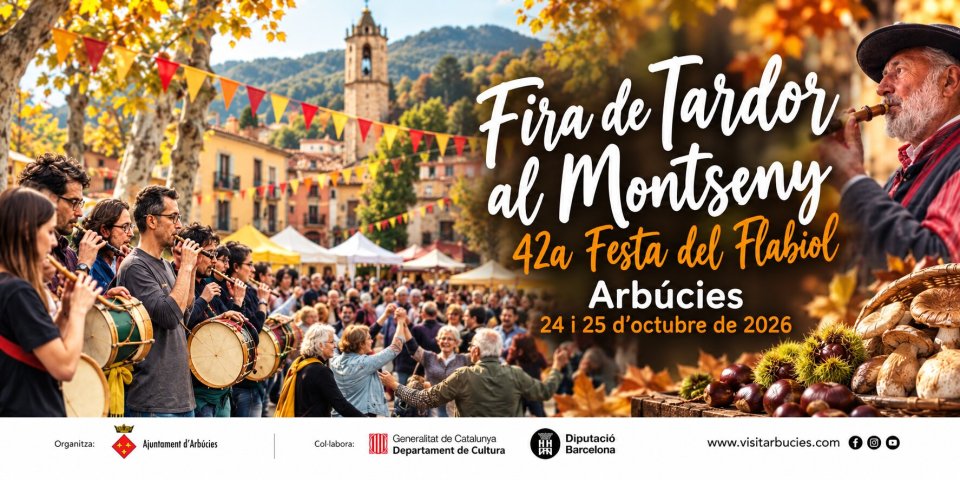
News
Iron architecture: the light and steam of industrial Catalonia
In the 19th century, the Industrial Revolution not only changed the way people worked and lived, but also profoundly transformed architecture. The arrival of new materials, such as cast iron, wrought iron, and glass, opened up possibilities…
Gothic Architecture: The light and height of medieval Catalonia
Gothic architecture marks a turning point in the history of Catalonia. It was the style that transformed cities, places of worship, and the way people built collectively. A style that changed not only the stone itself, but also the way people…








 Sustainable turism
 Biosphere