

Gothic Architecture: The light and height of medieval Catalonia
Gothic architecture marks a turning point in the history of Catalonia. It was the style that transformed cities, places of worship, and the way people built collectively. A style that changed not only the stone itself, but also the way people thought: it opened windows to the light, broadened horizons, and left behind the rigidity of the Romanesque world.
From the 13th to the 16th centuries, Gothic architecture became a symbol of change. Catalonia experienced a period of economic growth, urban consolidation, and spiritual fervor. In this context, Gothic architecture emerged as a visual expression of all this progress: taller, more open, more dynamic.
Cities like Barcelona, Girona, Tarragona, and Lleida still preserve authentic treasures that speak of an era of ambition, beauty, and community. An era that still resonates in the cloisters, stained-glass windows, and open naves of Catalan Gothic buildings.
How to recognize Gothic architecture?
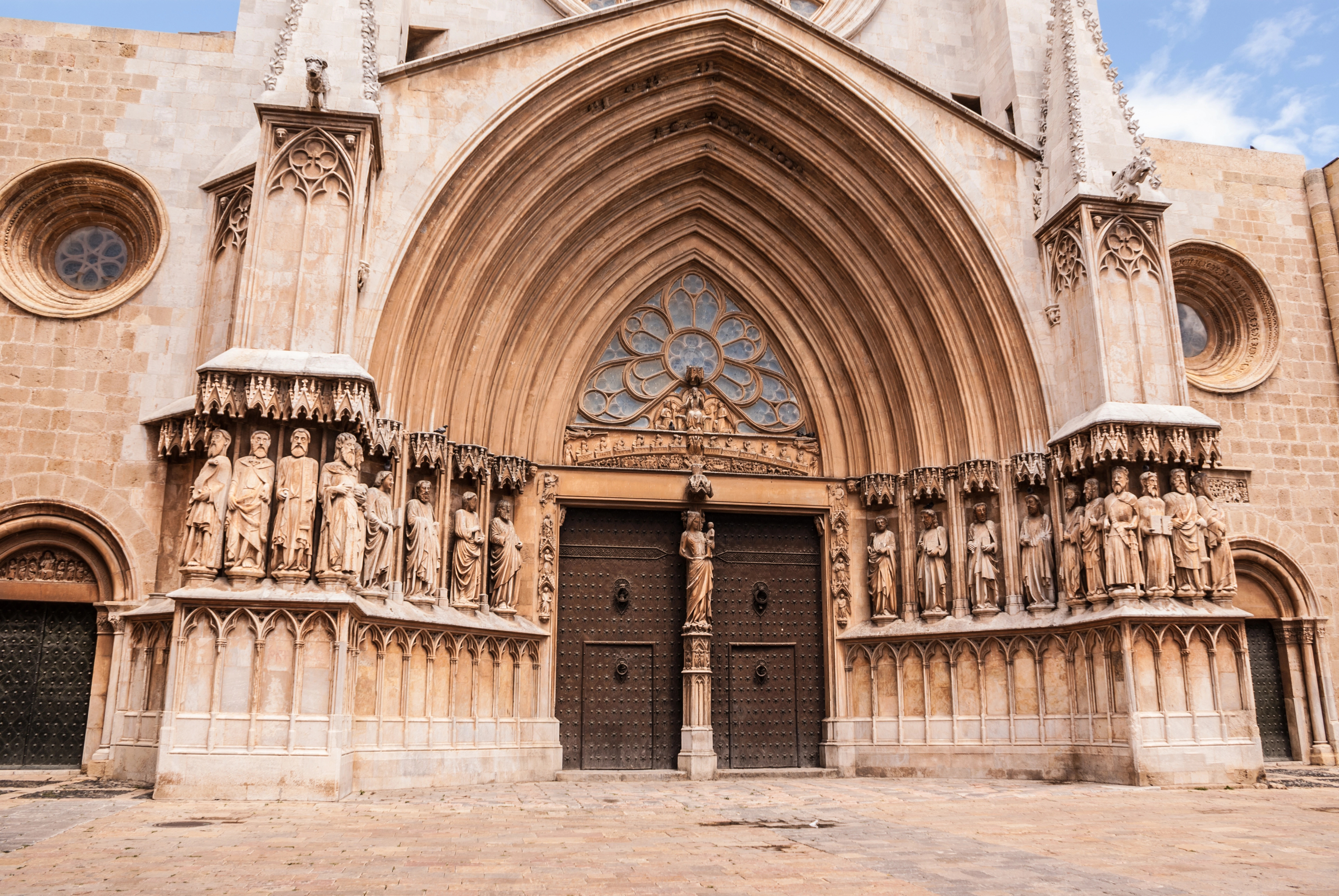
Gothic architecture is characterized by its verticality, the use of pointed arches, and large windows with stained glass. This desire to reach for the heavens is not merely a technical matter, but a symbolic one: space becomes wider, brighter, and more spiritual.
The most distinctive elements of Gothic architecture are:
- Pointed arches, which allow for more slender and elevated structures.
- Ribbed vaults, which distribute weight more efficiently.
- The stained glass windows, which fill the interior of the churches with light and color.
- The buttresses and flying buttresses, which make the height and lightness of the walls possible.
Everything creates more open and welcoming spaces, where light plays a central role.
The austere beauty of Catalan Gothic
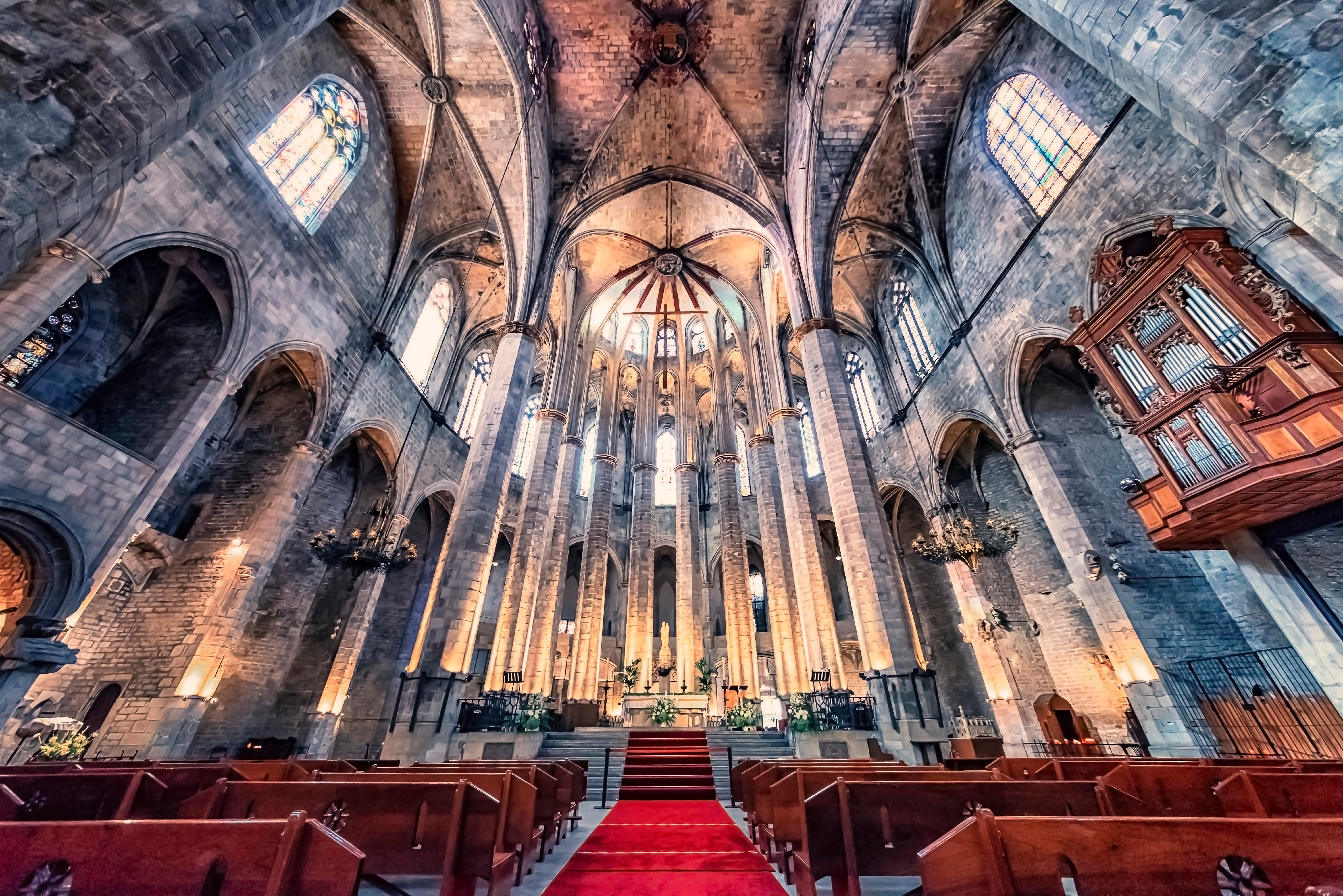
Unlike other European regions where Gothic architecture is characterized by exuberant decorative elements, in Catalonia it takes a more restrained and sober, yet equally impressive, form. Catalan Gothic is distinguished by its single, large nave, which replaces the typical three naves of the French model, and by the regularity and balance of its proportions. Beauty lies not in excess, but in the harmony of forms.
This style perfectly reflects the country's mentality and way of doing things: functionality, solidity, and serene beauty. This is evident in both religious and secular buildings, in spaces of contemplation as well as in centers of decision-making and community life.
Barcelona, epicenter of Gothic architecture
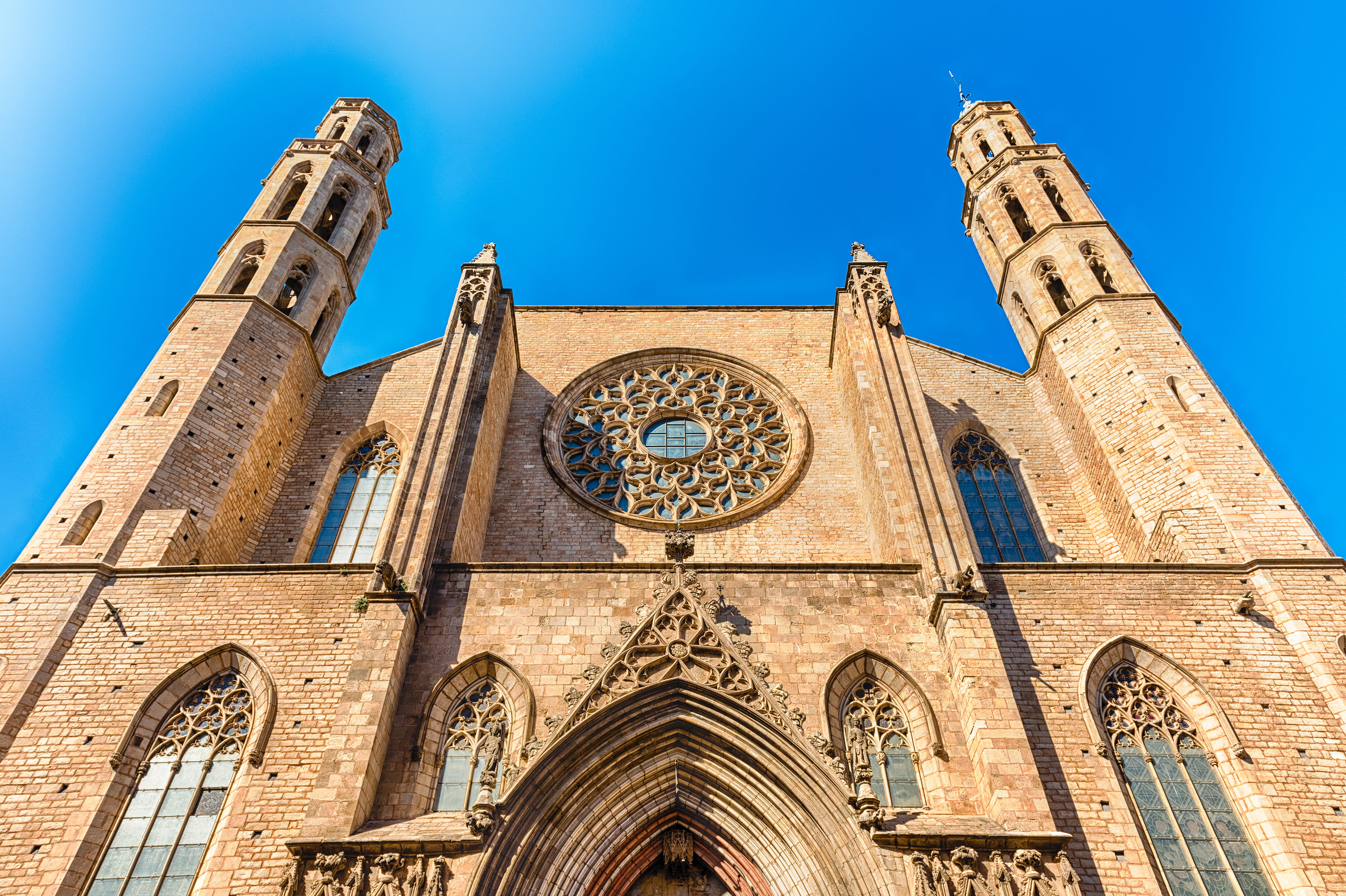
Gothic Barcelona is one of the most spectacular legacies of that style in Europe. Within walking distance of each other, you can visit some of its most emblematic monuments:
- The Cathedral of the Holy Cross and Saint Eulalia, a majestic symbol of the city and of ecclesiastical power, with a cloister full of life and symbolism.
- Santa Maria del Mar, built thanks to the efforts of the dockworkers and residents of the Ribera neighborhood, who spearheaded a community project that has become a masterpiece. Its clean lines, the light that filters through, and the sense of spaciousness make it one of the most beloved churches in Catalonia.
- The Pedralbes Monastery, a refined example of female monastic Gothic architecture, surrounded by calm and an architecture that invites silence.
Beyond the temples, Barcelona's Gothic style also permeates civil life: the Royal Palace, the Tinell Hall, the Royal Shipyards... spaces that speak of a time when Catalan political and commercial power projected influence in the Mediterranean.
A style that draws the medieval Catalan map
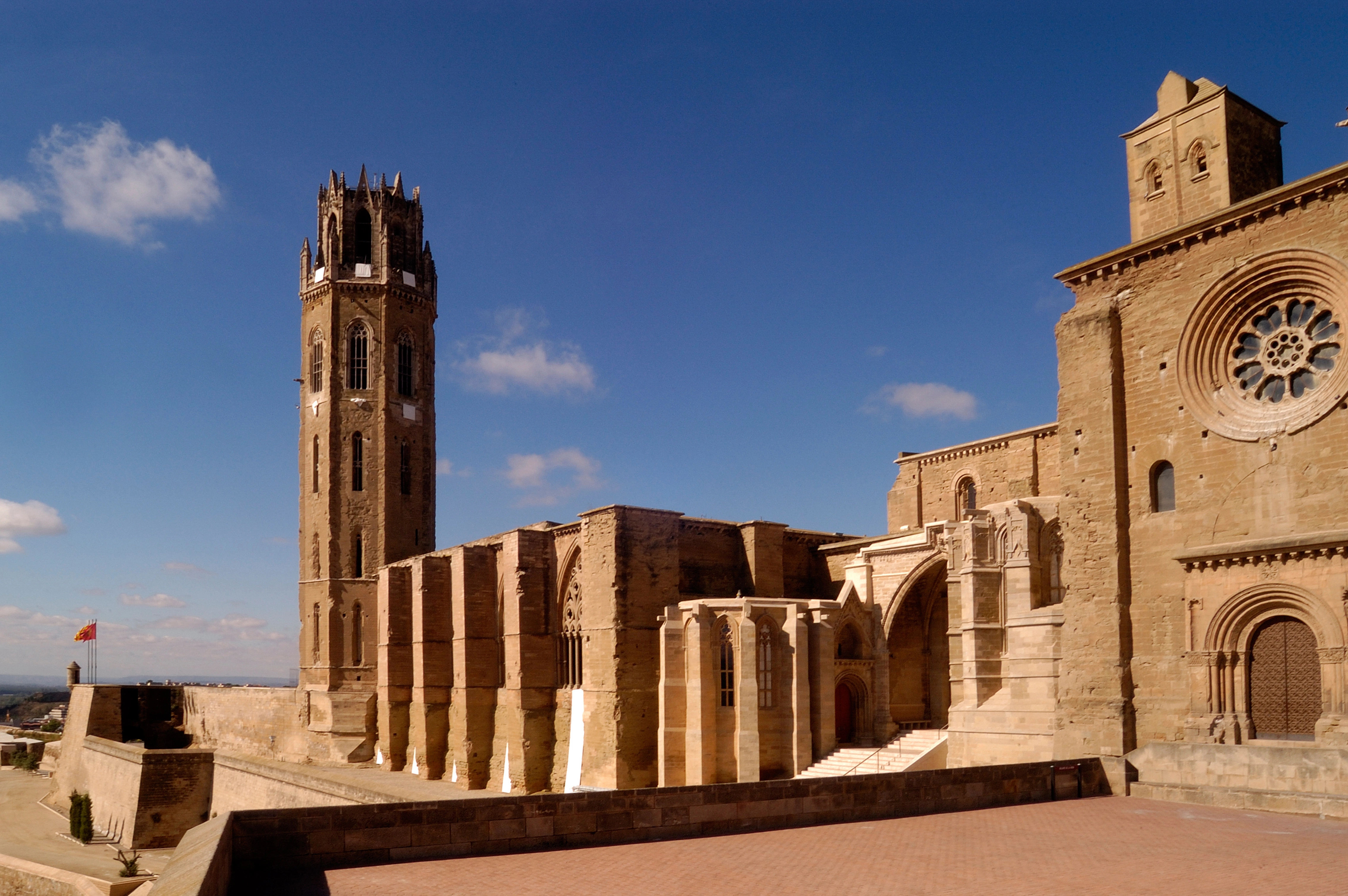
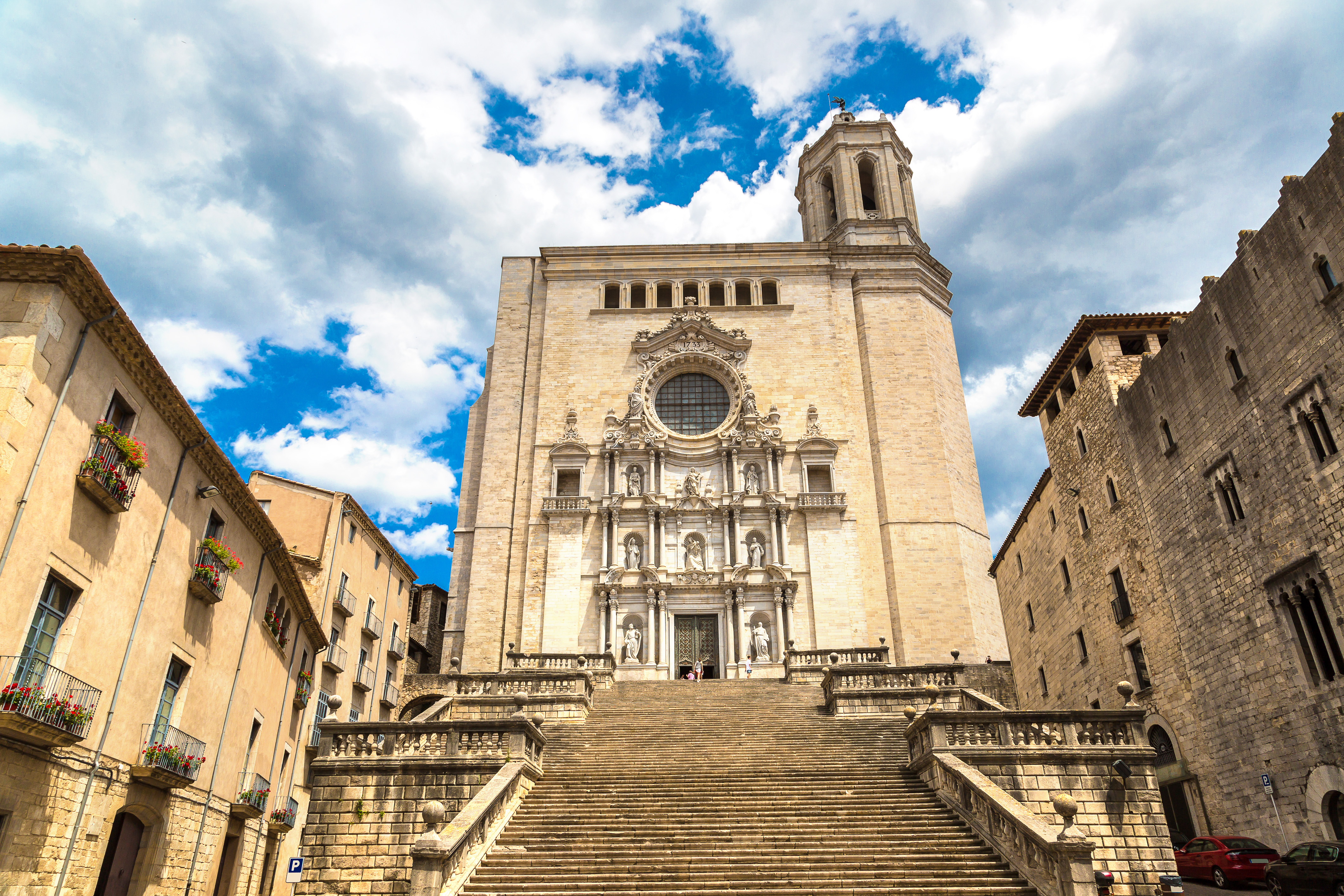
Gothic architecture wasn't confined to the capital. In Girona, the single nave of its cathedral is the widest in the world in the Gothic style; an architectural and spiritual landmark that dominates the old city. Tarragona, Lleida, Vic, Manresa, Perpignan, and many other cities boast Gothic churches and cloisters that demonstrate how this style became a central axis of medieval urban growth.
Also noteworthy is the Gothic architecture applied to public and government spaces: town halls, palaces, hospitals, fish markets... a whole common language that reinforced the sense of community and collective representation.
Beyond architecture: a change of mindset
Gothic architecture was not merely a formal change. It represented a new way of understanding the world, marked by a more open spirituality, a more structured society, and a more expressive culture. Architecture became a reflection of all this: more light, more space, more participation.
Therefore, visiting a Gothic space is not just about admiring its beauty, but about entering into a dialogue with an era of great intellectual, artistic, and spiritual ferment. An era in which Catalonia was coming of age, and expressing itself through stone.
From the past to the present: spaces that endure
Even today, Gothic architecture remains part of the Catalan collective imagination. Barcelona 's Gothic Quarter is a tourist icon; Santa Maria del Mar inspires novels and films; and many of these spaces continue to host liturgical services, concerts, and cultural activities. They are living buildings that have survived the centuries and remain a meeting point between past and present.
Exploring Catalan Gothic architecture is, therefore, an invitation to discover how architecture can speak to us about a way of being, feeling, and building in community. It is looking upwards, as those master builders did, with pride and hope.
Gothic architecture reminds us that every stone can hold a glimpse of the future. Through its arches and stained-glass windows, through those spaces open to light and silence, Catalan Gothic continues to speak to us of an era that knew how to build with ambition and beauty. Explore it at your leisure, let yourself be captivated by the verticality, by the shadows that dance with the sun, and discover how this style continues to shape the landscape, the memory, and the identity of our region.
Published by Oriol Rosselló Gil on 10 of march of 2026 at 10:12h
Related routes
Ruta Medieval in Bages
As you know, the medieval period, also known as middle age, has left a great legacy in Catalunya which currently can enjoy in different situations and places. For this reason, several times when I've recommended a route of this subject.…
Paths of the Bishop and Abbot Oliba
The Barcelona regions of Osona and Bages, and the Girona region of Ripollès, are the protagonists of this route that takes the name of a capital figure in the history of Catalonia, the Bishop and Abbot Oliba. The route (173 km and +)…
The Ignatian Way
The path that recalls the journey that Ignacio de Loyola, as a knight, made in 1522 from Loyola, in the Basque Country, to Manresa, finds his last steps in the regions of Barcelona. Igualada, Montserrat and the city of arrival - where the cave…
The battles of 1714
On this route femTurisme.cat offers a journey through the countries that suffered the most significant battles occurred during the year 1714. These are spread throughout Catalonia and predated the city Barcelona . This proposal follows a chronological…
Camino de Santiago: from Sant Esteve d'en Bas in Cervera
At the end of the last century, the Catalan sections of the millenary and well-known route of the Camino de Santiago (99 km and +) began to be recovered. Today it is possible to travel, on foot, on horseback or by bicycle, the almost 500 km…
Trying the 1714 food
The 1714 was a year that marked the Catalan region: culture, traditions, people and also gastronomy. This was important because it was the fuel that gave strength to the fighters of the battles. It gave them strength or weakened, the carrying…
Culture and legends of Ponent in the heart of Catalonia by electric car
This route is designed to be done by electric vehicle, although it can be done with any other car. Along the route we will suggest municipalities that have charging points and places of interest to visit while we charge batteries. Electric…
Grand Tour de Catalunya - Section 1. Vineyards with taste in the sea: from Barcelona to Tarragona
I want to do this route by electric vehicle! This route is designed to be done by electric vehicle, although it can be done with any other car. Along the route we will suggest municipalities that have charging points and places of interest…
Tubs among vineyards in the Pont de Vilomara i Rocafort
Hundred and fifty years the region of Bages was practically carpeted with vineyards, farmers excelled in building elements that helped them work more comfortably and prevented the harvest soured. Are the vineyard huts and wine vats, formerly…
Flower and garden fairs
Spring is the season of rebirth that will last until June, which is when it gives way to summer. At this time of year, temperatures begin to rise gradually, the days get longer, the landscapes change color, many flowers bloom, and animals begin…
Featured
La Clau Room Escape: Until Dawn i Game On
ManresaFind a group of 2 to 6 people and enjoy the puzzles posed by trying to get out of the room for an hour; teamwork will make everything easier. You will get it? Manresa escape room suitable for everyone as long as there is an adult in the group. Until Dauw Investigate a haunted house and escape before the sun rises. After the horrible events that took place at the Freeman family home, the building carries the legend that it is haunted. Now, an eccentric millionaire has just acquired it and offers a large financial reward for all those players who meet the objective set for them: spending a night inside the building. Do you dare to participate? Game On Have a great time in our Royale Escape Battle Game! What is a Royale Escape Battle Game? A Royale Escape Battle Game is a new type of game in Escape Rooms in which teams ( 2 or 3 players ) face the same challenge and only one will win. Within the game you will be solving puzzles and constantly interacting and competing with the other teams. The game is designed for 2 to 4 teams of 2 players to participate. If there are odd numbers, one of the teams will have 3 players. KIDS VERSION From 10 years old it is possible to play on GAME-ON. In this version, we adapt the tests and simplify the challenges to make the game much more dynamic and intuitive. If your group is made up entirely of minors , indicate “Kids Version” when formalizing the reservation. THE ALCHEMICAL STONE The Alchemical Stone is a portable escape room where players will have to solve riddles and puzzles to form the four elemental stones (fire, earth, water and wind). Once gathered, if the players communicate and work as a team they will be able to obtain the Philosopher's Stone. Surprise with a different activity Adapts to any space Playing it will be a first class team Who are we addressing? Friends and families. What better way to live an unforgettable experience with family and friends! It will strengthen the bond that unites you and you will get to know each other better. Coworkers. The activity we propose will enhance the skills of your work team and strengthen relationships between coworkers. Tourists. What do you know about Manresa? We are within the historic center of the city. After visiting La Clau, complete the day by discovering a city that has a lot to say. Gift us. We have different options to make the gift tailored to you. If you are looking for an original gift, do not hesitate and give La Clau.
Restaurant Marisquer Can Ladis
Sant Fruitós de BagesThe Can Ladis seafood restaurant, located in Sant Fruitós de Bages, is a reference point for lovers of fish and seafood in the Bages region. With a history that began in 1965 as the town's fishmongers, the establishment opened its current premises in 2003, after dedicating itself to catering since 1988. A cuisine rooted in the sea The cuisine at Can Ladis stands out for its selection of top-quality fresh fish and seafood. Under the direction of chef and owner Beatriz Velasco, daughter of founders Teresa Noguera and Ladislao Velasco, the restaurant offers a varied menu that includes dishes such as seafood stew, fish cannelloni, oysters, prawn ravioli and lobster stew. In addition to the menu, Can Ladis offers various set menus to sample the flavours of the Catalan Mediterranean, such as the Costa Brava Menu and the Rías Baixas Menu. They also have a daily set menu, a 5-tapas menu on Friday evenings, a tasting menu from Wednesday to Friday at lunchtime, group menus, a children's menu and options for coeliacs. A cozy and familiar atmosphere The dining room at Can Ladis is decorated with drawings and paintings by the artist Joan Soler-Jové, a friend of the family, and has windows in the ceiling that naturally illuminate the space. The dining room is run by Dani Giner, Beatriz's husband, who offers a friendly and welcoming service to customers, making them feel at home. Hours and location The restaurant is located at Carretera de Vic, 56, in Sant Fruitós de Bages. Opening hours are Wednesday to Sunday from 1:00 p.m. to 3:30 p.m. for lunch, and Friday and Saturday from 9:00 p.m. to 10:30 p.m. for dinner. Closed on Mondays and Tuesdays. Discovering the surroundings: Sant Fruitós de Bages and Bages Sant Fruitós de Bages is a municipality with a rich cultural and natural heritage. The Monastery of Sant Benet de Bages stands out, a medieval monastic complex with an outstanding cultural and gastronomic offer. The Bages region offers routes such as the Medieval Route through Bages and the Camino de Santiago, ideal for lovers of history and hiking. Find out!
Teatre Kursaal
ManresaProgramming Theater Music Dance Opera Cinema Youth Infant Circus Small Hall Parallel activities (lectures, symposia ...) Services Small Space Kursaal Ludo Free Service teak day matinee there. Entrance to house Ticketing Service for Internet Parking Performance days, 60 minutes of free parking in the car parks Europe, Sam, Catalònia, Carrio, The Street, Quatre Cantons and Plaça Porxada. Lifters Lifters for small, both as the Teatro Kursaal Theatre Conservatory. Audio System Sound transmission system for people with reduced hearing. Disabled People with reduced mobility have reserved spaces in the theater. Restaurant-bar The concept is focused restaurant with local produce and quality. Cultural information The Kursaal theater box office offers the service of cultural information about the activities of the region. Merchandising theater Articles available related to programming shows stable (CD's, books ...) i merchandising theater.
Món Sant Benet
Sant Fruitós de BagesMón Sant Benet is a highly unique cultural, tourist and leisure project. A unique complex, where you will find a medieval monastery a few meters from an innovative international center for cooking research. And all in an incomparable natural environment. Innovative guided tours of the monastery, a varied and high-quality gastronomic offer, visits and activities at the Alicia Foundation (Food and Science)... Món Sant Benet fuses medieval art, nature and gastronomy to create a proposal for leisure and attractive culture designed for all audiences. Guided visit We invite you to immerse yourself in the life of a medieval monastery where the voices, noises and images of the past emerge between the ancient walls, making this visit a unique experience. A tour of the most emblematic spaces of the monastery (the church, the cloister, the cellar and the cells of the Montserrat gallery) that will allow us to put ourselves in the shoes of the inhabitants of the monastery and learn first-hand how they lived and what their day by day through a powerful museographic montage. Activities for schools and institutes Món Sant Benet is a unique cultural complex in Catalonia, which combines an intense experience in history, with the monastery of Sant Benet de Bages as a starting point, with one of the most advanced proposals in the field of food: the Alicia Foundation, that promotes good eating habits. We offer you workshops and guided tours adapted to each educational level, where you can work on Modernism, Medieval times or healthy habits.
Can Puig
Sant Salvador de GuardiolaThe Can Puig holiday cottage, located in Sant Salvador de Guardiola, is a farmhouse from 1671 that was completely renovated in 2000 to offer a unique experience in a privileged natural setting. Located between Manresa and the border with Anoia, 72 km from Barcelona, this farmhouse combines the tranquillity of the forest with proximity to urban services, offering a safe and comfortable stay. An unrivalled environment for all ages Can Puig stands out for offering an unrivalled setting that invites guests to disconnect and enjoy nature. With Montserrat as a backdrop, guests can enjoy the tranquillity and beauty of the landscape, ideal for outdoor activities and moments of relaxation. Activities for students of all ages The summer camp is specially designed to accommodate students of all ages, offering a wide range of educational and recreational activities. From themed workshops to guided excursions, the programs are tailored to encourage learning and fun in a safe and stimulating environment. Weekends and holidays with family or friends In addition to school activities, Can Puig opens its doors during weekends and holidays for families and groups of friends. It is the perfect setting for special celebrations, family reunions or simply to enjoy a few days of rest in good company. Celebrations and events The farmhouse offers versatile spaces for all types of celebrations, from weddings to anniversaries or corporate events. The Can Puig team takes care of every detail to ensure that each event is a success, offering personalized services that adapt to the needs of each client. Christmas, Easter and Summer Camps During the school holidays, Can Puig organises Christmas, Easter and Summer camps, providing children with a fun and educational alternative. These camps include a variety of activities that encourage creativity, learning and socialisation, ensuring that the little ones enjoy their holidays to the fullest. Discover the surroundings of San Salvador de Guardiola San Salvador de Guardiola, located in the Bages region, offers a natural environment rich in landscapes and routes to explore. The proximity to Montserrat allows visitors to enjoy hiking routes with spectacular views. In addition, the area has a rich cultural and gastronomic offer that complements the experience at Can Puig.
Pessebre Vivent de Les Torres de Fals
FonollosaThe Living Nativity Scene of the Torres de Fals is an iconic spectacle of the Bages region, celebrated in a unique natural and heritage setting: the imposing Torres de Fals and its surroundings. Since 1977, hundreds of volunteers have brought to life a series of scenes that combine history, culture, and spirituality, making it a deeply moving Christmas experience. Welcome and presentation panels Currently, the Nativity scene consists of the following scenes: Welcome scenes Static paintings that place the visitor in time and history, introducing them to the atmosphere of the show before starting the tour. Presentation about the Towers A solemn welcome with background music and a spectacular light show projected onto the Fals Towers, one of the most iconic and recognizable images of the nativity scene. Everyday life and traditional scenes The Fairground Vendors and the Washing Machines Dynamic, fast-paced scenes depicting the trades and activities of the era. The set design and the participation of numerous actors transport the audience to a time of rural life and craftsmanship. Scenes from the Road The Annunciation, the Cave of the Nativity, and the Annunciation to the Shepherds are highly evocative biblical scenes, depicted in entirely natural settings. Other locations, such as the Balma del Majoral, the Rabadans, Living in the Open Air, Pouant Aigua, and La Cleda, fill the long route and lend warmth and authenticity. These scenes, despite being simple, connect emotionally with visitors and sustain the narrative of the nativity scene in a fluid way. Large biblical paintings Herod and the impactful episodes Herod's orgy, the Magi, the Flight into Egypt, and the Massacre of the Innocents are scenes visible from a distance. Coordinated with light, sound, and narration, they have a powerful visual and emotional impact, sparking the imagination, especially of children, and helping them to understand the verisimilitude of the biblical events. The Presentation in the Temple and the Carpentry Workshop of Nazareth Two paintings that reflect the continuation of the biblical message and the passage of time in the story of the manger. The final market and dismissal Finally, the viewer arrives at a market bursting with color, life, and movement, with men, women, and children bustling among the stalls selling essential trades and products of village life. It's a warm and endearing finale that symbolizes community and everyday life. The visit concludes among shepherds who offer a souvenir of Falso, providing even more closeness and a desire to return. A constantly evolving nativity scene The Fals Cultural and Recreational Association is aware of the cultural and emotional importance of this event. Therefore, year after year, it introduces improvements to all the tableaux, the set design, and the staging, in order to maintain a high level of quality and continue to surprise the audience. The performances last approximately 50 minutes, in a fast-paced but comprehensive tour. A career full of accolades The Living Nativity Scene of Falso began humbly in 1977 and has grown to become a Christmas landmark in the Bages region. Throughout its history, it has received several prestigious awards: National Prize for Popular Culture (1992) – Generalitat of Catalonia "El 7 de la Escena" Award from Region 7 (1991) Ateneus Prize (1992) Manresa Young Camera Award (2001) These awards recognize not only the artistic quality of the nativity scene, but also the strength of the volunteers and their ability to generate culture from within the community. Enjoy the incomparable setting of the Torres de Falso, enveloped in a Christmas that will touch your heart. We look forward to seeing you!
Cremallera i funiculars de Montserrat
Monistrol de MontserratThe Montserrat Rack Railway is one of the main routes to approach the Montserrat Sanctuary site, an essential step to access the center of the site. The San Juan and Santa Cova Funiculars, on the other hand, facilitate access to the Montserrat Mountain Natural Park, in the Bages region. Through these sustainable means of transport, citizens have the opportunity to live a unique experience in the middle of nature, visiting the most important and significant mountain in Catalonia, since, thanks to its surprising characteristics, it has become one of the symbols Catalans. The Rack Train travels 5 kilometers, overcomes a difference in altitude of 600 meters and lasts 15 minutes. The journey begins at the Monistrol de Montserrat station and goes to the Sanctuary grounds. Thanks to the panoramic glass, passengers can see impressive views of the Llobregat Valley and the particular shapes of the Montserrat mountains. Once there, visitors will find the two funiculars: The San Juan Funicular runs a distance of 503 meters and overcomes a slope of 65%, offering an aerial view of the Monastery at 1,000 meters above sea level and a panoramic view of Anoia from Pla de les Taràntules, as well as one of the best perspectives of the Sanctuary from the viewpoint of the upper station. In addition, it has the Interpretation Center of the Geoparc of Central Catalonia and the Montserrat Mountain Natural Park. The Santa Cova Funicular measures a distance of 262 meters and overcomes a difference in altitude of 118 meters. It connects the Sanctuary with the Cave Road where, according to legend, some shepherds found the image of the Virgin of Montserrat. In addition, on the Cova path you can see the monumental Rosario, the most important outdoor sculptural complex of Catalan modernism. This iconic place is located just over an hour and a half, by public transport, from the city of Barcelona. Starting with the combined Train + Rack Railway ticket, users access Montserrat with an economical and sustainable option, arriving in the middle of the Sanctuary grounds alternating train and Rack Railway. You can also enjoy the experience in Montserrat thanks to the combined packages from Plaza España to Barcelona: the TRANS Montserrat ticket that, in addition to the train and rack railway, includes access to the Sant Joan Funicular and the viewpoint, the Santa Cueva Funicular (when in service), entrance to the Audiovisual Space, and direct access, without prior reservation, to the Throne of the Virgin; and the TOT Montserrat ticket, which in addition to the advantages offered by TRANS Montserrat includes access to the museum and lunch at the Montserrat buffet. News Regarding new developments, the recent implementation of the Platform for People with Reduced Mobility (PMR) in the San Juan Funicular stands out and, in this way, accessibility and inclusion in this means of transport is expanded. This initiative joins the adaptation already existing in the Montserrat Rack Railway, reinforcing accessibility for all. There is also the interactive exhibition at the lower station of the Santa Cueva Funicular, opened on August 15. The exhibition immerses the visitor in the legend of this emblematic space through information panels, images, film projections and interactive screens. The exhibition offers a unique experience to connect with the history, culture and emotions of Montserrat. Admission is free with the Santa Cueva Funicular ticket. Activities around the Montserrat Rack Railway Nature and adventure Hiking and routes: Montserrat offers a wide variety of routes and itineraries for all levels, from light walks to more demanding ascents. Climbing: From the upper station of the San Juan Funicular, there are multi-level climbing routes that lead to the most emblematic peaks of Montserrat. It is a unique experience for adrenaline lovers. Culture and knowledge The Audiovisual Space of Montserrat: This is an exhibition that explains what Montserrat is and what it means. The exhibition revolves around three fundamental axes: mountain, monastery and sanctuary. The Museum of Montserrat: The museum, with permanent and traveling exhibitions, stands out for housing works by such important painters as Picasso, Dalí or Rusiñol. The space was also designed in 1929 by Josep Puig i Cadafalch within the framework of the general project to reform the monastery's squares. The Geoparc and Natural Park Interpretation Center: Located at the Mirador de Sant Joan, visitors can discover a space full of history of the characteristic mountain of Montserrat, as well as its climatic conditions and the variety of native flora and fauna.. Exhibition of the old rack railway: A journey in time to learn about the history of the Montserrat rack railway through texts, photographs, posters and a projection. Exhibition space "The Holy Cave: Path of emotions": Immerses visitors in the legend of the Virgin of Montserrat and allows them to discover its origins. They learn the history of the construction of the chapel, explore the natural environment of the Camino de la Cova and enjoy an interactive tour of the mysteries of the Monumental Rosary. Montserrat Sanctuary: A sanctuary rich in history and culture, just 50 kilometers from Barcelona. You can visit the Sanctuary of the Virgin and the Escolanía de Montserrat.
Alberg Viladoms de Baix, Fundesplai
Castellbell i el VilarViladoms de Baix is located in the municipality of Castellbell and Vilar, in the Bages region. The equipment, sustainable and with a modern and futuristic style, offers an extraordinary panoramic view of the Montserrat mountain. The modules-casitas form the various rooms with private bathrooms, dining rooms and activity rooms, scattered throughout the forest. Ideal for weekend stays, school camps or celebrations. It is a perfect hostel for families with babies and children from 0 to 6 years old, since all spaces are adapted and there is material, play spaces and specific activities for this age group. Innovative architecture in a surprising natural setting! WHAT YOU CAN DO IN VILADOMOS DE BAJO Summer activities for children and young people House of colonies for parties ampa/afa colonies Colonies teambuilding entities Colonies and school activities Colonies or recreation camps Lunch and spend the day Family holidays and weekends the shelter This hostel, Viladoms de Baix, offers family rooms with private bathrooms. It is fully accessible for people with reduced mobility and also provides Full Board service (includes breakfast, lunch and dinner). Other features that you will find in Viladoms de Baix are the swimming pool, WIFI connection, living rooms, television and environmental education classrooms, among other amenities. Our menus are based on the homemade and healthy cuisine of the Mediterranean diet. We use fresh and seasonal products, with a focus on local, ecological and socially responsible products. We adapt our menus for people with allergies, intolerances or who follow a vegetarian diet. In addition, we prepare special options for celebrations such as weddings, birthdays and other events. AROUND Enter the exciting odyssey of exploring the imposing mountain of Montserrat and everything that surrounds the cozy Viladoms de Baix hostel! This enclave invites you to discover its natural and cultural wonders with a unique mix of charm and authenticity. So, don't miss the opportunity to immerse yourself in exciting adventures and discover exceptional tourist attractions! One of these is the Torre de Vacarisses, a viewpoint that offers spectacular panoramic views of the Montserrat mountain!
Related villages
Manresa
Manresa is the capital of the region of Bages, also known as the heart of Catalunya by their geographical location. Today is one of the main communication centers,…
Vic
The municipality of Vic is the capital of the Osona region, in the province of Barcelona. Located about 70 kilometers from Barcelona and the Pyrenees, the city…
Lleida
Lleida is the capital of the Segrià region and also that of Tierras de Poniente. Its municipality is the largest and most populous in the region and has…
Barcelona
Barcelona is the capital of Catalonia. It is located in the southern part of the principality, next to the Mediterranean Sea, which limits the growth along with…
Tarragona
Images: © Txell Roig – Film Office Tarragona is a city with great personality, a city with pure Mediterranean essence, with a two-thousand-year Roman…
Girona
The city of Girona is located in a privileged location, northwest of Catalonia, between sea and mountain, right where the rivers Onyar, Guell, and Ter Galligants,…
Events
EbreBatec in Ulldecona
7 NovemberGuided tour of Hostalric Castle
7 NovemberBalaguer Theatre's Autumn Cycle
7 NovemberPriorat Film Festival in El Masroig
7 NovemberAutumn Festivalet in Santa Susanna
7 NovemberMIRA Digital Arts Festival
From 6 to 7 NovemberChestnut Fair in Maçanet de Cabrenys
7 November
Experiences
Day trip to Montserrat from Barcelona - Forever Barcelona
Forever BarcelonaEscape to Catalonia's most iconic mountain with an exclusive 5-hour private excursion. Discover the grandeur of the Montserrat Monastery, the history of the Virgin of Montserrat (La Moreneta), and the majesty of the natural park, all in maximum…
Cursa de l'Alba in Collbató
CollbatóRunning at the foot of Montserrat has a special appeal: the landscape accompanies every step, and the challenge unfolds in an unmistakable setting. On Saturday, November 7, 2026, Collbató will once again be the meeting point for mountain…





 Sustainable turism
 Biosphere