


Monestir de Sant Cugat
Municipalities
In the heart of the town, in Plaça d'Octavià, stands the imposing, majestic, and powerful monastic complex. This monastery was built in honor of the martyr Cugat and became the most powerful in the County of Barcelona. Enjoy a stroll through the history, architecture, and art housed within the Monastery of Sant Cugat.
The monastic complex
Founded in the 9th century, the Monastery is one of the most important examples of medieval art in Catalonia. It was completely fortified during the Middle Ages, and a good portion of the 14th-century wall still stands today.
In the 11th century, it became a very important center of power and culture. The monks dedicated themselves to worship and prayer under the Benedictine rule, but they also administered extensive properties, and their abbots were very influential men.
The power and splendor of monasticism can still be felt throughout the complex today.
The Monastery Church
Composed of three naves with their corresponding apses, it was built between the 12th and 14th centuries. Begun within the guidelines of the Romanesque style and finished with the new forms of Gothic art, it is one of the best places in Catalonia to observe this transition between styles.
Inside the church you can admire various works of art, such as tombs, altarpieces, altars and gold and silver objects.
The large central rose window of the 1337 facade stands out, which is of the same type as that of the south transept of Notre-Dame de Paris.
The Romanesque cloister
It's well worth taking a leisurely visit to admire the finest European cloister of Romanesque sculpture, with 114 unique capitals. It is considered the masterpiece of the sculptor Arnau Cadell.
The cloister is a symbolic and also functional space, since the different rooms were arranged around it and the community life of the monks was encouraged.
A jewel of Catalan Romanesque architecture and one of the best cloisters for its artistic quality.
Guided tours
You can also take guided tours of the monastery complex. See the website for the guided tours offered by the Monastery.
Opening hours - Sant Cugat Monastery
Cloister and Museum of the Monastery:
- From Tuesday to Saturday, from 10:30 to 13:30 and from 16:00 to 19:00.
- (From June 1st to September 30th, 10:30 a.m. to 1:30 p.m. and from 5 p.m. to 8 p.m.).
- Sundays and public holidays, from 10:30 a.m. to 2:30 p.m.
- Closed on Mondays (excluding public holidays).
*Closed January 1st and 6th, and December 25th and 26th.
Monastery Church:
Every day from 8am to 1pm and from 5pm to 8pm (times may be subject to change depending on parish needs).
Free admission
Nearby routes
A tour for golf players in Catalonia
Calafell, Caldes de Malavella, El Catllar, Girona, Gualta, Mont-roig del Camp, Pals, Peralada, Puigcerdà, Sant Cugat del Vallès, Sant Julià de Ramis, Santa Cristina d'Aro, Sitges, Tarragona
Golf is a sport that started practicing in the fifteenth century. Its origins come from Scotland, the entertainment that had the Scottish shepherds, who with batons beat pebbles they had to reach a target. In Catalonia the game came later in…
Monumental trees of Catalonia
Cànoves i Samalús, Castellar del Riu, Espinelves, Horta de Sant Joan, L'Aleixar, Rubí, Sant Sadurní d'Anoia, Subirats
The monumental trees of Catalonia are those that are preserved and protected due to their particularity and species, thanks to a decree approved in 1987. Since then, more than two hundred and seventy trees scattered throughout the territory…
Route for adventure parks in Catalonia
Arenys de Munt, Barcelona, Cerdanyola del Vallès, Dosrius, Esterri d'Àneu, Llívia, L’Esquirol, Mataró, Molló, Porrera, Prullans, Salou, Sant Hilari Sacalm, Santa Susanna
Jumping from one tree to another, fly like a bird, feel the air and caress the cheeks, seeing everything from above, feel that indescribable feeling of living a unique experience and realize that all this have only the possibility of repeating…
The Baix Llobregat, a trip through history
El Papiol, Gavà, Sant Boi de Llobregat, Sant Climent de Llobregat, Sant Joan Despí, Santa Coloma de Cervelló, Torrelles de Llobregat
The route offers you this month femTurisme lies south of the Baix Llobregat, a region full of historical heritage, natural and monumental, but often absorbed and forgotten by the tourist attractions and events of Barcelona. The proposed route…
Route of the hidden Churches of Baix Vallès
Mollet del Vallès, Montcada i Reixac, Sant Fost de Campsentelles, Santa Perpètua de Mogoda
At the southern end of the Vallès hide four unique buildings of the Vallesan religious architecture, the churches of Santa María de Gallecs (Mollet del Vallès), Santa María la Antigua, Santiga (Santa Perpètua…
Mediterranean Trail
Calafell, Lloret de Mar, Montcada i Reixac, Sant Vicenç dels Horts, Tordera, Vallgorguina, Vilanova i la Geltrú
The GR-92 or Path of the Mediterranean (162 km and +) crosses from north to south -or from south to north, as preferred- all of Catalonia, almost always doing it as close as possible to the coast. It is part of the European path E-10 (Baltic…
Events
The Castañera in La Pedrera!
24 OctoberCatalonia Industrial Tourism Week 2026
From 16 to 25 OctoberSostibaix, the sustainable fortnight of Baix Llobregat
From 15 October to 1 November'La Moguda Gastronòmica' in Santa Perpètua de Mogoda
From 9 October to 8 NovemberPanoràmic Festival in Granollers, Barcelona, Terrassa and Vic
From 15 October to 27 DecemberSEASONAL THEATER in Santa Perpetua de Mogoda
25 OctoberRiera Route: "Discovering the corners of Palau-solità i Plegamans"
25 October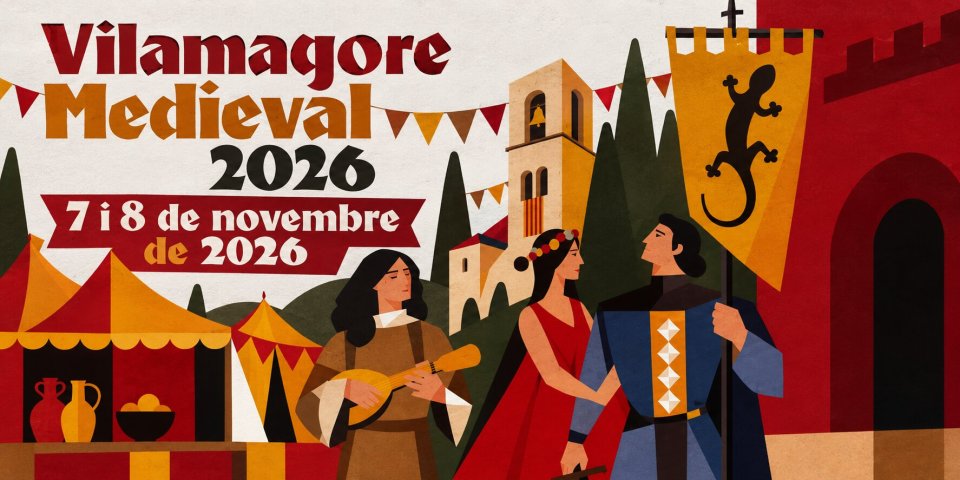
News
Iron architecture: the light and steam of industrial Catalonia
In the 19th century, the Industrial Revolution not only changed the way people worked and lived, but also profoundly transformed architecture. The arrival of new materials, such as cast iron, wrought iron, and glass, opened up possibilities…
Gothic Architecture: The light and height of medieval Catalonia
Gothic architecture marks a turning point in the history of Catalonia. It was the style that transformed cities, places of worship, and the way people built collectively. A style that changed not only the stone itself, but also the way people…






 Sustainable turism
 Biosphere