


Alberg Centre Esplai, Fundesplai
Municipalities
Centro Esplai is located in the municipality of El Prat de Llobregat, in the Baix Llobregat region.
Located near the Barcelona airport and excellently connected to the city center by public transport, the Esplai Center offers 74 rooms, a bright dining room, a charming garden, an auditorium, work rooms, a swimming pool and many other amenities for its guests..
It is a recently built youth hostel, modern and perfectly integrated into its surroundings. Totally accessible and committed to sustainability, the Esplai Center has obtained the Biosphere Certification for sustainable tourism. Discover our responsible tourism policy to learn more details.
Furthermore, the strategic location of the Esplai Center allows you to enjoy bike rides to the beach, explore the nature of the Llobregat Delta, visit Barcelona, organize conferences, courses or conferences, and stay comfortably before taking a flight.
A green and cozy refuge next to Barcelona!
WHAT YOU CAN DO AT CENTRO ESPLAI
- Summer activities for children and young people
- House of colonies for parties
- Colonies team building entities
- Colonies and school activities
- Lunch and spend the day
the shelter
The Esplai Center has family rooms with private bathrooms and is completely accessible for people with reduced mobility. In addition, it offers Full Board service, including breakfast, lunch and dinner. Other features that you can enjoy at the Esplai Center include a swimming pool, climbing wall, Wi-Fi connection, living rooms, television and many other amenities.
Around
A region with a great diversity of landscapes and activities! You can enjoy the beach, explore the Llobregat Delta or go hiking in the mountains. The possibilities are endless! Discover all the excursions and tourist places that surround the Alberg Center Esplai.

Nearby routes
Llobregat path
Castellar de n'Hug, El Prat de Llobregat
Long Distance Path (GR-270) that allows you to go from the source of the Llobregat river, in Castellar de n'Hug, to the mouth, in El Prat de Llobregat, passing through thirty towns.
Following the work of Puig i Cadafalch along the coast
Argentona, Barcelona, Canet de Mar, El Prat de Llobregat, Lloret de Mar, Mataró, Viladecans
The cultural movement of modernism made ??his mark in Catalonia and, unlike other artistic movements, presented a special dimension since spread throughout Catalonia and not just in big cities. At the time that was experienced and spread this…
The main characters in the the siege of 1714
Barcelona, Lleida, Moià, Sant Boi de Llobregat, Sant Hilari Sacalm, Sort
The story is not written on paper with the help of a pen. The story is drawn with the facts, actions, decisions and actions that people do. And the site of Barcelona September 11, 1714, like many other historical events, was created as well.…
Trying the 1714 food
Barcelona, Cardona, Cervera, Els Prats de Rei, La Seu d'Urgell, Lleida, Manresa, Moià, Sant Boi de Llobregat, Talamanca, Vic
The 1714 was a year that marked the Catalan region: culture, traditions, people and also gastronomy. This was important because it was the fuel that gave strength to the fighters of the battles. It gave them strength or weakened, the carrying…
The Baix Llobregat, a trip through history
El Papiol, Gavà, Sant Boi de Llobregat, Sant Climent de Llobregat, Sant Joan Despí, Santa Coloma de Cervelló, Torrelles de Llobregat
The route offers you this month femTurisme lies south of the Baix Llobregat, a region full of historical heritage, natural and monumental, but often absorbed and forgotten by the tourist attractions and events of Barcelona. The proposed route…
A stroll through the gardens surrounding Barcelona
Cornellà de Llobregat, Esplugues de Llobregat, Gavà, Sant Feliu de Llobregat, Sant Joan Despí, Sant Just Desvern
The gardens are areas where it is grown, pleasure, diverse vegetation orderly and combined with other elements such as fountains and sculptures. These gardens, as they called once before the adoption of the French word "garden", have a long…
Events
Moaré Terrassa Festival
From 16 to 18 OctoberCatalonia Industrial Tourism Week 2026
From 16 to 25 OctoberSostibaix, the sustainable fortnight of Baix Llobregat
From 15 October to 1 November'La Moguda Gastronòmica' in Santa Perpètua de Mogoda
From 9 October to 8 NovemberPanoràmic Festival in Granollers, Barcelona, Terrassa and Vic
From 15 October to 27 DecemberThe Castañera in La Pedrera!
17 OctoberScenic programming in Gelida
17 October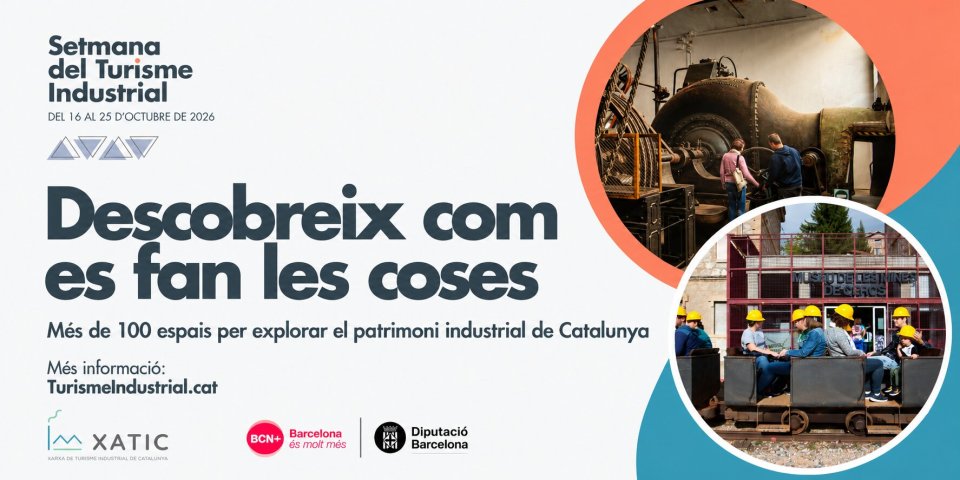
News
Iron architecture: the light and steam of industrial Catalonia
In the 19th century, the Industrial Revolution not only changed the way people worked and lived, but also profoundly transformed architecture. The arrival of new materials, such as cast iron, wrought iron, and glass, opened up possibilities…
Gothic Architecture: The light and height of medieval Catalonia
Gothic architecture marks a turning point in the history of Catalonia. It was the style that transformed cities, places of worship, and the way people built collectively. A style that changed not only the stone itself, but also the way people…








 Sustainable turism
 Biosphere