


Cal Candi
Municipalities
Located in the town of Vilada, at an altitude of 750 metres above sea level, in the Pre-Pyrenees, in the Berguedà region, just an hour and a half from Barcelona or Andorra.
For over 25 years we have been trying to satisfy all the people who come to our house, whether just to eat or to spend a few days.
The kitchen
The cuisine we offer is traditional from these places, and the people here, who have lived here all their lives, are in charge of cooking it.
Our daily menu consists of three courses: starter, first course and second course. The menu indicates the dishes that are suitable for coeliacs. All our staff is trained to provide correct information about the different ingredients contained in each dish, in order to be able to properly and adequately serve anyone with eating problems, such as coeliacs, lactose intolerants, allergy sufferers, etc.
The environment
We are in the middle of nature, in the valley, surrounded by mountains, the Picancel mountain range to the south and the Catllaràs mountain range to the north. An idyllic place to carry out activities related to nature, from hiking or cycling, with a wide variety of routes for all audiences, going mushroom hunting in autumn or simply relaxing, to a whole series of adventure activities, and for the more daring, you can also take a paragliding ride through the air of Berguedà.
We can also enjoy the Baells reservoir, located no more than 10 minutes from the house, either by swimming, fishing, canoeing, beach scootering or simply walking.
At Cal Candi, we know that each person is unique, and for this reason we treat each person in an idealized way, because we believe that the most important thing is that each person enjoys their stay or their meal the way they have imagined.
This establishment is affiliated with the Berguedà Mushroom Kitchen and the Club dels Sabors.
Nearby routes
Circular route through Catllaràs from Sant Romà de la Clusa
Vilada
El Catllaràs is one of the largest and most wooded mid-mountain extensions in Berguedà. Without exceeding 2000 meters like other neighboring mountains, the trees become masters of the mountain up to the most rounded peaks. Only…
We make trekking in Vilada
Vilada
Vilada is a small municipality in the Berguedà region with just over 400 inhabitants in an incomparable natural environment. We propose a series of itineraries so you can get to know more about all the architectural and natural heritage…
Route Canals of San Miguel in Vilada
Vilada
We propose a route through the town of Vilada, which will allow you to know and pass from abrupt shadows to the calm of the plans of this village of Berguedà. It is a beautiful but demanding route that can be started both from the village…
Road to the Roset Castle in Vilada
Vilada
This tour brings us closer to the sunny sector of the municipality of Vilada, under the Sierra de Picamill (1,415 m), where we will find the ruins of the Castle of Roset and enjoy wonderful views of the Mergançol valley and shady mountains…
Walk of the Doctor in Vilada
Vilada
Vilada offers us this family walk, next to the town, where long ago Dr. Soler's patients recovered from their chest diseases in contact with nature. Today converted into a public space of the town, the Viladans come for a walk and to enjoy…
The Romanesque in Alt Berguedà
Berga, Borredà, Guardiola de Berguedà, La Pobla de Lillet, Sant Jaume de Frontanyà, Vilada
Alt Berguedà area is known for its natural environment: mountains, forests, mushrooms, etc., but this time we will look at us with new eyes. We will do a historical and artistic look is that this space also includes an important and…
Events
The Berguedà mushroom kitchen
From 18 September to 22 NovemberTest Festival in Navàs
17 OctoberFeast of Sant Galderic de Avià
From 17 to 18 OctoberMushroom Festival in Guardiola de Berguedà
From 17 to 18 OctoberNavàs Autumn Fair
From 17 to 18 OctoberNovemberfest - The Hops and Craft Beer Festival of Avià
24 OctoberBerga Mushroom Festival
25 October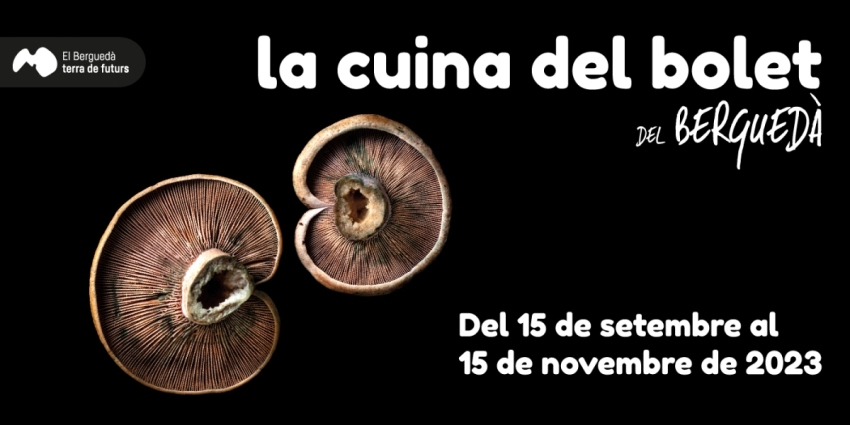
News
Gothic Architecture: The light and height of medieval Catalonia
Gothic architecture marks a turning point in the history of Catalonia. It was the style that transformed cities, places of worship, and the way people built collectively. A style that changed not only the stone itself, but also the way people…
Iron architecture: the light and steam of industrial Catalonia
In the 19th century, the Industrial Revolution not only changed the way people worked and lived, but also profoundly transformed architecture. The arrival of new materials, such as cast iron, wrought iron, and glass, opened up possibilities…








 Sustainable turism
 Biosphere