


Discover La Figuera, the sentinel of Priorat
Perched at an altitude of 575 meters and nestled among the western foothills of Montsant, La Figuera is one of those villages that surprises even before you arrive. Its privileged location, overlooking a rugged landscape open to sweeping horizons, has earned it the nickname "sentinel of the Priorat." And it's no exaggeration; from its natural viewpoints, the landscape unfolds in every direction, transforming a visit into an experience defined by breathtaking views, tranquility, and the feeling of standing on an exceptional balcony overlooking the region.
With a municipal area of 18.78 km², La Figuera is small in size, but big in landscape and memory.
History and legends of La Figuera
According to tradition, its name comes from a very unique legend. It is said that where the town now stands, there was once an enormous fig tree, so large that the Romans sheltered their flocks there. Later, on that same spot, a castle was built, preserving the tree in its courtyard. The castle building is gone, but along Muralla Street, remnants of fortified walls can still be seen, evoking that past. The town is said to have taken its name from that vanished fortress and the great fig tree.
The documented history of La Figuera also takes us far back in time. The first known reference appears in a donation from Albert de Castellvell to the church of Tortosa, where the place is mentioned as the mountain of Gibolhoder. The town did not become established until some years after its incorporation into the lands of Tortosa, and its charter of settlement is dated December 5, 1182, three years before that of Cabacés. It is, therefore, one of the oldest charters of settlement in New Catalonia.
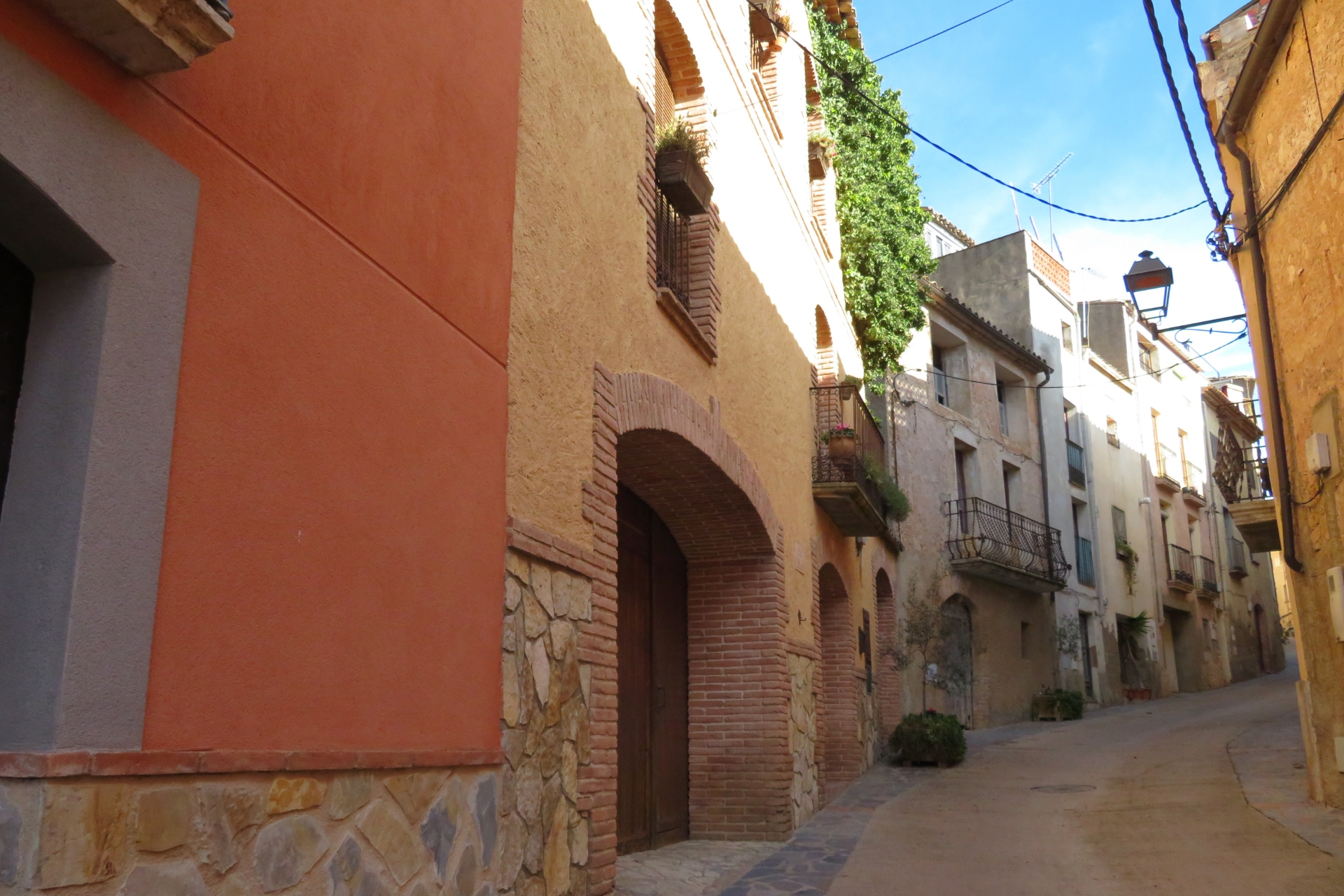
Prades Bel, Juan Emilio (2025). Municipality of La Figuera, El Priorat Region, Tarragona. Wikimedia Commons. CC BY 4.0. See the photograph on Wikimedia Commons
Over time, La Figuera became part of the Barony of Cabacés. A particularly interesting testament to that period is the Book of Ordinances of the Town of La Figuera, begun in 1310 and completed in 1734, which recorded the customs and traditions intended to regulate the life of the town. It is a testament to the long continuity of a community that has managed to preserve its character throughout the centuries.
What to see in La Figuera
Today, strolling through La Figuera is like stepping into a village of narrow, steep streets that retains the essence of the traditional villages of the Priorat region. The parish church, dedicated to Sant Martí, is part of the local heritage, but the village's greatest appeal lies above all in its surroundings. Here, rather than seeking grand monuments, it's essential to let yourself be guided by the paths, the hills, and the viewpoints from which the landscape reveals itself in all its splendor.
One of the must-see places is the hermitage of Sant Pau, located about two and a half kilometers northwest of the village. From there, you can enjoy an extraordinary panoramic view of the surrounding area. The hermitage houses the venerated Virgin of La Mola, who inspires great devotion even among the neighboring villages.
About 500 meters west, towards the mountain's peak, you can visit what was the Republican army's command post during the Battle of the Ebro. Its position immediately reveals the strategic value of the place: from here you can see up to 40 kilometers of the Ebro River.
La Figuera boasts other viewpoints and secluded spots that invite leisurely strolls. The Coll de Solans is known as the "Balcony of Priorat," a name that perfectly encapsulates its essence. Also noteworthy are the Guixar or Escambellet mountain range, the Roca Foradada, and several natural caves carved into the rock, such as the Vasques, Tres Ajos, and Mas d'en Nenet caves, some of which are quite large.
Hiking between Vilella Baixa and La Figuera
For hiking enthusiasts, one of the most interesting routes is the old Vilella Baixa path in La Figuera. The route is about 4 kilometers long, takes approximately one hour, and has an elevation gain of about 360 meters. Much of the trail follows the old royal road that traditionally connected the two villages and coincides with a marked route within the Montsant Natural Park, indicated by yellow paint markings.
The route begins at the Gran bridge in Vilella Baixa, next to the Montsant River, and gradually climbs until it reaches the old bridle path that ascends the Figuera pass. Between dry stone walls, stretches of woodland, and ancient switchbacks, the trail still retains cobbled sections that allow one to imagine the importance this communication route once held. It is a particularly evocative itinerary, ideal for reaching the village on foot and discovering the landscape in a leisurely and authentic way.
Festivals and traditions
Local life is also marked by a calendar of festivals deeply rooted in tradition. On January 15th, for Saint Paul, a mass is celebrated at the hermitage; May 15th is the feast day of Saint Isidore the Farmer, and November 11th is the feast day of Saint Martin. In addition, the second weekend of August features a Sardana dance gathering and a large community celebration at the Sant Pau hermitage.
Visiting La Figuera is to discover a high, tranquil, and panoramic Priorat, where history blends with ancient paths, legends, dry stone walls, and vast horizons. It's a village for walking, gazing into the distance, and understanding why this small hamlet has rightfully earned the title of sentinel of the Priorat.
Photo: Prades Bel, Juan Emilio (2025). Municipality of La Figuera, Priorat Region (Tarragona). Wikimedia Commons. CC BY 4.0. See the photograph on Wikimedia Commons
Published by Youssef Haouriqui on 14 of september of 2026

Events
Forest week in Sant Celoni
16 OctoberAmateur Theatre Showcase in Sant Gregori
16 OctoberEuropean Heritage Days in Collbató
16 OctoberRACC Costa Dorada Rally in Salou
From 16 to 17 OctoberZim Zam Cassà - Cassà de la Selva Urban Art Festival
From 16 to 17 OctoberEmbarrats Fair in Sant Joan de Vilatorrada
From 16 to 18 OctoberFish and Rice Gastronomic Days
From 9 to 18 October
Experiences







 Sustainable turism
 Biosphere