


Canònica de Santa Maria de Vilabertran
Municipalities
Considered Cultural Heritage of National Interest by the Government of the Generalitat of Catalonia, Santa María de Vilabertran is, without a doubt, one of the best well-preserved examples of the architecture of medieval regular canonical houses in Catalonia.
The nucleus of the abbey is organized around the cloister, where the monastic rooms and the 12th century church are located, with typically Romanesque elements. In this church you can see the recently restored Cruz de Vilabertran on display. The Abbot's Palace, located outside the main nucleus, is still in the process of being restored.
The abbey was built in the late 11th and early 12th centuries by Abbot Rigau, with the help of three noble families from the village. The three-nave church, with an elegant Llombart bell tower, and the cloister, which perfectly preserves the layout of the different monastic rooms, are the main elements of the monument, creating a harmonious ensemble of austere beauty.
The Cruz de Vilabertran is the largest silverware processional cross in Catalonia. It is made of gilded silver with a wooden core and is inlaid with semi-precious stones from the Romanesque era with pagan iconography. The cross is exposed in the church, in its original location.
Visiting hours:
From September 1 to June 30
-
From Thursday to Saturday: from 10:00 a.m. to 1:30 p.m. and from 3:00 p.m. to 5:30 p.m.
-
Sundays and holidays: from 10:00 a.m. to 3:00 p.m.
Easter hours
-
Saturday: from 10:00 a.m. to 1:30 p.m. and from 3:00 p.m. to 5:30 p.m.
-
Friday, Sunday and Monday: from 10:00 a.m. to 3:00 p.m.
July and August
-
From Tuesday to Sunday: from 10:00 a.m. to 1:30 p.m. and from 3:00 p.m. to 6:30 p.m.
Closed on non-holiday Mondays, December 25 and 26 and January 1 and 6.
*The ticket office and entrance close 30 minutes before the time limit.

Nearby routes
Route through the Romanesque of Empordà: Stone, wind and memory
El Port de la Selva, La Bisbal d'Empordà, Palau-Sator, Rabós, Roses, Sant Feliu de Guíxols, Santa Cristina d'Aro, Ullastret, Vilabertran
When we think of the Empordà region, coastal landscapes, charming villages, and figures like Dalí and Josep Pla often come to mind. But beyond that, there's a heritage that stands the test of time almost silently: the Romanesque…
Grand Tour of Catalonia - Section 4. Ode in nature: from La Seu d'Urgell to Figueres
Bagà, Banyoles, Bellver de Cerdanya, Besalú, Camprodon, Castellar de n'Hug, Figueres, Guardiola de Berguedà, Llívia, Meranges, Olot, Puigcerdà, Ribes de Freser, Ripoll
I want to do this route by electric vehicle! This route is designed to be done by electric vehicle, although it can be done with any other car. Along the route we will suggest municipalities that have charging points and places of interest…
Grand Tour de Catalunya - Section 5. From Surrealism to Modernism. From Figueres to Barcelona
Arenys de Mar, Barcelona, Begur, Blanes, Cadaqués, Caldes de Malavella, Canet de Mar, Figueres, Girona, L'Escala, Lloret de Mar, Manlleu, Mataró, Palafrugell, Palamós, Pals, Rupit i Pruit, Tossa de Mar, Vic, Viladrau
I want to do this route by electric vehicle! This route is designed to be done by electric vehicle, although it can be done with any other car. Along the route we will suggest municipalities that have charging points and places of interest…
The Dali Triangle
Cadaqués, Figueres, La Pera
The route offers you femturisme.cat is a tribute to a historical Catalan, international, rebel, maverick, eccentric, indiscreet, malicious ... and many other adjectives that describe him as a unique character that has marked the history of…
The Triangle Dalinià, following the genius footsteps using the electric car
Cadaqués, Figueres, La Pera
This route is designed to be done by electric vehicle, although it can be done with any other car. Along the route we will suggest municipalities that have charging points and places of interest to visit while we charge batteries. Electric…
Route of cultures on the Costa Brava
Castelló d'Empúries, Figueres, L'Escala, Peralada, Sant Pere Pescador
If there were a ranking of points of cultural interest per square kilometer, the Costa Brava would surely occupy a very prominent place. Through this route you will go into paleolithic and neolithic sites, remains of Iberian populations, Greco-Roman…
Events
Fish stew in Roses
From 16 to 25 OctoberLlançà in autumn, September and October
From 1 September to 31 OctoberVisit: The Romanesque paintings of Santa Eulàlia, a treasure of the Empordà
24 OctoberSant Martirià Festival in Banyoles
From 24 to 26 OctoberChestnut in Torroella de Montgrí and L'Estartit
From 29 October to 1 NovemberThe Chestnut Festival in Port de la Selva
31 OctoberChestnut Fair in Maçanet de Cabrenys
7 November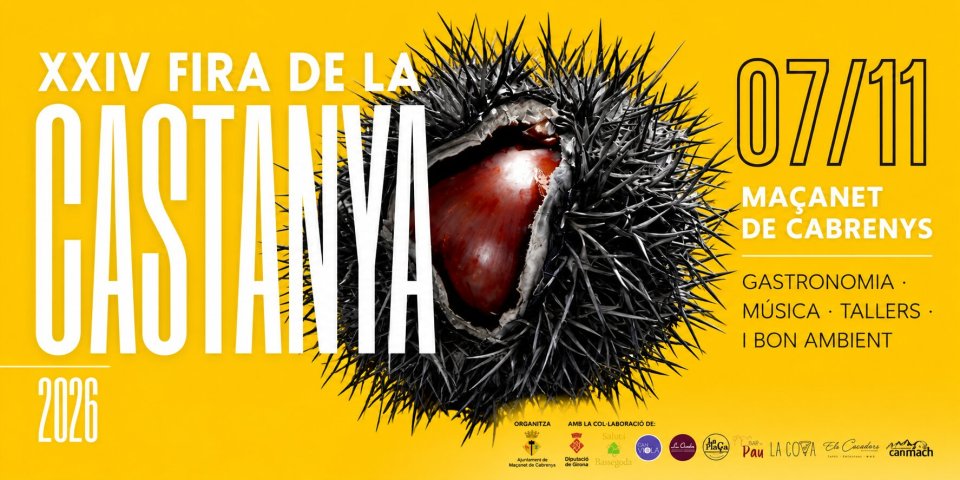
News
Gothic Architecture: The light and height of medieval Catalonia
Gothic architecture marks a turning point in the history of Catalonia. It was the style that transformed cities, places of worship, and the way people built collectively. A style that changed not only the stone itself, but also the way people…
Iron architecture: the light and steam of industrial Catalonia
In the 19th century, the Industrial Revolution not only changed the way people worked and lived, but also profoundly transformed architecture. The arrival of new materials, such as cast iron, wrought iron, and glass, opened up possibilities…








 Sustainable turism
 Biosphere