


Cal Maco, Alberg i Centre de Visitants d'Igualada
Municipalities
Cal Maco is a modernist building located in the center of Igualada that currently houses the city and region's Tourist Office, the Ignatian Way Interpretation Center, and a pilgrims' hostel.
Igualada is at the end of the Camino. A city that has not stopped growing for a thousand years. Surrounded by small towns and castles, it is a city where tradition, dating back to the medieval centuries, meets the modernity that comes with its industrial character. The city where Ignatius of Loyola began his most profound transformation.
The Igualada Ignatian Interpretation Center is the ideal place to begin your exploration of Saint Ignatius's time in the city. You can delve deeper into 16th-century Igualada and understand the reasons that led the saint to make a brief—but significant—stop.
One of the exhibition's most notable features is the faithful recreation of the pilgrim's attire, one of the most emblematic pieces of the Camino. In addition to its cultural and educational value, Cal Maco also offers accommodation in a modern, warm, and welcoming space, designed for both pilgrims and visitors who wish to explore Igualada and its surroundings.
Visiting Cal Maco is an excellent gateway to get to know Igualada, discover its past and understand its historical role as a crossroads of cultures.
Hostel
The Igualada Pilgrims' Hostel occupies the three upper floors of the Cal Maco building. It offers a total of 45 beds, distributed in several rooms, both shared and single, to suit the different needs of its guests.
The facilities include several services designed to make your stay more pleasant and practical: dining room, showers, bicycle parking, garden and other spaces that invite relaxation and conviviality.
In-person service hours
- Monday to Saturday from 10 a.m. to 2 p.m. and from 4 p.m. to 8 p.m.
- Sunday from 10 a.m. to 2 p.m.
Tourist Office of Igualada and the Anoia region
The Tourist Office is the welcome and reference point for anyone who wants to discover Igualada and the Anoia region. Located in Cal Maco, it offers personalized service to help visitors enjoy an enriching stay tailored to their interests.
The Tourist Office welcomes, informs, and guides both occasional visitors and pilgrims and hikers following the main routes that cross the region, such as the Ignatian Way and the Way of St. James.
Interpretation center
Located on the ground floor and open to the city, the Ignatian Interpretation Center is the starting point for exploring Saint Ignatius's time in Igualada. A city that, at the beginning of the 16th century, already displayed some features that would come to define its identity over time.
In this space, where you can see the recreation of Saint Ignatius's pilgrim costume, a tour also begins that will open the door to future proposals and activities linked to his figure and legacy.
Schedules and contact
- Monday to Saturday from 10am to 2pm and from 4pm to 8pm.
- Sunday from 10am to 2pm.
Telephone: 935 16 40 16.
Email: [email protected].
Anoia Room
This is a multipurpose space, designed to host all types of activities linked to the tourism development of Igualada and the Anoia region.
Thanks to its privileged location in the city center, this space is available to public administrations and socioeconomic entities working to promote local and regional tourism and requiring a modern, versatile, and functional environment for their initiatives.
Hours of use:
- Monday to Saturday: 10am to 2pm and 4pm to 8pm.
- Sunday: 10 a.m. to 2 p.m.
Equipment:
- Space with flexible configuration, divisible into two zones
- 30 chairs (expandable to 60)
- 2 high tables and 12 high chairs
- Screens for projections
If you are an organization interested in using the Anoia Room, please send your request to [email protected].

Nearby routes
The Ignatian Way
Cervera, Igualada, Manresa
The path that recalls the journey that Ignacio de Loyola, as a knight, made in 1522 from Loyola, in the Basque Country, to Manresa, finds his last steps in the regions of Barcelona. Igualada, Montserrat and the city of arrival - where the cave…
Camino de Santiago: from Sant Esteve d'en Bas in Cervera
Artés, Cervera, Igualada, L'Estany, L’Esquirol, Manresa, Vic
At the end of the last century, the Catalan sections of the millenary and well-known route of the Camino de Santiago (99 km and +) began to be recovered. Today it is possible to travel, on foot, on horseback or by bicycle, the almost 500 km…
The paper path for Catalonia
Capellades, Igualada, Jorba
Knowing which is the papermaking process or as this has evolved over time are some of the intricacies that can be removed to make the route that we propose this month. The paper path is a path with a historical component that reveals when and…
The leather path in Igualada
Igualada
The Anoia is one of the interior regions of Catalonia, located at the eastern end of the Catalan Central Depression, where Igualada exerts its capital. Igualada has been one of the municipalities of the territory that has taken advantage of…
The river road in the Alt Penedès
Mediona, Sant Pere de Riudebitlles, Sant Quintí de Mediona, Sant Sadurní d'Anoia, Subirats, Torrelavit
Sant Sadurní d'Anoia offers a wide range of activities for the whole family, routes and places to visit, in an environment of vineyards and cellars that will make your stay a great experience for the senses. We propose an itinerary through…
The battles of 1714
Barcelona, Cardona, Castellví de Rosanes, Corbera de Llobregat, Gaià, Gironella, La Seu d'Urgell, Manresa, Monistrol de Calders, Sallent, Sant Hilari Sacalm, Sant Llorenç Savall, Sant Martí Sarroca, Sant Quintí de Mediona, Sort, Talamanca
On this route femTurisme.cat offers a journey through the countries that suffered the most significant battles occurred during the year 1714. These are spread throughout Catalonia and predated the city Barcelona . This proposal follows a chronological…
Events
Fira Mediterrània de Manresa 2026
From 15 to 18 OctoberEmbarrats Fair in Sant Joan de Vilatorrada
From 16 to 18 OctoberEcoviure Fair in Manresa
From 2 to 20 OctoberCatalonia Industrial Tourism Week 2026
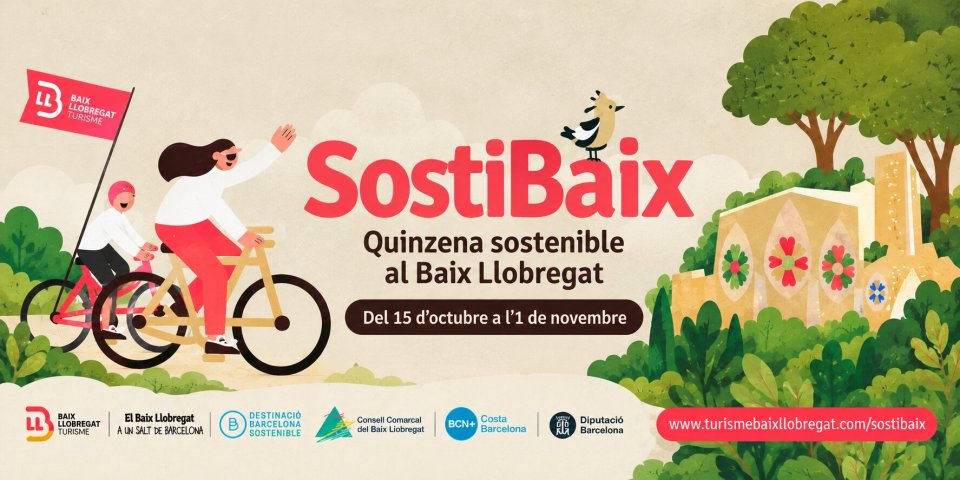
From 16 to 25 OctoberSostibaix, the sustainable fortnight of Baix Llobregat
From 15 October to 1 NovemberMARIDA'm: The secrets of two liquid golds of Catalonia, Sant Sadurní
17 OctoberScenic programming in Gelida
17 October
News
Iron architecture: the light and steam of industrial Catalonia
In the 19th century, the Industrial Revolution not only changed the way people worked and lived, but also profoundly transformed architecture. The arrival of new materials, such as cast iron, wrought iron, and glass, opened up possibilities…
Gothic Architecture: The light and height of medieval Catalonia
Gothic architecture marks a turning point in the history of Catalonia. It was the style that transformed cities, places of worship, and the way people built collectively. A style that changed not only the stone itself, but also the way people…








 Sustainable turism
 Biosphere