


Modernist Architecture: When Stone Became Art
There are buildings you admire. Others make you stop in your tracks, look up, and smile without even realizing it. Modernist architecture has a lot of this. It's detail, imagination, and emotion. It's that feeling of entering a space and discovering that every window, every mosaic, and every curve seems to have a soul of its own.
This June offers two dates that invite us to look at this legacy with fresh eyes. On June 10, we commemorate the death of Antoni Gaudí, one of the most universal figures in Catalan architecture. And on June 28, Barcelona hosts the UIA World Architecture Congress, once again making Catalonia an international meeting point to discuss cities, creativity, and the future.
Perhaps that's why this is a good time to revisit modernism. To understand why this movement, born between the late 19th and early 20th centuries, continues to fascinate people around the world.
An architecture that wanted to evoke emotion
Modernism emerged during a time of profound transformation. At the end of the 19th and beginning of the 20th centuries, Catalonia experienced a period marked by industrialization, urban growth, and the rise of a bourgeoisie seeking to project prosperity, sophistication, and cultural identity. Barcelona expanded with the Eixample district, factories redefined the landscape, and new European artistic movements arrived with force.
In this context, architecture ceases to be purely functional and becomes an artistic statement. Buildings must no longer simply serve as places to live or work: they must also convey beauty, modernity, and a unique worldview. Modernism draws inspiration from nature, organic forms, artisanal traditions, and also from the desire to stand out.
That's why you'll find facades brimming with details, stained-glass windows, ceramic mosaics, wrought iron, and forms seemingly inspired by trees, waves, or flowers. Entering a modernist building is to discover that almost nothing is accidental. The ceilings, staircases, doorknobs, and even the natural light are all part of a comprehensive experience, meticulously planned down to the last detail.
This movement didn't just seek to impress visually. It wanted to move people, surprise them, and demonstrate that architecture could also be a form of total art.
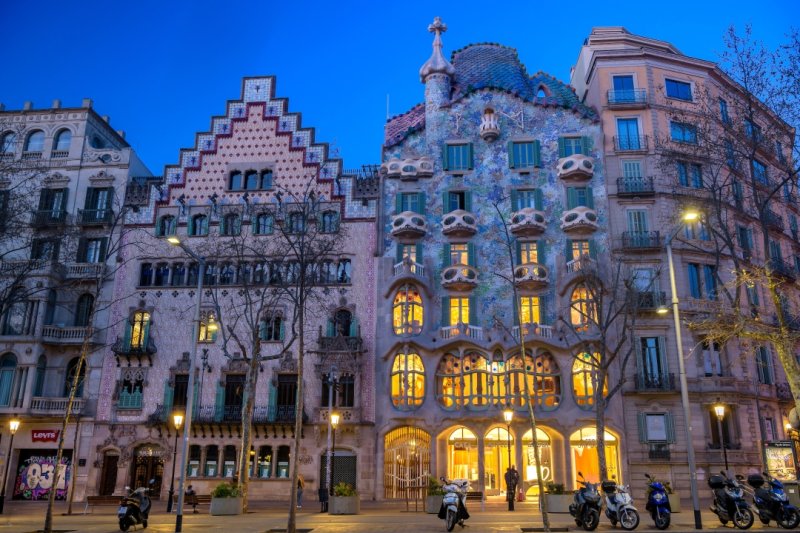
Gaudí and collective work
To speak of Modernism is inevitably to speak of Antoni Gaudí, but to reduce the movement solely to his figure would be unfair. However, it is impossible to ignore the emotional impact of his works. Some people enter the Sagrada Família and remain silent. Others stroll through Park Güell and feel as if they are inside a fairy tale.
Gaudí took modernism to limits no one had explored before. He obsessively studied nature to understand how to build better, experimented with impossible structures, and transformed light into a material in itself.
Casa Batlló seems to have emerged from the seabed. La Pedrera defies the traditional forms of residential buildings. The Sagrada Família remains, even today, a living work that connects past, present, and future. But behind these icons were also hundreds of artisans: ceramists, sculptors, blacksmiths, cabinetmakers, and glassmakers who gave physical form to many of these ideas. Modernism is also a collective history.
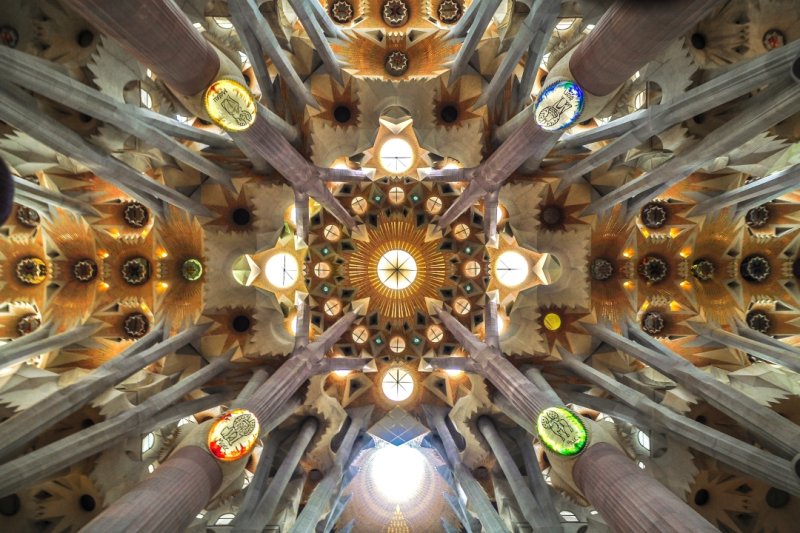
Beyond Barcelona
Although Barcelona concentrates many of the great modernist symbols, the movement spread throughout Catalonia and left its mark on places that often go unnoticed.
In Reus, Gaudí's birthplace, you can discover gems like Casa Navàs, one of the best-preserved Modernista buildings in Europe. In Terrassa, industrial heritage blends seamlessly with unique Modernista architecture. In Canet de Mar, the Domènech i Montaner House Museum commemorates another essential architect.
In cities like Sitges, Mataró or Lleida, markets, private homes and facilities also appear, showing the extent to which modernism transformed the Catalan urban landscape.
This territorial expansion demonstrates that it was not an exclusive phenomenon of the major capitals, but a movement that connected with many local realities.
.jpg)
When architecture enters everyday life
One of the great virtues of modernism is its ability to reach very diverse spaces. It manifests itself not only in large monumental buildings, but also in markets, agricultural cooperatives, pharmacies, factories, cafes, and private homes.
Many people live surrounded by modernist buildings every day without even realizing it. They are part of the everyday landscape, the collective memory of neighborhoods, and the visual identity of many cities.
Perhaps this is one of the keys to its success: modernism made beauty present in common spaces. It democratized, in a way, the idea that the places we live in can also inspire us. 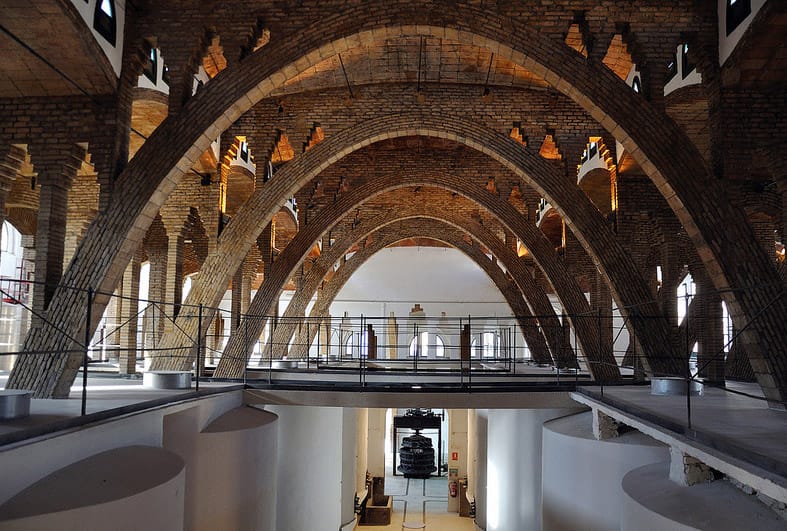
A legacy that continues to inspire
More than a century later, modernism continues to move us because it is profoundly human. It has imperfections, it has audacity, and it has an enormous capacity to amaze.
It reminds us of a time when architects, artisans, and artists decided to take risks and imagine more beautiful cities. Cities where buildings told stories and evoked emotions.
Today, as Barcelona once again finds itself at the center of the international architectural debate with the World Congress of Architecture, perhaps it is a good time to look back and appreciate that extraordinary legacy.
Because modernism is not just heritage. It is imagination made stone. And it continues to invite us, even today, to look up.
Published by Oriol Rosselló Gil on 9 of june of 2026 at 09:18h

Events
Guided tour of Hostalric Castle
17 OctoberAutumn Theater Season in Caldes de Malavella
17 OctoberAntiques and Arts Market of Tàrrega
17 OctoberTest Festival in Navàs
17 OctoberScenic programming in Gelida
17 OctoberZim Zam Cassà - Cassà de la Selva Urban Art Festival
From 16 to 17 OctoberGuided tours of the old town of Verdú
17 October
Experiences







 Sustainable turism
 Biosphere