


Castell de Gelida
Municipalities
The castle of Gelida was a fortress, which had its origin in the 10th century in the context of the border that separated the territories of Al-Andalus and the Catalan counties, it is formed by the building of the castle and the church of Sant Pedro, also from 10th century.
Over the centuries it has gone through different owners and uses, becoming a Gothic residence and finally being abandoned with the construction of the House of the Lord in the town of Gelida.
The visible structures today are the result of a historical process throughout which phases of abandonment and reconstruction have occurred, also marked by changes in the functionality of the spaces.
It currently has the Castell de Gelida Interpretation Center, a space for visitors. Equipped with two floors, it has an information, services and shop space and a permanent exhibition on the history and significance of the castle.
It offers a range of possibilities to get to know the castle and the historical and natural heritage of Gelida, such as guided tours, educational activities, workshops and other activities that are scheduled throughout the year and are adapted to different types of audiences.
Gelida Castle opens its doors to the public from Wednesday to Sunday from 10:00 a.m. to 2:00 p.m. The guided tour is offered at 10:30 a.m. and 12:30 p.m.
Visit options:
-
A walk through the Castle: this is a free visit where you can learn about the history of Gelida Castle at your own pace.
-
A Castle and a church: guided tour to learn about the history of Sant Pere del Castell, currently it is the building in the best state of conservation.
-
A Castle Stone in Stone: guided tour of the complete Gelida Castle, where you will get to know all the spaces of the castle.
Nearby routes
150 years of the railway from Tarragona to Martorell
Altafulla, El Vendrell, Gelida, L'Arboç, La Granada, Martorell, Sant Sadurní d'Anoia, Santa Margarida i els Monjos, Subirats, Tarragona, Torredembarra, Vilafranca del Penedès
2015 marked the 150th anniversary of the arrival of the railroad that connected the lands of Penedés and Tarragona with Barcelona. This construction involved the connection, by rail, of two of the Catalan capital, Tarragona and Barcelona,…
Path of the natural parks
Aiguafreda, Canet de Mar, Gelida, Olesa de Montserrat, Rellinars, Sant Celoni, Sant Feliu de Codines, Sant Llorenç Savall, Sitges
Starting and ending on the shores of the Mediterranean, the Sendero de los Parques Naturales (210 km), also known as Sendero de los Miradores, makes an arc towards the interior of the territory, always about 40-50 kilometers from Barcelona…
Modernism in Vilafranca del Penedès
Gelida, Sant Sadurní d'Anoia, Vilafranca del Penedès
Vilafranca del Penedès, in the center of the Penedès regions, stands out for the strong link to the cultivation of the vine, currently highlighted with the Penedès Designation of Origin. The ups and downs of this product…
The battles of 1714
Barcelona, Cardona, Castellví de Rosanes, Corbera de Llobregat, Gaià, Gironella, La Seu d'Urgell, Manresa, Monistrol de Calders, Sallent, Sant Hilari Sacalm, Sant Llorenç Savall, Sant Martí Sarroca, Sant Quintí de Mediona, Sort, Talamanca
On this route femTurisme.cat offers a journey through the countries that suffered the most significant battles occurred during the year 1714. These are spread throughout Catalonia and predated the city Barcelona . This proposal follows a chronological…
Fairs, cowherd boys, games and theater to celebrate Christmas
Barcelona, Calaf, Corbera de Llobregat, Espinelves, Tona, Vic, Vilafranca del Penedès
With December comes the cold and the desire to be at home near the fireplace or heating, but these dates allow us to discover Christmas traditions that are celebrated in Catalonia. Surely one or the other will fall near your home for a weekend…
Route through the Sierra de las Torretes and the Castillo de Rosanes
Martorell
The mountainous area of Martorell is concentrated in the south of the municipality where the crest is the limit of the municipal area. Numerous roads and trails cross this part of the mountain, which borders the protected area of the…
Events
Moaré Terrassa Festival
From 16 to 18 OctoberSitges - International Fantastic Film Festival of Catalonia
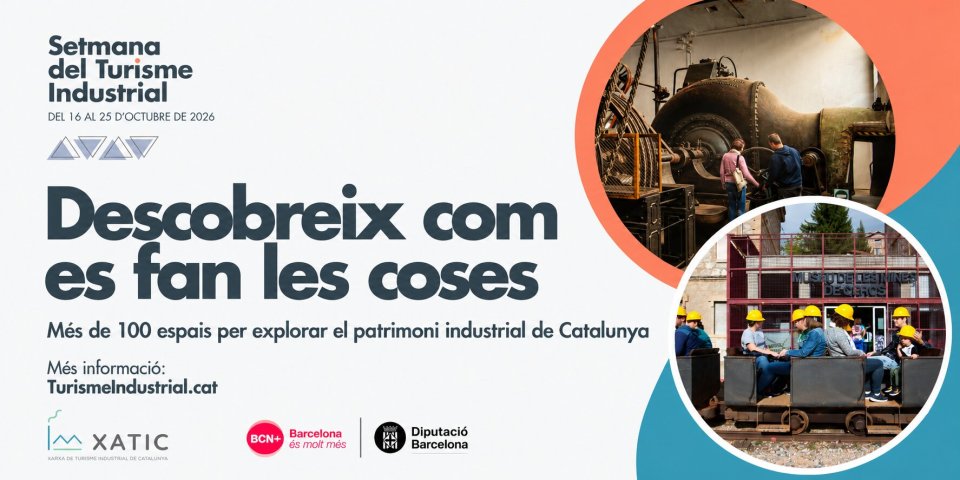
From 8 to 18 OctoberCatalonia Industrial Tourism Week 2026
From 16 to 25 OctoberSostibaix, the sustainable fortnight of Baix Llobregat
From 15 October to 1 November'La Moguda Gastronòmica' in Santa Perpètua de Mogoda
From 9 October to 8 NovemberPanoràmic Festival in Granollers, Barcelona, Terrassa and Vic
From 15 October to 27 DecemberScenic programming in Gelida
17 October
News
Iron architecture: the light and steam of industrial Catalonia
In the 19th century, the Industrial Revolution not only changed the way people worked and lived, but also profoundly transformed architecture. The arrival of new materials, such as cast iron, wrought iron, and glass, opened up possibilities…
Gothic Architecture: The light and height of medieval Catalonia
Gothic architecture marks a turning point in the history of Catalonia. It was the style that transformed cities, places of worship, and the way people built collectively. A style that changed not only the stone itself, but also the way people…








 Sustainable turism
 Biosphere