


Municipalities
Starting and ending on the shores of the Mediterranean, the Sendero de los Parques Naturales (210 km), also known as Sendero de los Miradores, makes an arc towards the interior of the territory, always about 40-50 kilometers from Barcelona city, to crossing natural spaces protected from the Garraf, Montserrat, Sant Llorenc de Munt and the Obac, Montseny and Montnegre-Corredor.
It is equivalent to the GR-5 Long Distance Trail, and you can imagine that, due to the number of natural parks and mountainous areas that it crosses, the ups and downs are a constant, but also that the effort is worth it.
Its stages are:
- Sitges * - Olesa de Bonesvalls: Route: 16.75 km Accumulated elevation gain: 1,044 m Estimated time: 4 - 5 h
- Olesa de Bonesvalls - Gelida: Route: 15 km Accumulated difference in altitude: 1,360 m Estimated time: 3 - 4 h
- Gelida - Can Parellada: Route: 13.5 km Accumulated difference in altitude: 794 m Estimated time: 3 - 4 h
- Can Parellada - Montserrat Monastery: Route: 21 km Accumulated difference in altitude: 2,073 m Estimated time: 5-6 h
- Montserrat Monastery - Rellinars: Route: 12 km Accumulated difference in altitude: 710 m Estimated time: 6-7 h
- Rellinars - San Lorenzo Savall: Route: 21.75 km Accumulated elevation gain: 2,148 m Estimated time: 5-6 h
- San Lorenzo Savall - Sant Feliu de Codines: Route: 13.4 km Accumulated difference in altitude: 1,007 m Estimated time: 3 - 4 h
- Sant Feliu de Codines - Aiguafreda: Route: 19.36 km Accumulated difference in altitude: 2,057 m Estimated time: 4 - 5 h
- Aiguafreda - Montseny: Route: 22.22 km Accumulated difference in altitude: 2,395 m Estimated time: 5-6 h
- Montseny - Sant Celoni: Route: 21.31 km Accumulated difference in altitude: 2,197 m Estimated time: 5-6 h
- Sant Celoni - Montnegre: Route: 9.18 km Accumulated difference in altitude: 729 m Estimated time: 2-3 h
- Montnegre - Canet de Mar: Route: 16.40 km Accumulated difference in altitude: 1,651 m Estimated time: 4 - 5 h
NATURA FOR ALL
Having a physical, mental or sensory disability every day is less reason not to enter a natural park in the regions of Barcelona and enjoy it. Adapted itineraries, tactile maps, directional bars, joëlettes chairs or dossiers and braille cards are some of the support elements that you will be able to find. Today there are 6 fully accessible routes or routes of the Barcelona Provincial Council's Natural Parks Network: La Pleta botanical route (Barcelona), SL-C 63, the source of La Portella (Sant Llorenç del Munt and the Obac), the Fraile fountain (Montseny), Masía Mariona itinerary (Montseny), Sau Nature School itinerary (Guilleries-Savassona) and Fondal path (Sierra de Collserola).
SAN LORENZO DEL MONTÓN AND THE OBAC
The Sant Llorenç de Munt massif and the Obac mountain range make up a Natural Park of 13,694 hectares, between the regions of Vallès Occidental, Bages and Moianès.
Cliffs and monoliths of reddish conglomerate give uniqueness to this protected area, which has its highest peaks at Montcau (1,056.7 m) and La Mola (1,101.9 m). Above the second, the Romanesque monastery of Sant Llorenç del Munt has stood since the 11th century, declared a Cultural Asset of National Interest. Thirteen marked itineraries will allow you to access the most emblematic and charming places of the Park.
Source: Barcelona Provincial Council
Nearby experiences
Nearby routes
Tourdera Route: From la Batllòria to Gualba
Gualba, Sant Celoni
The La Batllòria - Gualba section is an easy section, 6.3 kilometers long, in which you travel along the old Gualba royal road and the PR-C 211, in a quiet walk between forest tracks, crops and forests. It is a connecting itinerary from…
Route from the porch of Santa Oliva to Sant Salvador de les Espases
Olesa de Montserrat
This is one of the busiest and most popular itineraries in Olesa de Montserrat. It starts in the old town and ends on a historic hill. Every year on the first Sunday of September, many people follow him to celebrate the great meeting.
Following the work of Puig i Cadafalch along the coast
Argentona, Barcelona, Canet de Mar, El Prat de Llobregat, Lloret de Mar, Mataró, Viladecans
The cultural movement of modernism made ??his mark in Catalonia and, unlike other artistic movements, presented a special dimension since spread throughout Catalonia and not just in big cities. At the time that was experienced and spread this…
Route through Vilanova, Miralpeix Castle and Sant Pere de Ribes
Sant Pere de Ribes, Sitges, Vilanova i la Geltrú
Route that takes us from the Garraf sailor to the interior, the maritime viewpoint in the vineyards and carob trees, where we will discover the ruins of the castle of Miralpeix. The distance is 8.56km, with a slope: 235m and with an approximate…
Related routes
A high altitude walk through Cap de Creus
Roses
Circular route that will allow us to enjoy views of the north and south of Cap de Creus with all its scenic beauty from the highest part. We will enter the authentic flora of the Costa Brava and we will witness the passage of time. Difficulty:…
Route of Carrilet I of Olot in Girona
Amer, Anglès, Bescanó, La Cellera de Ter, La Vall d'en Bas, Les Planes d'Hostoles, Les Preses, Olot, Salt, Sant Feliu de Pallerols
The Carrilet I Route crosses three counties and twelve towns, as well as places of great scenic, ecological and cultural importance, through its 54 km of compacted salon. The road that formerly linked La Garrotxa and Gironès, now allows…
Circular route of the Water Museum of Lleida and the suburb of the Gold Cup
Lleida
If you come to Lleida you cannot miss the Water Museum. Only then will you understand the link between this land and water, and the human ingenuity that allowed it to be distributed throughout the territory. And since you are in the Museum,…
Slow Bike Route - Penedès 360
Sant Jaume dels Domenys, Sant Sadurní d'Anoia, Torrelles de Foix, Vilafranca del Penedès
The Penedès plain is ideal to discover by bicycle, without haste. This is what the Slow Bike Route - Penedès 360 (162 km) proposes, a circular itinerary of four stages that does not present great difficulties! If we talk about…
Events
Forest week in Sant Celoni
16 OctoberAmateur Theatre Showcase in Sant Gregori
16 OctoberEuropean Heritage Days in Collbató
16 OctoberRACC Costa Dorada Rally in Salou
From 16 to 17 OctoberZim Zam Cassà - Cassà de la Selva Urban Art Festival
From 16 to 17 OctoberEmbarrats Fair in Sant Joan de Vilatorrada
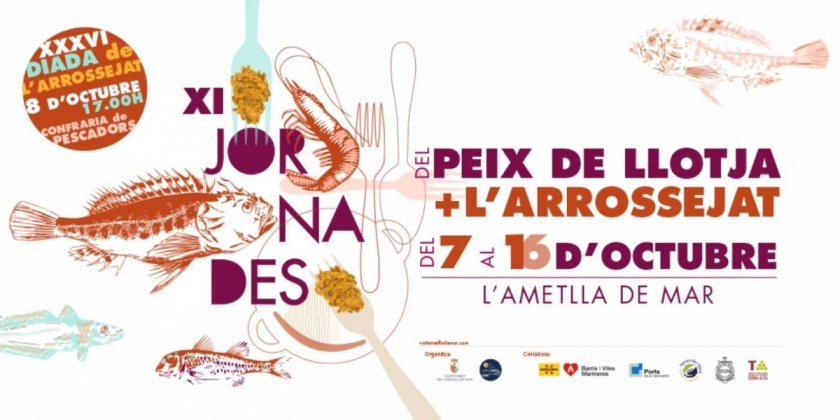
From 16 to 18 OctoberFish and Rice Gastronomic Days
From 9 to 18 October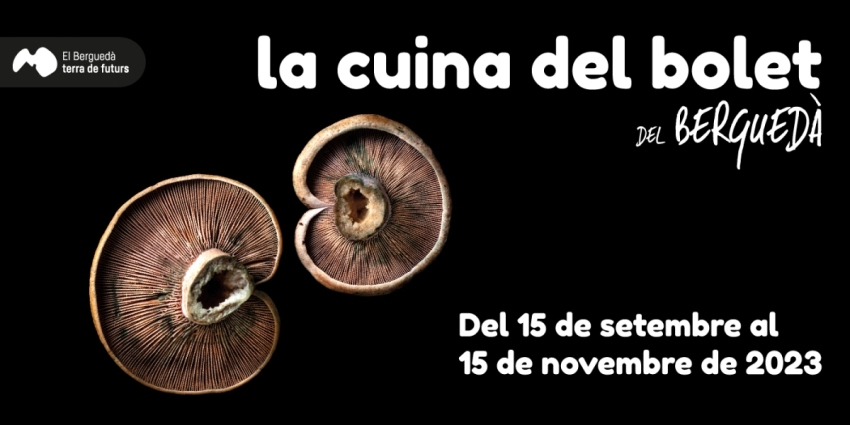
News
Iron architecture: the light and steam of industrial Catalonia
In the 19th century, the Industrial Revolution not only changed the way people worked and lived, but also profoundly transformed architecture. The arrival of new materials, such as cast iron, wrought iron, and glass, opened up possibilities…
Gothic Architecture: The light and height of medieval Catalonia
Gothic architecture marks a turning point in the history of Catalonia. It was the style that transformed cities, places of worship, and the way people built collectively. A style that changed not only the stone itself, but also the way people…








 Sustainable turism
 Biosphere