


Discover the Correfocs: the festival that lights up the streets
Correfocs are one of the most intense, popular, and recognizable expressions of Catalan festive culture, a celebration in which fire, music, and popular participation transform the streets into a vibrant stage. As night falls, devils emerge to dance amidst sparks, festive beasts advance surrounded by smoke, and drummers set a steady rhythm that invites the public to join the festivities, not as mere spectators, but as active participants in a collective ritual.
Essentially, a correfoc is a fire parade featuring gangs of devils, demons, or other characters from fantasy, who roam through squares and streets setting off firecrackers and other pyrotechnic devices. They are often accompanied by figures from festive bestiaries, such as dragons, "vibris" (a mythical creature), oxen, eagles, or other real or mythological animals that breathe fire and give the festival a powerful visual impact. All of this is complemented by the sound of drums, which set the pace for the devils, intensify the atmosphere, and create a vibrant, almost hypnotic ambiance in which smoke, gunpowder, and sparks are integral to the experience.
One of the great features of the correfoc is that the public is not left out of the action; many people dress in old clothes, made of wool, cotton, and long sleeves, cover their heads with a hat or scarf, and enter the route to jump under the sparks, run alongside the devils, or follow the fire beasts.
Participation is what makes the correfoc so special, because the boundary between those who act and those who watch blurs until everyone becomes part of the same festive movement. Fire, which in other contexts can generate respect or fear, becomes here an element of play, community, and shared celebration.
From medieval roots to modern correfoc
Although the word "correfoc" is relatively modern, the tradition that makes it possible comes from a long time ago; fire and gunpowder have been present for centuries in Catalan festivals, especially in processions, folk dances, street theater performances, and celebrations linked to the religious and festive calendar.
One of the most important antecedents is the Dance of the Devils, a manifestation of medieval origin in which demons often represented the symbolic struggle between good and evil, with a theatrical, burlesque and transgressive component that over time incorporated the festive use of gunpowder.
In 1979, as part of the La Mercè Festival in Barcelona, a gathering of dragons and festive beasts was organized, with the participation of groups from various Catalan towns. During this parade, some spectators, instead of simply watching the devils and beasts pass by, began running and dancing under the fire, mingling with the participants and transforming the parade into a much more participatory celebration.
The following year, in 1980, the event was repeated and officially presented as the Correfoc Festival. From that moment on, the name caught on and spread rapidly to many Catalan towns, to the point that today it is difficult to imagine a town festival without some kind of correfoc. The model was new, but it incorporated very old elements: devil dances, bestiary figures, gunpowder, street music, and the desire to transform public space into a place for popular gathering, expression, and participation.
Devils, beasts and popular identity
The devils are the main protagonists of the correfoc (fire run). Organized into groups, each group has its own way of dressing, moving, and interacting with fire, which means that each town or neighborhood experiences this tradition with its own unique style. Their clothing is usually sturdy and thick, often made of cotton or burlap, and may be decorated with infernal motifs, local symbols, or fantastical elements. Many groups also feature prominent figures like Lucifer or the Devil Woman, who lead the group and carry scepters or more spectacular fire structures.
Beside them, the festive bestiary completes this symbolic universe. Dragons, "víbries" (a type of dragon), mulasas (a type of wild animal), oxen, and other figures advance through the crowd as if medieval imagery had been brought back to life, while the fire that bursts from their mouths, horns, or wings fills the path with sparks and smoke. The music of the drummers completes the scene, because without the rhythm of the drums, the correfoc would lose much of its intensity; they are the ones who command the movement, create tension, and amplify the energy of the moment.
Today, there are well-known fire runs (correfocs) throughout the country. The Mercè fire run in Barcelona is one of the largest and most spectacular, while the Santa Tecla fire run in Tarragona fills the upper part of town with fire, music, and festive creatures. The Cervera Witches' Sabbath combines the fire run with a performance linked to witchcraft and esoteric imagery, and the Vilafranca del Penedès Festival maintains a strong tradition of the Devils' Dance (Ball de Diables). Also worth mentioning is the Patum in Berga, which, although not strictly a fire run, is one of Catalonia's major fire festivals and an essential reference point for understanding the power of fire within popular culture.
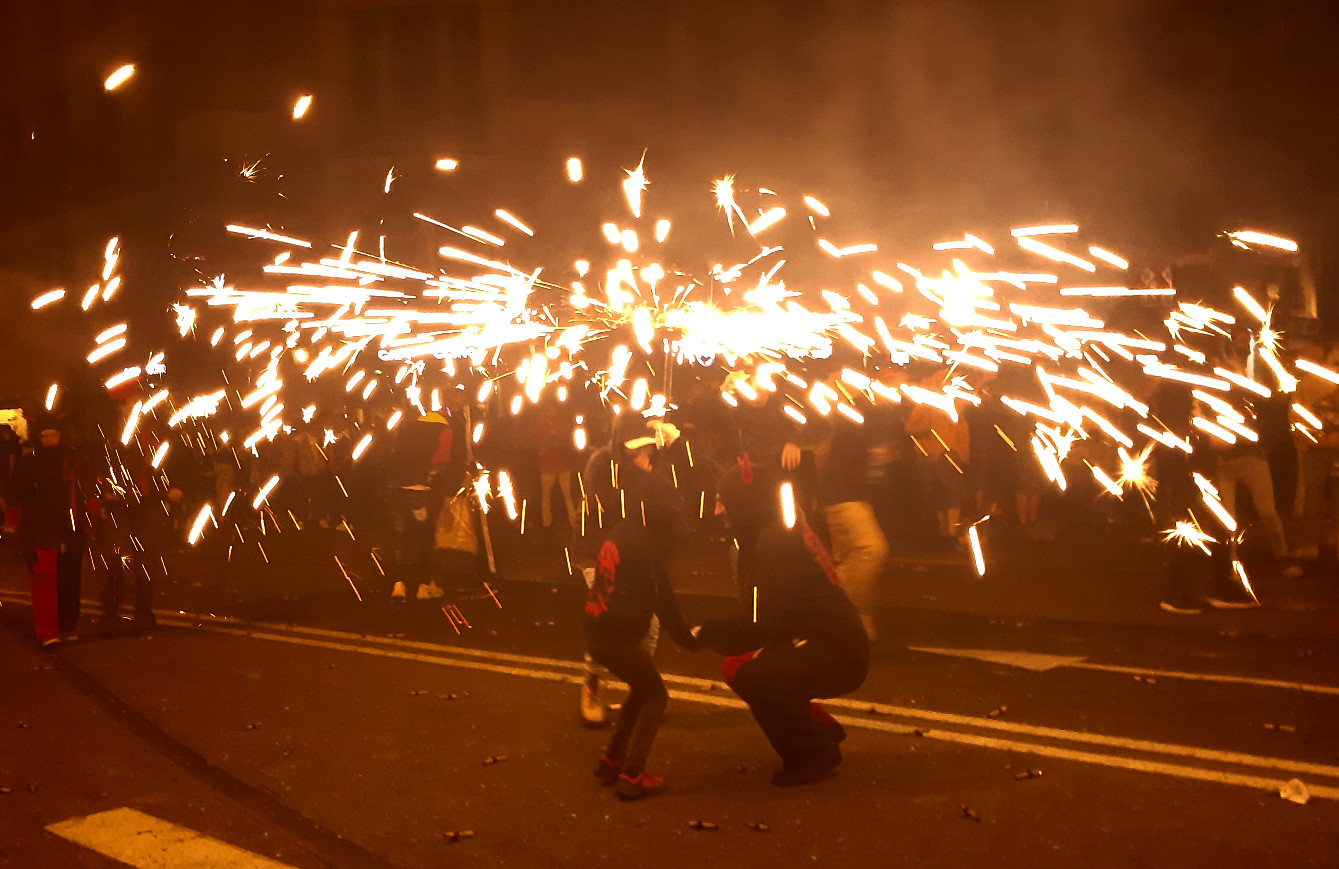
Correfuego de la Mercè
The correfoc continues to evolve, as each generation adds new forms, new rhythms, and new ways to participate, but its essence remains intact: transforming the street into a space for shared celebration. It is a tradition that combines controlled risk, theater, music, fire, and collective identity, and expresses, like few others, the vitality of Catalan popular culture.
Under a shower of sparks, amidst drums and devils, the correfoc reminds us that the festival is not only to be watched, but also to be run, danced, and lived.
Published by Youssef Haouriqui on 4 of august of 2026 at 09:12h
Events
Forest week in Sant Celoni
16 OctoberAmateur Theatre Showcase in Sant Gregori
16 OctoberEuropean Heritage Days in Collbató
16 OctoberRACC Costa Dorada Rally in Salou
From 16 to 17 OctoberZim Zam Cassà - Cassà de la Selva Urban Art Festival
From 16 to 17 OctoberFira Mediterrània de Manresa 2026
From 15 to 18 OctoberMoaré Terrassa Festival
From 16 to 18 October
Experiences







 Sustainable turism
 Biosphere