


Eixample: the city that Ildefons Cerdà imagined
Some neighborhoods simply grow up. And then there are neighborhoods that are born from an idea. Barcelona's Eixample district is probably the best example of this in Catalonia.
When we walk through its wide streets, open corners, or long, light-filled avenues today, we often forget that all of this was envisioned long before it existed. Behind this instantly recognizable layout was a person with a revolutionary idea: to build a healthier, more livable city, designed for people.
This August, coinciding with the birth of Ildefons Cerdà i Sunyer, is a good time to look at the Eixample district with fresh eyes. Not only as an emblematic area of Barcelona, but as an urban planning project that changed the way we understand cities.
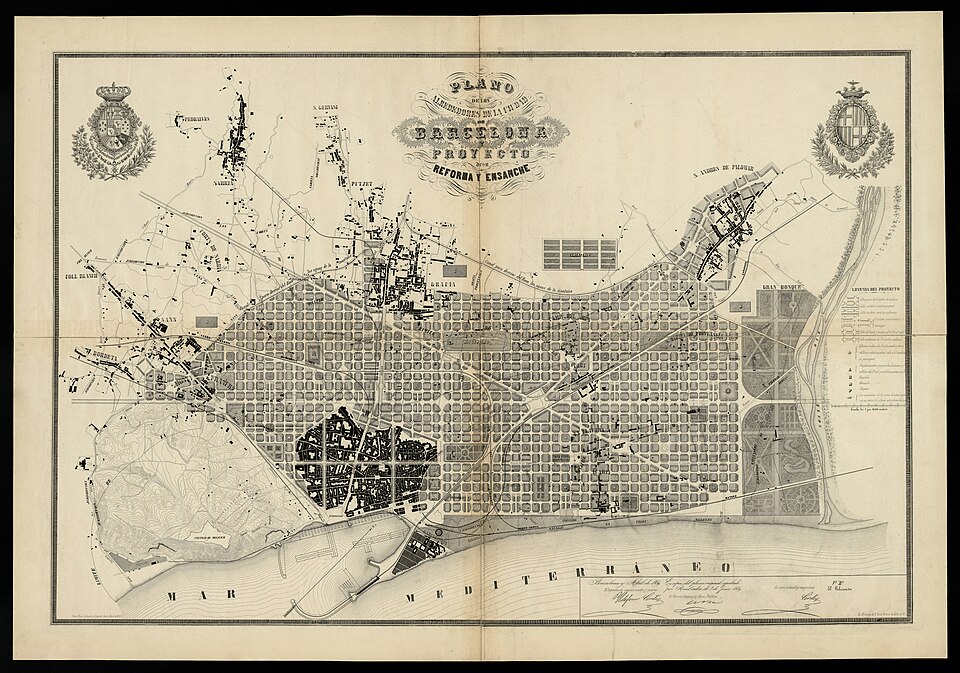
A city that had become too small
In the mid- 19th century, Barcelona faced a difficult situation. The city was still surrounded by walls, and the population density was increasing rapidly. Narrow streets, poor ventilation, and unsanitary conditions led to serious health and quality of life problems.
Barcelona needed to expand, but Cerdà didn't just want to make the city grow: he wanted to completely rethink it.
His proposal broke with many traditional urban planning ideas of the time. He advocated for wide streets, green spaces, good ventilation, and a more balanced distribution of services. The city had to be functional, yes, but also humane.
For the first time, a city was being considered that was designed not only for getting around, but also for living better.
The islands that changed Barcelona
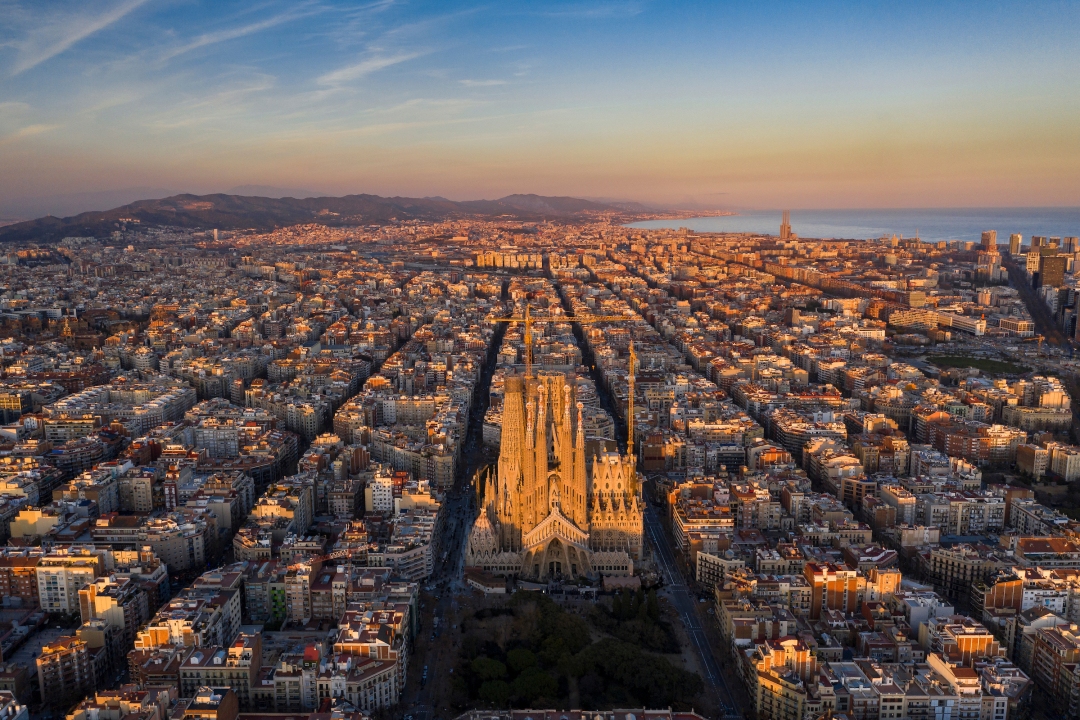
The great symbol of the Eixample district is its famous octagonal islands. These chamfered corners, known as chamfers, were not a casual aesthetic choice. Cerdà designed them to facilitate circulation, improve visibility, and allow for more natural light and air.
Even today, this structure continues to define Barcelona's visual identity. Seen from the air, the city appears almost drawn with a ruler and compass, but behind that geometry lay a very advanced idea for its time: the city should be orderly, accessible, and healthy. Each block had to have open interior spaces and vegetation, although over the years many of these original ideas were modified.
However, Cerdà's project remains one of the most influential urban planning examples in Europe.
Modernism, everyday life and urban identity
The Eixample would also end up becoming the ideal setting for modernist architects to develop some of their best-known works.
Casa Batlló, La Pedrera, Casa Amatller or the Sagrada Família are now part of the everyday landscape of a neighborhood that combines rational urban planning with architectural creativity.
This coexistence of order and expressiveness is one of the great distinguishing features of the Eixample. On the one hand, Cerdà's regular grid plan provides coherence and functionality. On the other, the Modernista buildings introduce imagination, detail, and personality.
Perhaps it is precisely this mix that makes the Eixample much more than a neighborhood: it is a way of understanding the city.

A model that still inspires
More than a century later, many of Cerdà's ideas continue to surprise us with their modernity. Concepts such as mobility, ventilation, the relationship between public space and quality of life, and the need for green spaces are part of current urban debates.
At a time when many cities around the world are seeking to be more sustainable and livable, the Eixample is once again emerging as a benchmark.
Walking through Barcelona today is to discover a city that still functions thanks to an idea conceived more than one hundred and fifty years ago.
The legacy of Ildefons Cerdà
Ildefons Cerdà didn't just design streets. He envisioned a new way of experiencing the city. A more open, healthier city, more connected to its people.
Perhaps that's why the Eixample continues to fascinate. Because behind its perfect geometry lies a profoundly human idea: that urban planning can also improve everyday life.
And even today, among chamfers, trees and modernist facades, Barcelona continues to walk within that urban dream that Cerdà imagined more than a century ago.
Published by Oriol Rosselló Gil on 10 of august of 2026
Events
Forest week in Sant Celoni
16 OctoberAmateur Theatre Showcase in Sant Gregori
16 OctoberEuropean Heritage Days in Collbató
16 OctoberZim Zam Cassà - Cassà de la Selva Urban Art Festival
From 16 to 17 OctoberRACC Costa Dorada Rally in Salou
From 16 to 17 OctoberEmbarrats Fair in Sant Joan de Vilatorrada
From 16 to 18 OctoberFish and Rice Gastronomic Days
From 9 to 18 October
Experiences







 Sustainable turism
 Biosphere