


Shepherd Dog Competitions in Catalonia: when the countryside becomes a spectacle
The Catalan Sheepdog Trials are one of the most unique expressions of the region's livestock farming culture. Born from the daily work of shepherds, they have now become a public festival where visitors can witness firsthand the intelligence of the dogs, the shepherd's skill, and the life of a flock in motion. It is not just a competition, but a way to keep alive a heritage that for centuries has helped to organize the land, manage pastures, and make transhumance possible.
The sheepdog, protagonist of the tradition
The protagonist is the sheepdog, an indispensable working companion for herding sheep and goats. In Catalonia, this figure is especially associated with the Catalan Sheepdog, a breed linked to the Pyrenees and extensive livestock farming.
Rustic, attentive, obedient, and resilient, the dog learns to interpret the shepherd's commands— often whistles, brief shouts, or gestures —and to move the flock with precision, without frightening it. In a good competition, what the audience witnesses is not brute force, but trust, complicity, and an almost invisible communication between the person and the animal.
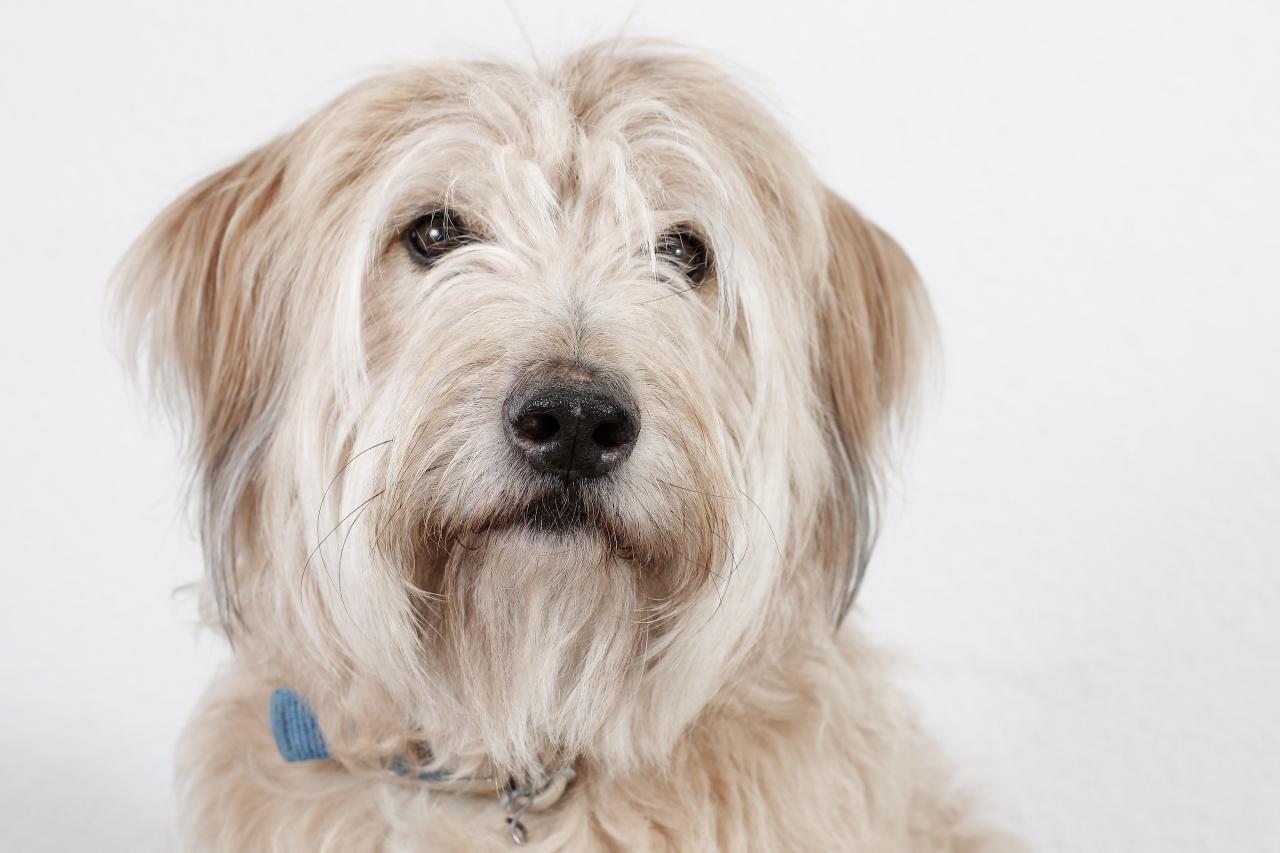
Photo: Catalan Shepherd Dog, photography by orse, via Wikimedia Commons, CC BY-SA 2.0 license
Competitions with a history
The competitive origins of this tradition have an important point of reference in Ribes de Freser, where the first sheepdog trials in the Catalan Countries were held in 1948. Over the years, these events spread to other mountain towns and eventually established their own calendar.
Castellar de n'Hug, in the Berguedà region, is probably the most emblematic setting. It has held its International Sheepdog Competition since 1962, every last Sunday of August, in the Prat del Castell. The town explains that the event originated from gatherings of shepherds who wanted to demonstrate which dog worked best and that, over time, it has become a popular event with significant tourist appeal.
How does a sheepdog competition work?
The competition's format is easy to understand and very exciting to follow. The shepherd and the dog must guide a flock of sheep along a route, overcoming various challenges. Typically, the dog's obedience, its ability to pass through designated checkpoints, how well it herds the flock to a specific area, and its skill in moving sheep in and out of a pen or enclosure are all assessed.
The judges observe the speed, but also the composure, the precision of the work, and the connection between the shepherd and his dog. When the animal crouches, circles the flock, and patiently guides it, the field is transformed into a unique stage.
A festival rooted in the rural world
In the towns that host these competitions, the day is usually accompanied by communal breakfasts, craft fairs, displays of local products, tastings, family activities and gatherings of people linked to the rural world.
For this reason, the competition attracts not only specialists but also families, hikers, and visitors seeking a unique Catalonia, less urban and more deeply rooted in the landscape. In Castellterçol, for example, the competition is presented as an opportunity to showcase the sheepdog breed and, at the same time, enjoy the town's tourist and gastronomic offerings.
A shared tradition in the Catalan Countries
The Catalan Countries Shepherd Dog Competition Championship has brought together trials in places such as Prades, Llavorsí, Ribes de Freser and Castellar de n'Hug, as well as in Osséja, in Northern Catalonia, and Canillo, in Andorra.
This network demonstrates that tradition shares a common thread on both sides of the Pyrenees: respect for the shepherd's profession and for a livestock culture that has shaped paths, meadows, villages and festive calendars.
A living heritage that looks towards the future
The value of these competitions is especially important at a time when the shepherd's profession has changed considerably and often suffers from a lack of generational succession. Watching a sheepdog work in front of an audience helps us understand that extensive livestock farming is not a relic of the past, but an activity with current functions: it manages the landscape, keeps grazing areas open, helps prevent fires, and preserves knowledge that cannot always be learned from books.
The festival, therefore, is also a tool for raising awareness. Attending a Sheepdog Competition is to discover a unique Catalonia: the Catalonia of meadows, flocks, shepherds dressed for the occasion, whistles that pierce the air, and dogs that seem to understand everything with a glance. Among sheep, staffs, cowbells, and mountains, these competitions remind us that popular culture doesn't only live in squares and streets, but also thrives in the fields, where the dog and the shepherd continue to walk the path together.
Published by Youssef Haouriqui on 21 of july of 2026 at 11:05h
Events
Forest week in Sant Celoni
16 OctoberAmateur Theatre Showcase in Sant Gregori
16 OctoberEuropean Heritage Days in Collbató
16 OctoberRACC Costa Dorada Rally in Salou
From 16 to 17 OctoberZim Zam Cassà - Cassà de la Selva Urban Art Festival
From 16 to 17 OctoberFira Mediterrània de Manresa 2026
From 15 to 18 OctoberMoaré Terrassa Festival
From 16 to 18 October
Experiences







 Sustainable turism
 Biosphere