


Pre-Romanesque Art in Catalonia: A Journey to the Origins
Long before Romanesque architecture unfolded in Catalonia, there was already a built legacy that, although less well-known, holds fundamental historical, artistic, and symbolic value. We are referring to the Pre-Romanesque, a transitional style that transports us to the fragile boundary between the ancient world and the nascent medieval identity.
This style spans several centuries and influences, from Visigothic to Carolingian and Mozarabic art, and constitutes a key stage for understanding the origins of religious and monumental architecture in Catalonia. It speaks of a territory in transformation, where Christianity expands, power decentralizes, and art becomes an expression of identity and spirituality.
What exactly is pre-Romanesque?
Pre-Romanesque architecture is a set of forms and languages that emerged in Western Europe between the 6th and 10th centuries. It does not constitute a unified style, but rather a sum of inherited traditions adapted to the new social, political, and religious context after the fall of the Roman Empire.
In Catalonia, pre-Romanesque art has three major influences:
- Visigothic art, typical of the Kingdom of Toledo (6th-8th centuries), which maintains late Roman elements with a new Christian symbolism.
- Carolingian art, promoted by the Franks (8th-9th centuries), which revived classical elements and encouraged the construction of monasteries as centers of power.
- Mozarabic or Andalusian-influenced art, the result of contact with Islamic culture, which brings unique ornamental forms and structures.
Characteristics of Catalan pre-Romanesque
Despite their diversity, pre-Romanesque buildings share some common features: small proportions, cramped spaces, thick walls, narrow windows, and minimal decoration. Floor plans are typically rectangular or cruciform, and roofs combined wood and barrel vaults.
This style does not seek the monumentality of later Romanesque architecture, but rather functionality and sacredness. These are buildings made to last, to house worship, and to symbolize the faith of a community that was beginning to take shape.
Sant Quirze de Pedret: a jewel of European pre-Romanesque art
Located in Berguedà, next to the Llobregat River, the church of Sant Quirze de Pedret is one of the most important examples of pre-Romanesque architecture in Catalonia and southern Europe. Of Visigothic origin, documented since the 9th century, it showcases the evolution of the style over the centuries.
Its original layout consisted of three naves with trapezoidal apses, a highly unusual structure reflecting Carolingian and Visigothic influences. Over time, Romanesque elements were added, but it still retains important remains of mural paintings, now in the National Art Museum of Catalonia (MNAC), with symbolic motifs of Late Antique origin.
Sant Quirze de Pedret is not just a building, but a living testimony to a moment of historical and spiritual crossroads.
The case of Sant Pere de Rodes: a bridge between two eras
Despite being known as a prime example of Romanesque architecture, the Sant Pere de Rodes complex, located high in the Sierra de Rodes ( Alt Empordà ), has significant pre-Romanesque origins. The monastery is documented as early as the 9th century, during the Carolingian period, and became one of the most important spiritual centers in the County of Empúries.
From its pre-Romanesque past, structures such as the crypt and some interior walls are preserved. Furthermore, it is a clear example of how the style evolved towards monumental Romanesque, integrating the natural environment with an imposing architecture full of symbolism.
Visiting Sant Pere de Rodes is discovering a place where spirituality, geography and history come together in a symphony of stone.
Visigothic heritage in Catalonia: discreet legacy, great value
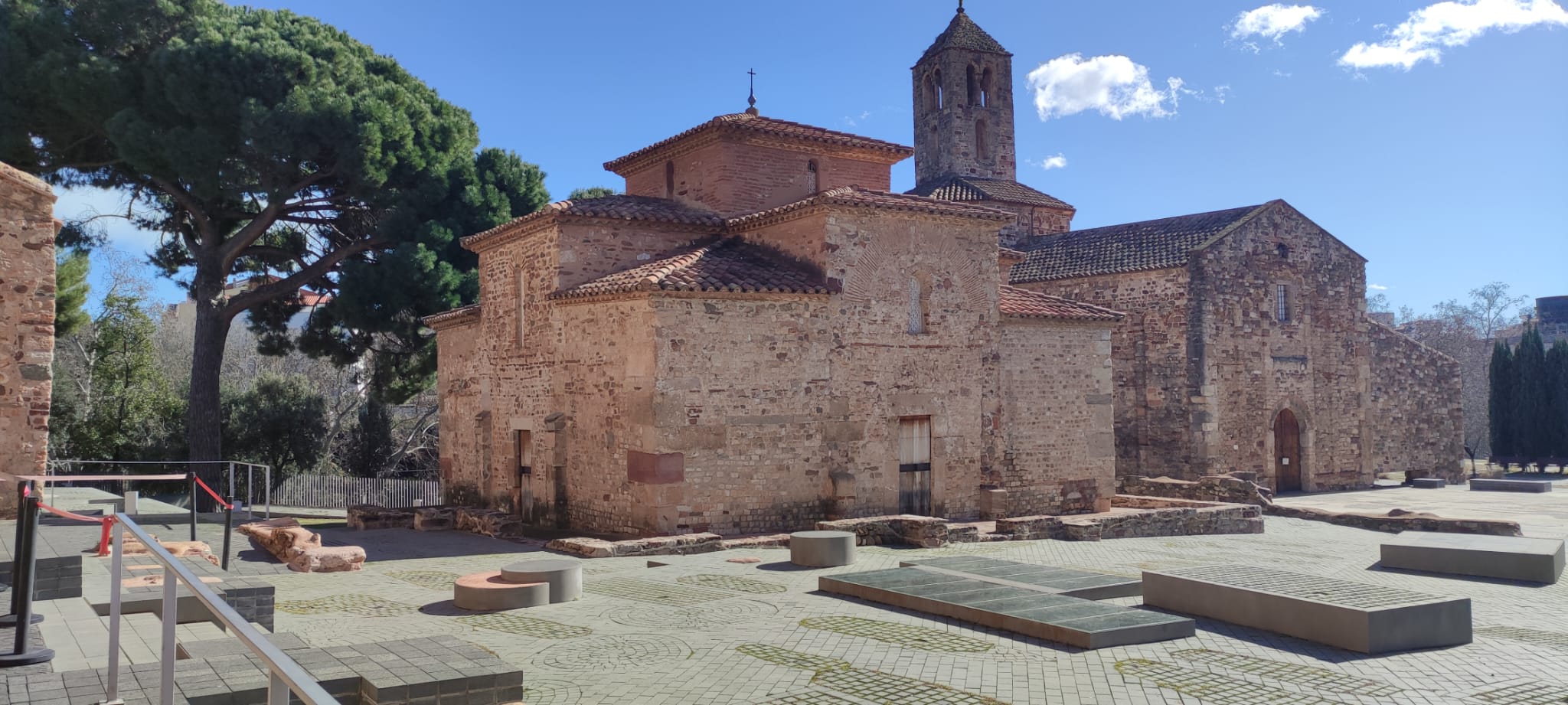
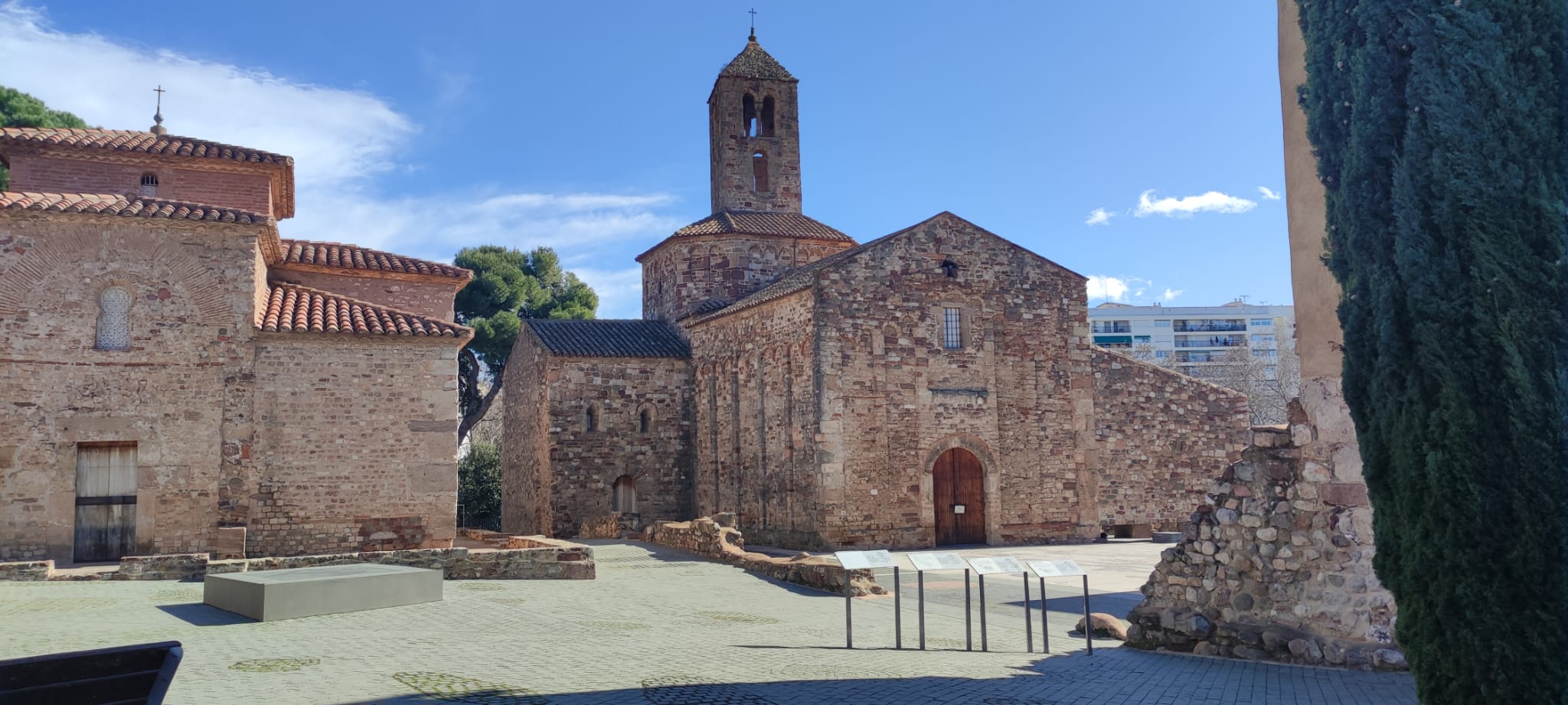
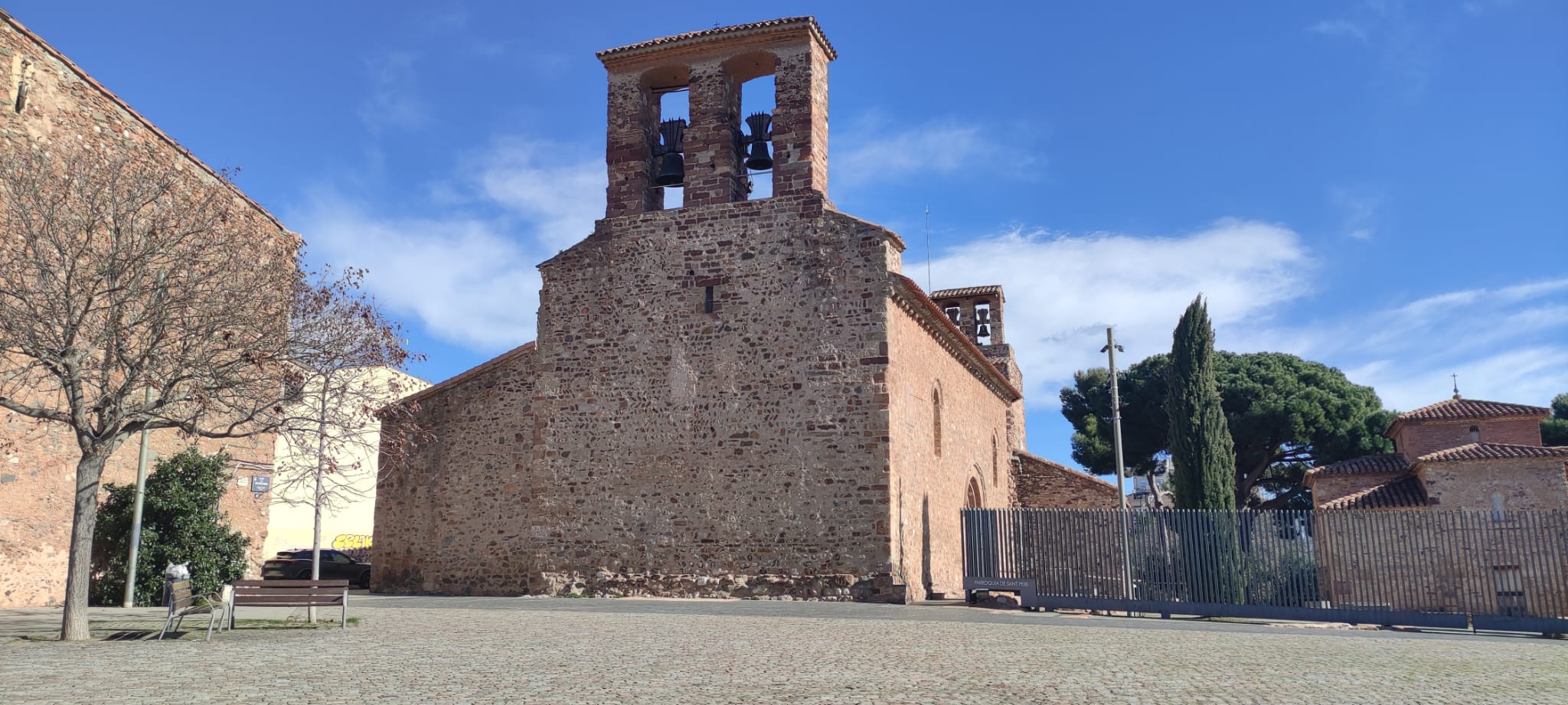
Visigothic art and architecture, despite leaving few surviving remains, constitute an essential foundation of Catalan pre-Romanesque architecture. The few documented buildings, such as those in the Terrassa area ( the churches of Sant Pere, Santa Maria, and Sant Miquel ), reveal a style influenced by Christian Rome, with elements such as horseshoe arches, rectangular apses, and the integration of liturgical elements.
This heritage is fragile but of great value. It represents the continuity between the ancient and medieval worlds, and is essential for understanding how the religious and political landscape of early medieval Catalonia was shaped.
A little-known but fundamental legacy
Unfortunately, pre-Romanesque architecture lacks the widespread recognition of Romanesque art and the prestige of later styles. However, it is a key period for understanding the origins of medieval Catalonia. It represents the expression of a territory beginning to structure itself, consolidate Christianity, and forge its own identity through art and sacred spaces.
Understanding and preserving this legacy is also about recognizing our deepest roots. A journey into the soul of a Catalonia that was beginning to write the first pages of a thousand-year-old history.
Image of San Quirze de Pedret – Author: Aniol (Wikimedia Commons) – CC BY-SA 4.0
Published by Oriol Rosselló Gil on 10 of february of 2026 at 08:00h
Events
Forest week in Sant Celoni
16 OctoberAmateur Theatre Showcase in Sant Gregori
16 OctoberEuropean Heritage Days in Collbató
16 OctoberRACC Costa Dorada Rally in Salou
From 16 to 17 OctoberZim Zam Cassà - Cassà de la Selva Urban Art Festival
From 16 to 17 OctoberEmbarrats Fair in Sant Joan de Vilatorrada
From 16 to 18 OctoberFish and Rice Gastronomic Days
From 9 to 18 October
Experiences







 Sustainable turism
 Biosphere