


Baroque Architecture in Catalonia: Emotion, Movement and Grandeur
Following the balance and restraint of the Renaissance, Catalan architecture entered a new era marked by intensity. The Baroque burst onto the scene as a style that sought to move, impress, and surprise. It was no longer simply about organizing space, but about bringing it to life, transforming it into an experience.
Between the 17th and 18th centuries, Catalonia experienced a complex period marked by political tensions, social transformations, and a strong religious influence. In this context, Baroque architecture became a powerful tool of communication: an architecture that speaks, that moves, and that seeks to captivate the senses.
When architecture becomes spectacle
The Baroque style broke with the serenity of the Renaissance, embracing more dynamic and expressive forms. Straight lines gave way to curves, plays of volume, and compositions that created movement. Facades were adorned with reliefs, ornamentation, and contrasts of light and shadow that added depth.
This style is not accidental. It responds to a clear intention: to move the viewer. Architecture becomes a stage set, especially in the religious sphere, where spaces are designed to reinforce the spiritual experience. Entering a Baroque building is like entering a visual narrative, in which every detail has a symbolic function.
In Catalonia, this theatricality is often expressed with a certain restraint, but it doesn't lose its power. It's an adapted Baroque style, combining expressiveness with materials and techniques specific to the region.
.jpg)
Josep Bracons (via Wikimedia Commons) · CC BY-SA
Churches and spirituality: the heart of the Baroque
Catalan Baroque finds its greatest expression in religious architecture. Churches are transformed into spaces designed to impact the senses, convey emotion, and reinforce the Church's message within the context of the Counter-Reformation.
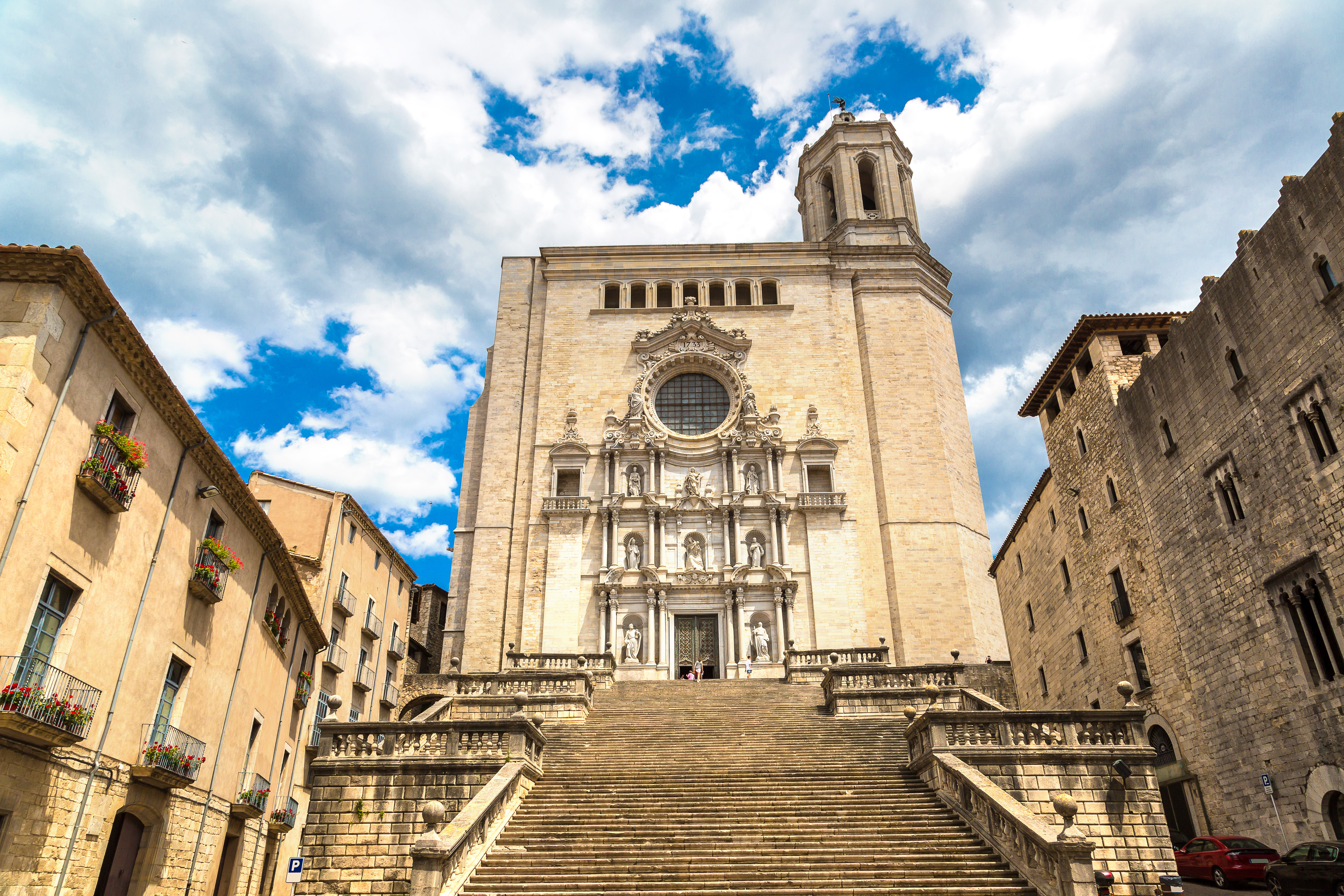
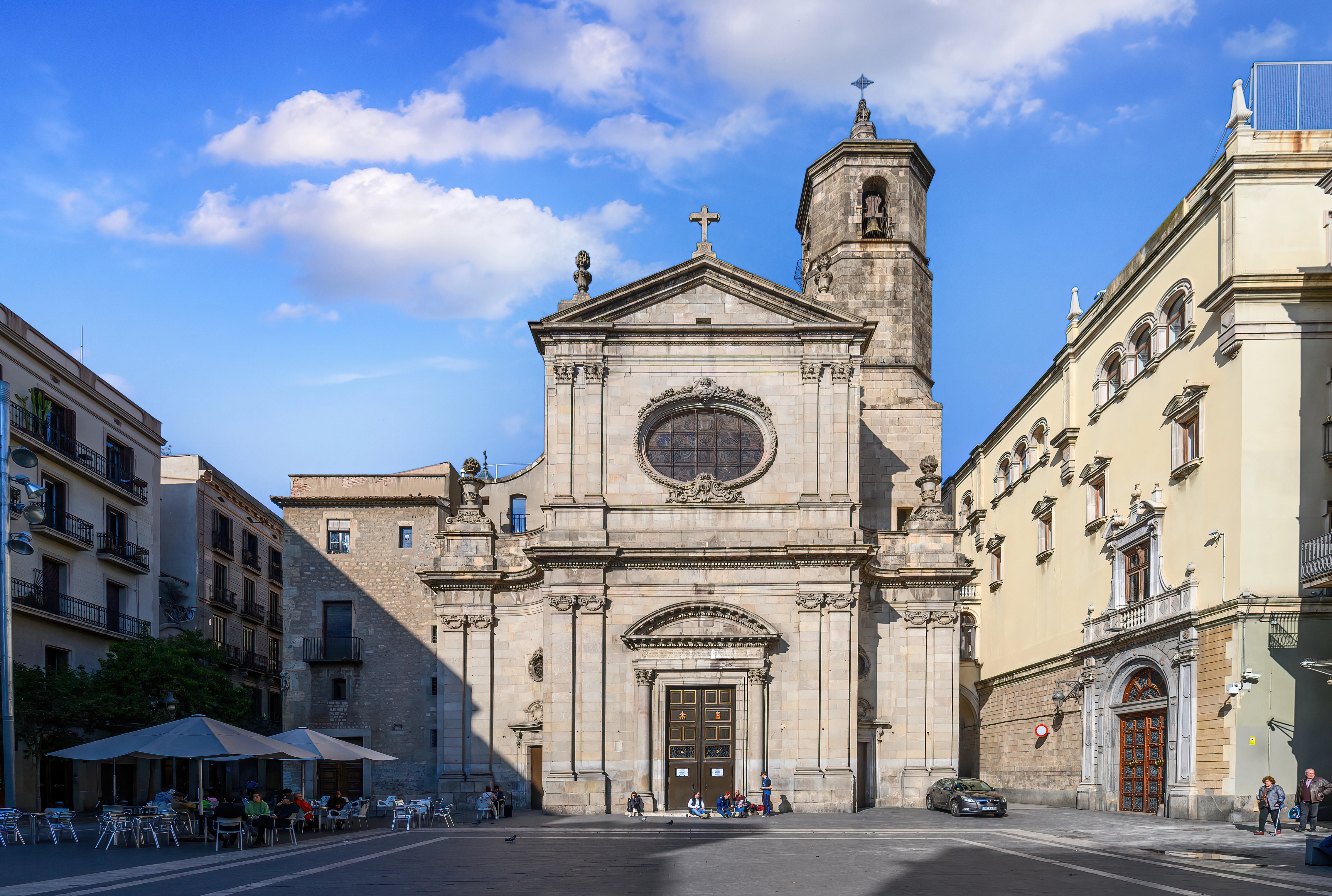
One of the most striking examples is the Baroque façade of Girona Cathedral, with its monumental staircase, which creates an imposing and dramatic urban space. In Barcelona, the Basilica of La Mercè is another outstanding example, with a façade rich in detail and an interior that plays with light and volume to generate an intense atmosphere.
However, in many cases, Catalan Baroque is most strongly expressed in interiors: spectacular altarpieces, gilded decorations, paintings, and sculptures that fill the space and create a sense of abundance and movement. This interior theatricality is often more characteristic of the style in the region than the grand exterior facades.
A style that transforms cities
Despite its strong religious component, the Baroque also left a notable mark on the urban landscape. Although it did not generate large-scale, radical urban plans, it did bring dynamism and presence to squares, streets, and institutional buildings.
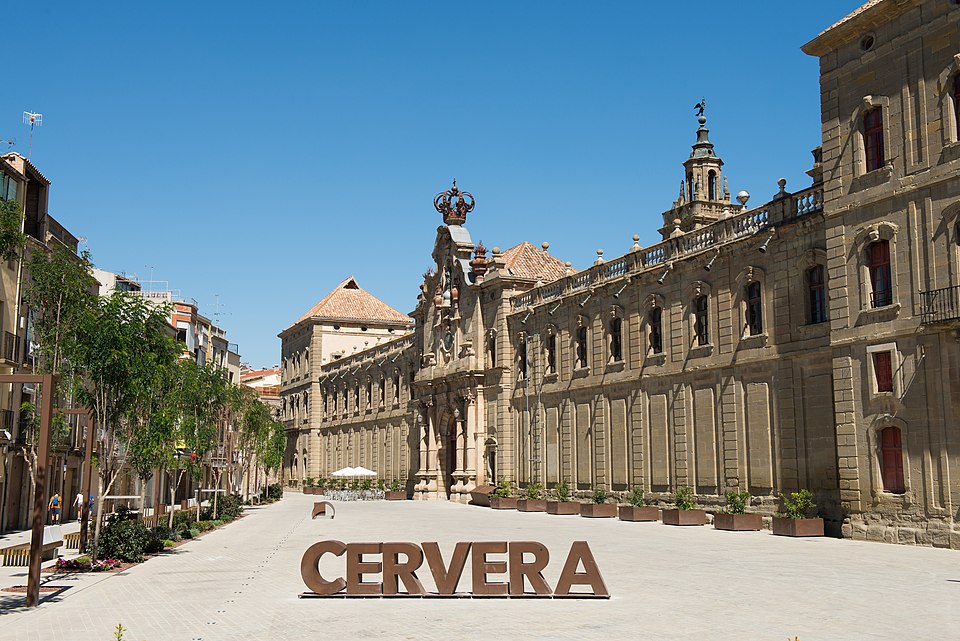
Catalan cities became stages where architecture took on a more communicative and visual role. Façades were more elaborately ornamented, monumental portals appeared, along with ornate balconies and compositions that engaged with the public space. Among the most outstanding examples are the University of Cervera, with its solemn and imposing façade, and the Casa de Convalescència in Barcelona, which demonstrate how the style also extended to civil architecture.
This transformation is generally more restrained and less systematic than in other European regions. In Catalonia, urban Baroque adapts to the existing fabric, often integrating into earlier structures and respecting a certain scale characteristic of the territory. However, these details contribute to enriching the urban landscape and creating a more expressive and theatrical city.
Catalan Baroque: Between Expressiveness and Restraint
Unlike other European regions, where the Baroque style becomes exuberant and almost overflowing, in Catalonia it maintains a certain restraint. This does not mean it is less striking, but rather that it knows how to combine ornamentation and balance.
The materials, construction techniques, and economic context give Catalan Baroque its own distinct identity. It is a style that not only seeks to impress, but also to adapt, integrate, and engage in dialogue with what already exists.
This balance is, in fact, one of its greatest virtues. It allows us to understand the Baroque not as a complete break, but as an evolution that brings emotion to an architecture that until then had been more restrained.
Magí by Cal Belluga (via Wikimedia Commons) · CC BY-SA
A legacy that still inspires
Today, Baroque architecture continues to captivate visitors and residents alike. It may not always be as obvious as other, more monumental styles, but it reveals itself in unexpected details, intricately crafted facades, and interiors that surprise when you least expect it.
Exploring Catalonia with a discerning eye allows you to discover this legacy in churches, streets, and spaces that still retain that desire to surprise and move you. The Baroque invites us to look more intently, to let ourselves be carried away by the form, the light, the movement, and the detail, and to connect emotionally with the history of the region.
It's a style that reminds us that architecture not only builds physical spaces, but also creates memorable experiences. And that, sometimes, the best way to understand a place and its identity is simply to let yourself be moved by it.
Published by Oriol Rosselló Gil on 12 of may of 2026 at 10:19h
Events
Forest week in Sant Celoni
16 OctoberAmateur Theatre Showcase in Sant Gregori
16 OctoberEuropean Heritage Days in Collbató
16 OctoberRACC Costa Dorada Rally in Salou
From 16 to 17 OctoberZim Zam Cassà - Cassà de la Selva Urban Art Festival
From 16 to 17 OctoberEmbarrats Fair in Sant Joan de Vilatorrada
From 16 to 18 OctoberFish and Rice Gastronomic Days
From 9 to 18 October
Experiences







 Sustainable turism
 Biosphere