


Verdú Ceramic Mural Route
Organized by: Verdú
Since ancient times, Verdú has been an important center of pottery production.
From Roman times, three kilns have been located that were used to bake roof tiles, soft tiles, building materials and everyday items.
The first documented reference to a potter in Verdú dates from 1492 and mentions Antoni Guasch. However, remains of kilns have been found within the first walled enclosure, corresponding to earlier periods. From that time onwards, pottery workshops began to proliferate in the town.
During the 15th century, Verdú experienced a period of growth, especially thanks to the fairs and markets promoted under the rule of the Poblet monastery.
Ceramicists - Verdú Ceramic Mural Route
The ceramic artisans of Verdú have left an exceptional legacy, keeping alive a tradition that combines functionality, beauty and local identity.
Currently, the ceramists of Verdú continue to create and innovate, merging traditional techniques with contemporary design proposals.
Their wares include both decorative and utilitarian objects, renowned for their quality and aesthetic value. Besides traditional water jugs, today one can also find sculptures, murals, and other ornamental elements that showcase the evolution of ceramic art in Verdú.
Visitors can discover active workshops and observe up close how master craftsmen transform clay into authentic works of art.
It is a free route that will allow you to discover about thirty ceramic murals, tile panels and relief panels spread throughout the streets and squares of the town, through which you can rediscover our centuries-old ceramic tradition.
It's a free route, perfect for enjoying with children!

Nearby routes
Cistercian Route: gastronomy in Vallbona de les Monges
Agramunt, Guimerà, Llorac, Maldà, Tàrrega, Vallbona de les Monges, Verdú, Vilagrassa
On this route we suggest you visit the Monastery of Santa María de Vallbona de las Monjas, a female monastery that is included in the Cistercian Route. We will also make interesting proposals to get to know some of the most charming…
Urgell Canal pedal route
Arbeca, Balaguer, Castellserà, Juneda, Les Borges Blanques, Linyola, Mollerussa, Penelles, Preixana, Tàrrega, Torregrossa, Vila-sana, Vilanova de Bellpuig
Discover Lleida's plans by pedaling through the Urgell Canal, the most important hydraulic infrastructure work in the history of Catalonia, which changed the appearance of the landscape, the way of life of the people, promoting the development…
Culture and legends of Ponent in the heart of Catalonia by electric car
Calaf, Cervera, Manresa, Mollerussa, Tàrrega
This route is designed to be done by electric vehicle, although it can be done with any other car. Along the route we will suggest municipalities that have charging points and places of interest to visit while we charge batteries. Electric…
Electric car route through the Lands of Lleida: 6 charming stops
Alcarràs, Cervera, Lleida, Mollerussa, Tàrrega, Torrefarrera
This route is designed to be done by electric vehicle, although it can be done with any other car. Along the route we will suggest municipalities that have charging points and places of interest to visit while we charge batteries. Electric…
Sanctuary of Santa Maria de la Bovera
Guimerà
Building monasteries and shrines is no stranger in a land like Catalan. It is true that these constructions are present throughout the country, but we must recognize that in the area of confluence of the province of Lleida and Tarragona there…
Grand Tour de Catalunya - Section 2. Meeting history: from Tarragona to Lleida
Bot, Cambrils, Capafonts, Cornudella de Montsant, Deltebre, El Perelló, El Pinell de Brai, Falset, Gandesa, Guimerà, L'Ametlla de Mar, L'Espluga de Francolí, La Sénia, Les Borges Blanques, Lleida, Miravet, Montblanc, Salou, Tarragona, Tortosa, Ulldecona, Vallbona de les Monges
I want to do this route by electric vehicle! This route is designed to be done by electric vehicle, although it can be done with any other car. Along the route we will suggest municipalities that have charging points and places of interest…
Route of the Cercavins River
Montoliu de Segarra, Montornès de Segarra
The river Cercavins is born on the coasts of the Sierra de Suró (790 m) and runs through the terms of Montoliu de Segarra and Montornès de Segarra, through which this route runs. It is a fairly flat territory in which forest areas…
Route of the Plans
Montoliu de Segarra, Montornès de Segarra
The route leaves from Montornès de Segarra and circulates through the various plains that border the valley of the Cercavins between north and south, passing through the municipality of Montoliu de Segarra and returning through the shady…
Route of the Castles of Sió
Cervera, Els Plans de Sió, Montornès de Segarra, Ossó de Sió, Tordera
The Route of the Castles of the Sió runs basically by a flat zone furrowed by the river Sió. It is an MTB itinerary of low difficulty, with a route of almost 42 km. The point of departure and arrival is Cervera. Along the way…
Route of the Cercavins
Montoliu de Segarra, Montornès de Segarra
The Ruta del Cercavins is a path of just over 13 km, with departure and arrival point in Montornès de Segarra and runs through the terms of Montoliu and Montornès. It is a fairly flat territory where forest areas alternate with…
Events
Catalonia Industrial Tourism Week 2026
From 16 to 25 OctoberGuided tours of the old town of Verdú
17 OctoberAntiques and Arts Market of Tàrrega
17 OctoberPresent and future of the peasantry in Catalonia under debate, Castell de Concabella
17 OctoberLes Garrigues Amateur Comic Theatre Showcase
From 17 to 18 OctoberMemefest - Western Humor Festival in Tàrrega
From 19 to 24 October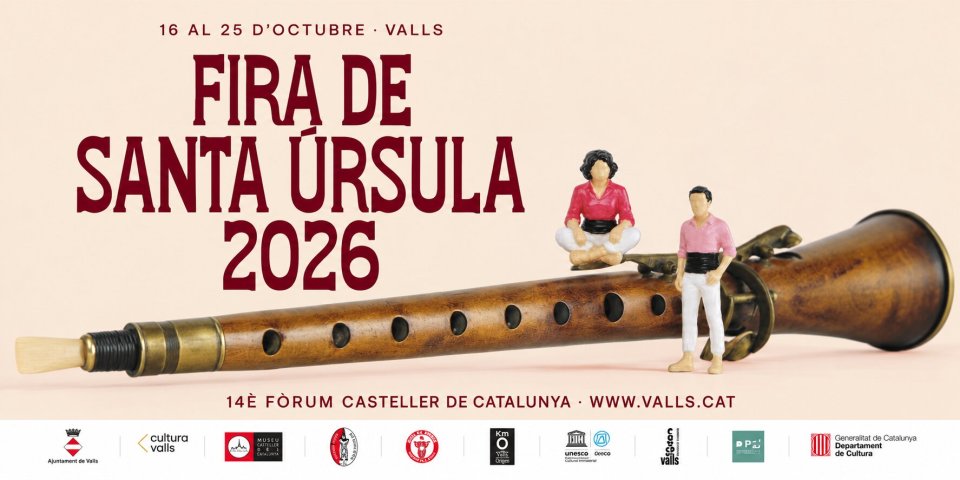
News








 Sustainable turism
 Biosphere