


The rice harvest in Catalonia: when harvest time arrives
As summer ends and the days begin to shorten, the rice paddies of Catalonia experience one of the most anticipated moments of the year: the rice harvest. The fields, which months before were an immense mirror of water, are transformed into golden expanses that herald the harvest. It is a changing, vibrant landscape, deeply linked to the identity of territories like the Ebro Delta and Pals, two of the country's major rice-growing regions.
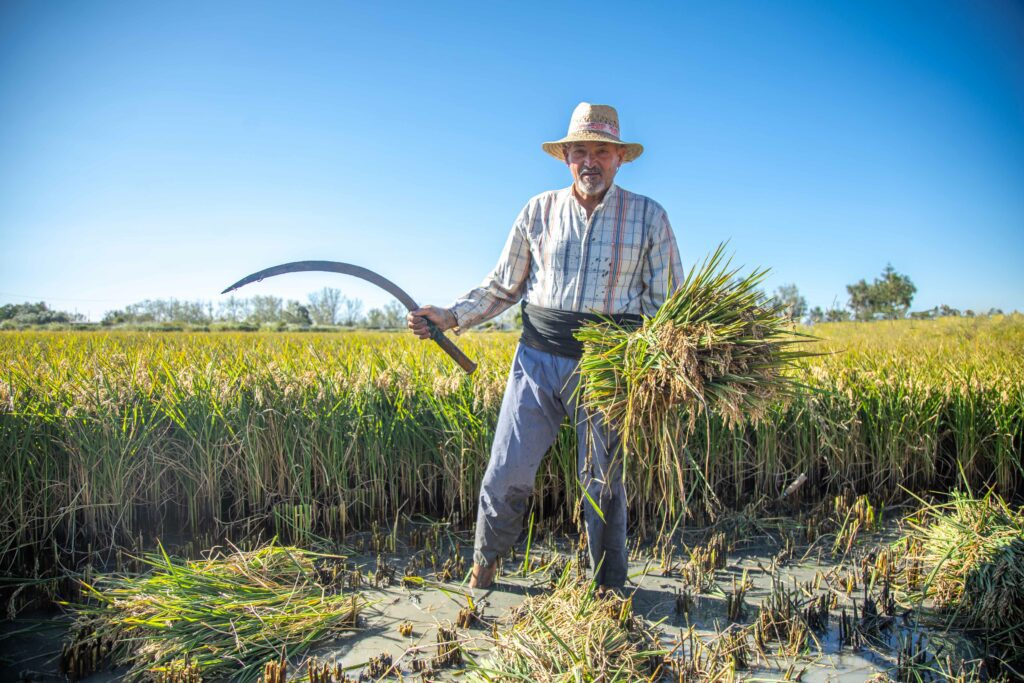
Harvesting is much more than just farming: it's the culmination of a cycle that begins with sowing, continues with the growth of the grain, and ends with the harvest. In the past, this task was done by hand, with a sickle, effort, and many hours of work under the sun. Today, machines have replaced much of that arduous labor, but several towns keep the memory of the old harvesters alive through local festivals that combine heritage, gastronomy, and landscape.
A tradition that explains the territory
Rice cultivation is inextricably linked to the Ebro Delta. This area, formed by the river in its final stretch before reaching the Mediterranean, is one of Catalonia's most unique agricultural and natural landscapes. The Protected Designation of Origin (PDO) "Arroz del Delta del Ebro" (Ebro Delta Rice) encompasses production areas in municipalities such as Deltebre, Sant Jaume d'Enveja, l'Aldea, Amposta, Camarles, l'Ampolla, and Sant Carles de la Ràpita, and recognizes a product deeply connected to the delta's unique conditions.
But rice is not just about economics and gastronomy. It's also about popular culture. Harvest festivals recall how rice fields were worked in the past: the harvesters entered the fields, cut the plants with sickles, formed sheaves, carried them to the threshing floor, and then came the time to thresh, winnow, and bag the grain. Each step had a technique, a rhythm, and a wisdom passed down from generation to generation.
Attending a harvest festival today is to witness this tradition come alive once more. Visitors can observe demonstrations of traditional harvesting techniques, listen to explanations from farmers, sample rice dishes, and understand that behind a simple grain lies a landscape, a history, and a way of life.
Harvest Festivals in the Ebro Delta
In the Ebro Delta, the rice harvest is a collective event. Several municipalities celebrate their own harvest festivals between September and early October, often accompanied by local produce markets, music, family activities, and gastronomic events.
One of the most emblematic events is the Harvest Festival of Sant Jaume d'Enveja, where the last heartbeats of summer are revived among rice fields, traditional demonstrations and an atmosphere deeply rooted in the territory.
The festive route continues through other municipalities in the delta, such as La Ràpita, l'Ampolla, Camarles, l'Aldea, and Amposta. In many of these towns, the harvest becomes a gateway to the local gastronomy: seafood rice dishes, duck with rice, paellas, suquets (fish stews), and recipes that explain the relationship between the river, the sea, and the land. According to the Ebro Delta Rice PDO Harvest Route, the calendar includes celebrations in Sant Jaume d'Enveja, Deltebre, La Ràpita, l'Ampolla, Camarles, l'Aldea, and Amposta.
These festivities have great value because they not only showcase an ancient tradition, but also highlight the role of farmers and the need to preserve a fragile landscape, rich in biodiversity and essential to the identity of the Terres de l'Ebre.
Pals and the traditional rice harvest
The other major rice-growing region in Catalonia is Pals, in the Baix Empordà. Here, rice has been part of the landscape and local history for centuries. The rice paddies of Basses d'en Coll, located next to the Montgrí Natural Park, the Medes Islands, and the Baix Ter River, offer ideal growing conditions: flooded fields, warm water, and a privileged natural environment.
The traditional rice harvest in Pals is one of the town's most emblematic celebrations. It showcases how the harvest was carried out in the past and is usually accompanied by local activities and a communal rice meal, transforming the day into a celebration of culinary culture. Pals also promotes initiatives such as the Rice Route, a tourist train tour that allows visitors to learn about the cultivation process, from planting to harvest, with a stop at the Pals Mill.
Furthermore, the municipality has revived the Pals Rice Fair, a cultural and gastronomic event that showcases its star product through tastings, workshops, product sales, and activities for all ages. It's a great opportunity to discover that Pals rice is not just a cooking ingredient, but a true symbol of the region.
Gastronomy, landscapes and experiences to enjoy at a relaxed pace
The best way to experience the rice harvest is to take your time. In the Ebro Delta, it's worth combining the festivities with a visit to the viewpoints, lagoons, unspoiled beaches, and natural areas where flamingos, migratory birds, and rice fields coexist. In Pals, the experience can be enhanced with a stroll through the medieval town center, a walk through the rice paddies, and a delicious meal prepared with locally grown rice.
These festivities are ideal for families, food lovers, photography enthusiasts, and travelers seeking authentic traditions. The harvest has a special beauty because it takes place at a very specific time of year, when the fields change color, the grain is ripe, and the landscape seems to bid farewell to summer with golden hues.
In an age where we often travel in haste, the rice harvest reminds us of the value of natural cycles and the labor that has shaped the land. Each sheaf, each grain, and each plate of rice tells a story of agriculture, water, effort, and celebration. That's why experiencing a harvest festival in Catalonia is much more than attending an agricultural demonstration: it's entering, for a few hours, into the heart of a landscape that continues to beat to the rhythm of the earth.
Published by Youssef Haouriqui on 5 of october of 2026 at 12:08h

Events
Amateur Theatre Showcase in Sant Gregori
16 OctoberEuropean Heritage Days in Collbató
16 OctoberAlfaro Year in Sant Andreu de Llavaneres
16 OctoberRACC Costa Dorada Rally in Salou
From 16 to 17 OctoberZim Zam Cassà - Cassà de la Selva Urban Art Festival
From 16 to 17 OctoberModernist Conferences in la Garriga
From 16 to 18 OctoberTortosa artery
From 15 to 18 October
Experiences







 Sustainable turism
 Biosphere