


The legend of the Devil's Bridge (Tarragona)
There are monuments that bear witness to ancient civilizations; others that captivate with their shape and size; but only a few manage to capture the soul of a place and connect with the collective imagination. The Devil's Bridge in Tarragona is a prime example of this phenomenon, a monumental feat of engineering with a legend that has endured for centuries.
A vital need: water for Tarraco
It is the 1st century AD, and Emperor Augustus is consolidating Roman influence in the western Mediterranean. Tarraco, present-day Tarragona, is one of the most important cities in Roman Hispania, but it has a problem: it needs a constant and abundant water source for its population, baths, fountains, and temples. To solve this, one of the most ambitious aqueduct systems in the region is planned, which will bring water from the Francolí River to the city.
An essential part of this system is a huge stone structure with two levels of arches that spanned a natural ravine, the Ferreres Aqueduct, popularly known as the Devil's Bridge because of the legend surrounding its construction.
When the impossible seems inevitable
Construction of the aqueduct progressed step by step, but the sheer scale of the project, the technical complexity, and the rugged terrain led many to doubt whether those arches could withstand the test of time. According to oral tradition, one of the architects, frustrated by the difficulties, exclaimed that only a demonic force could build a bridge that would last a thousand years.
And it was precisely at that moment that —so the legend says—Satan appeared before him. The demon, surprised by the human lack of faith, made him an irresistible promise: "I will build you that bridge at night, but I will take the soul of the first one who drinks the water that passes over it."
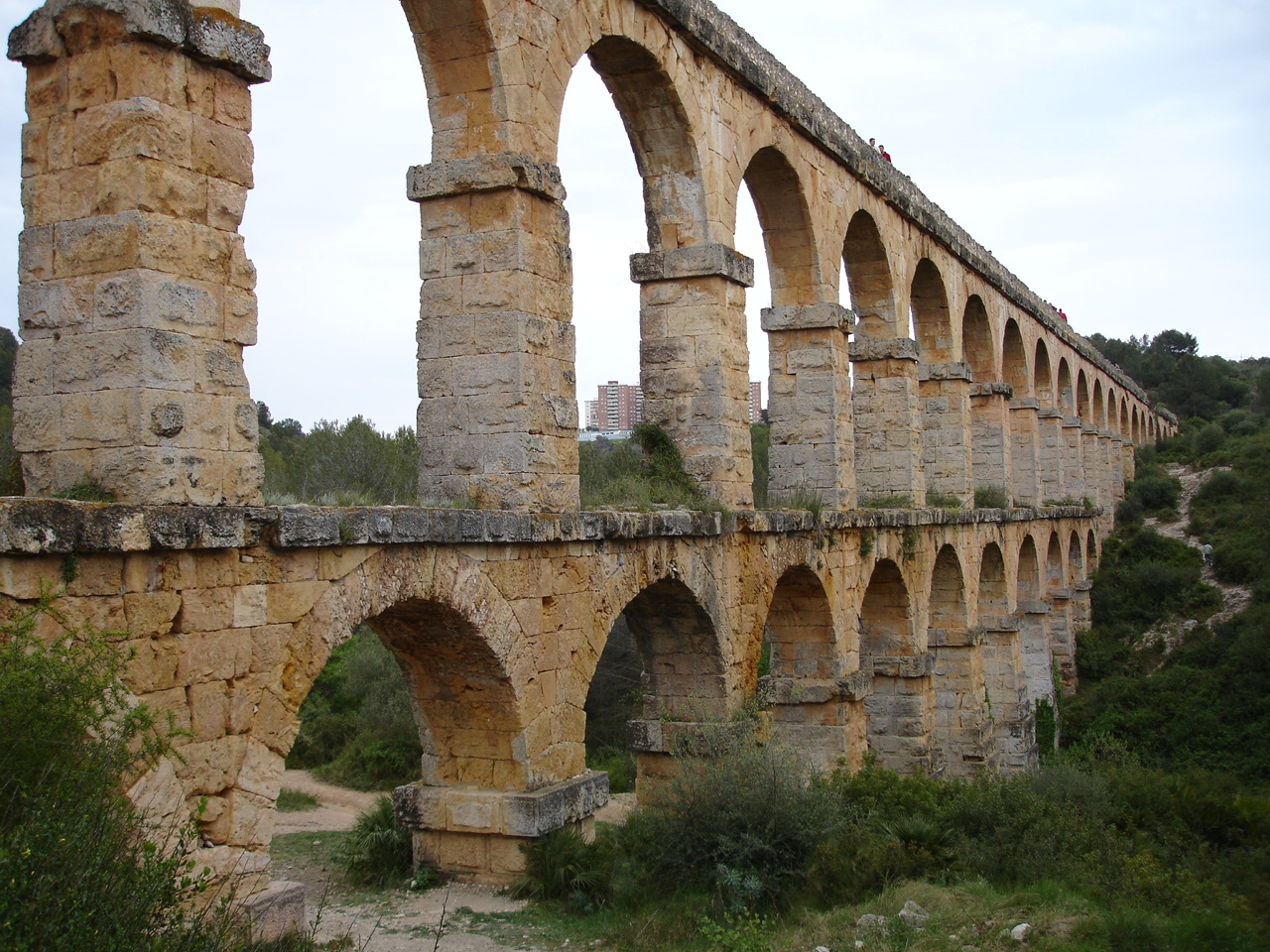
That very night, according to the local tale, the demon fulfilled his part of the bargain. Enormous stone arches rose swiftly, as if magic were stronger than human patience. When they approached the next day to see the finished work, however, the agreed-upon price had to be paid. The villagers, in a display of cunning, decided that a donkey (or a cat, according to some versions) would drink first from the water flowing over the aqueduct, thus tricking the demon and saving a human soul.
The story, with variations, is told in this way, but always with the devil offering help and the people finding a way to avoid human sacrifice.
A bridge between history and legend
The Devil's Bridge is not just a tale of mystery and pacts with hidden forces. Real or not, these stories arose in a context where Roman technology seemed almost supernatural to the people of that time, which explains why many cultures attribute their most spectacular works to dark or divine beings.
Archaeologically, the aqueduct is an impressive piece of Roman ingenuity, with two rows of arches that rise almost 30 meters high and a length that exceeds 200 meters; it was vital to bring water from natural springs to Tarraco.
The legacy of Tarraco lives on.
Today, the Devil's Bridge is part of the Archaeological Ensemble of Tarraco, a UNESCO World Heritage Site, and continues to attract tourists, hikers, scholars, and enthusiasts of ancient legends. Visitors see not only a monumental aqueduct but also a link to the imagination of past generations, where history and legend coexist in a single place.
Like the stones that defy the passage of time, the legend of the Devil's Bridge reminds us that necessity, ingenuity, and mystery often go hand in hand. It is a tale to be experienced and felt as the sun shines through the arches and the water, even today, inspires questions about what is real and what is legend in those ancient Roman stones.
Published by Youssef Haouriqui on 19 of january of 2026 at 10:15h
Events
Forest week in Sant Celoni
16 OctoberAmateur Theatre Showcase in Sant Gregori
16 OctoberEuropean Heritage Days in Collbató
16 OctoberRACC Costa Dorada Rally in Salou
From 16 to 17 OctoberZim Zam Cassà - Cassà de la Selva Urban Art Festival
From 16 to 17 OctoberFira Mediterrània de Manresa 2026
From 15 to 18 OctoberMoaré Terrassa Festival
From 16 to 18 October
Experiences







 Sustainable turism
 Biosphere