


Ou com balla (The Egg as it dances): the magic of a unique Corpus Christi tradition in Catalonia
Every year, with the arrival of Corpus Christi, some of Catalonia's most emblematic corners are transformed into stages for one of the country's most unique and fascinating traditions: the Ou com balla ( Dancing Egg). An egg spinning on a stream of water, seemingly without falling, captivates the gaze of young and old alike and becomes a living symbol of Catalan cultural heritage.
Beyond its simplicity, this tradition hides centuries of history, symbolism and mystery, and offers a unique experience that combines culture, spirituality and beauty.
What exactly is Ou com balla?
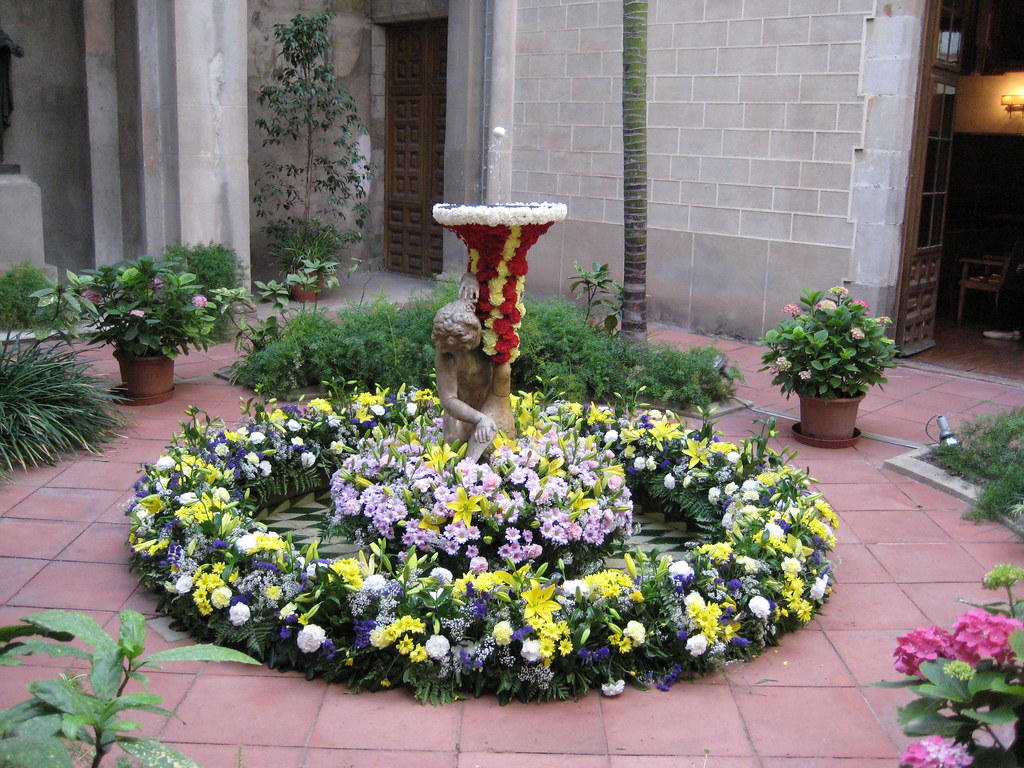
The Ou com balla is a tradition that consists of placing an empty egg over the water jet of a fountain so that it spins and "dances" without falling.
To achieve this, the egg is first emptied and the small hole is sealed with wax, so that it remains stable over the spout. When the water shoots forcefully upwards, it gently rotates the egg, creating a striking and almost hypnotic visual effect.
This phenomenon, as simple as it is ingenious, is complemented by a very careful set design: the fountains are decorated with seasonal flowers and fruits, especially cherries, as well as plant elements such as broom or carnations.
The result is a delicate and ephemeral composition that invites contemplation.
A tradition with more than five centuries of history
Although its exact origin is not entirely clear, it is known that the Ou com balla (dancing egg) is a very old tradition. The first documented references date back to Barcelona, where fountains were already being decorated for the Corpus Christi festival in the 15th century.
Specifically, there is evidence of the purchase of eggs for this celebration in 1636 in the cloister of the Barcelona cathedral, which confirms that the tradition was already established at that time.
Some sources, however, suggest that it could be even older, with possible antecedents around the year 1440. Over time, the tradition spread from Barcelona Cathedral to other courtyards and cloisters in the city, and later to various towns in Catalonia.
Today, it is one of the most characteristic expressions of the Catalan Corpus.
Origin and symbolism: an open mystery
One of the most fascinating aspects of Ou com balla is that its meaning is not entirely clear. Over the years, historians and folklorists have proposed various interpretations.
One of the best-known interpretations is the religious one: the egg symbolizes the consecrated host, while the water in the fountain represents the chalice. The cherries and other red fruits evoke the blood of Christ, in a clear allusion to the feast of Corpus Christi.
But there are also older, more symbolic interpretations. The egg is universally considered a symbol of life, fertility, and rebirth, while water is an essential element associated with purification and creation.
Some theories even point to possible influences from water games of Muslim origin or medieval courtly entertainments.
Whatever its true origin, what is indisputable is that the tradition has accumulated meanings over time, becoming a rich and multifaceted symbol.
Where can I see it today?
Although the Ou com balla can be found in various parts of Catalonia, its epicenter remains Barcelona. The one that can be seen in the cathedral cloister is particularly emblematic, considered the most traditional and visited.
On Corpus Christi Day, numerous historic buildings in the city open their courtyards to the public to showcase this tradition. Spaces such as the Casa de l'Ardiaca, the Frederic Marès Museum, and the Ateneo Barcelonés become stages for this ephemeral spectacle.
Besides Barcelona, the tradition has also spread to other municipalities such as Tarragona, Sitges, Igualada or Manresa, among others.
This allows you to discover the Ou com balla in different contexts, often in heritage environments of great beauty.
Corpus Christi: the framework of tradition
The Ou com balla cannot be understood without Corpus Christi, the religious festival with which it is closely linked. This celebration, which takes place about 60 days after Easter, has historically been one of the most important on the festive calendar.
For centuries, Corpus Christi was a major festival in many Catalan cities, with processions, floral decorations and multiple popular demonstrations.
In this context, the Ou com balla becomes another expression of this cultural richness, combining religious solemnity with a playful and aesthetic component.
A unique symbol of Catalonia
The Ou com balla is undoubtedly one of Catalonia's most unique traditions. In fact, it is considered practically unique in the world, making it a distinctive element of Catalan cultural heritage.
Its combination of simplicity, beauty, and mystery makes it especially attractive to both visitors and the inhabitants of the country.
If you have the chance to experience it live, don't miss it. Because, as with many traditions, it's not just about seeing it, but about feeling it.
Published by Youssef Haouriqui on 2 of june of 2026 at 09:18h
Events
Amateur Theatre Showcase in Sant Gregori
16 OctoberEuropean Heritage Days in Collbató
16 OctoberAlfaro Year in Sant Andreu de Llavaneres
16 OctoberRACC Costa Dorada Rally in Salou
From 16 to 17 OctoberZim Zam Cassà - Cassà de la Selva Urban Art Festival
From 16 to 17 OctoberXavier Miserachs Photography Biennial in Palafrugell
From 2 August to 18 OctoberSitges - International Fantastic Film Festival of Catalonia
From 8 to 18 October
Experiences







 Sustainable turism
 Biosphere