


Oli Raig d'Arbeca
Municipalities
Raig d'Arbeca is a family business with a long tradition in the production and marketing of top-quality olive oil. It has a specialized store, known as an oleoteca, where customers can find a wide range of products made with our extra virgin olive oil, sourced exclusively from our Arbequina olive farms located in the heart of Les Garrigues. This region is famous for its olive groves and for producing an oil with a savory, distinctive green olive flavor that delights the most discerning palates.
Oleotourism and physical store
Raig d'Arbeca has a physical store (oleoteca) at 2 Arquitecto Gaudí Street, where visitors can purchase their products and enjoy a tasting area. They also offer tours of the mill located at Camino Pedruell S/N, where you can learn firsthand about the oil production process and the company's philosophy.
Varieties of extra virgin olive oil
Rayo de Arbeca offers several varieties of extra virgin olive oil, all made with Arbequina olives. They also offer a balsamic vinegar made with Cabernet Sauvignon wine aged in oak barrels for 12 months, and a range of cosmetics and hygiene products made with organic extra virgin olive oil.
Furthermore, in our quest to offer our customers the finest gourmet products, we import delicatessen products from the "La Chinata" brand. This brand is recognized for making its products with a key ingredient: organic extra virgin olive oil, which guarantees superior quality and an authentic, natural flavor.
The Mill: tradition and technology
The Raig d'Arbeca mill combines artisanal tradition with modern technology to create the highest quality extra virgin olive oil. Located near the fields and the village, they work with care and respect for the olives, treating them as a natural treasure. The mill has the CCPAE Organic Certification, guaranteeing that the production system is ecological and that the quality of the oil is maintained at all times.
Our facilities go beyond just a point of sale. We have spacious spaces that are perfect for celebrations or events of all kinds. Whether it's for private parties, corporate meetings, or any other type of event, our spaces offer a welcoming and elegant setting where you can enjoy unique experiences surrounded by our excellent culinary offerings.
We look forward to seeing you! At Raig d'Arbeca, every visit is an opportunity to discover the best flavors of our land and enjoy attentive, personalized service.

Nearby routes
The oil route, from field to table
Arbeca, Castelldans, La Pobla de Cérvoles, Les Borges Blanques
This month we recommend you femTurisme oil route as it is during the month of November, around day 25, which is when we celebrate Santa Caterina, which begins harvesting the olives, which can last until the end of January. In fact, as we would…
Urgell Canal pedal route
Arbeca, Balaguer, Castellserà, Juneda, Les Borges Blanques, Linyola, Mollerussa, Penelles, Preixana, Tàrrega, Torregrossa, Vila-sana, Vilanova de Bellpuig
Discover Lleida's plans by pedaling through the Urgell Canal, the most important hydraulic infrastructure work in the history of Catalonia, which changed the appearance of the landscape, the way of life of the people, promoting the development…
Grand Tour de Catalunya - Section 2. Meeting history: from Tarragona to Lleida
Bot, Cambrils, Capafonts, Cornudella de Montsant, Deltebre, El Perelló, El Pinell de Brai, Falset, Gandesa, Guimerà, L'Ametlla de Mar, L'Espluga de Francolí, La Sénia, Les Borges Blanques, Lleida, Miravet, Montblanc, Salou, Tarragona, Tortosa, Ulldecona, Vallbona de les Monges
I want to do this route by electric vehicle! This route is designed to be done by electric vehicle, although it can be done with any other car. Along the route we will suggest municipalities that have charging points and places of interest…
Route of the cabins back
Castelldans, El Vilosell, L'Albi, Les Borges Blanques, Vinaixa
Les Garrigues is a region with an abundant heritage of dry stone constructions, among which the vaulted cabin stands out, its most emblematic construction. In an inventory compiled by Josep Preixens, there are cataloged more than a thousand…
Cistercian Route: gastronomy in Vallbona de les Monges
Agramunt, Guimerà, Llorac, Maldà, Tàrrega, Vallbona de les Monges, Verdú, Vilagrassa
On this route we suggest you visit the Monastery of Santa María de Vallbona de las Monjas, a female monastery that is included in the Cistercian Route. We will also make interesting proposals to get to know some of the most charming…
Culture and legends of Ponent in the heart of Catalonia by electric car
Calaf, Cervera, Manresa, Mollerussa, Tàrrega
This route is designed to be done by electric vehicle, although it can be done with any other car. Along the route we will suggest municipalities that have charging points and places of interest to visit while we charge batteries. Electric…
Events
Firauto Balaguer
From 16 to 18 OctoberCatalonia Industrial Tourism Week 2026
From 16 to 25 OctoberGuided tours of the old town of Verdú
17 OctoberAntiques and Arts Market of Tàrrega
17 OctoberBalaguer Theatre's Autumn Cycle
17 OctoberLes Garrigues Amateur Comic Theatre Showcase
From 17 to 18 OctoberJazzTardor Lleida
18 October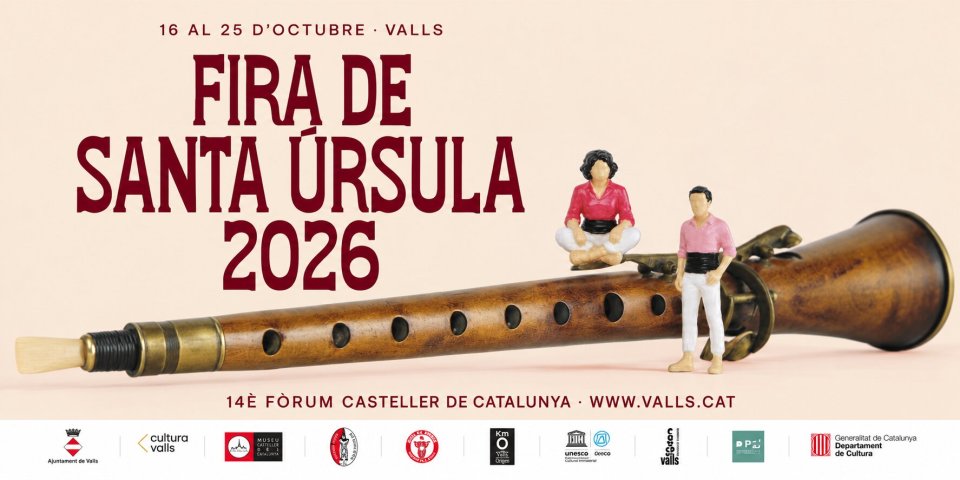
News
Gothic Architecture: The light and height of medieval Catalonia
Gothic architecture marks a turning point in the history of Catalonia. It was the style that transformed cities, places of worship, and the way people built collectively. A style that changed not only the stone itself, but also the way people…
Iron architecture: the light and steam of industrial Catalonia
In the 19th century, the Industrial Revolution not only changed the way people worked and lived, but also profoundly transformed architecture. The arrival of new materials, such as cast iron, wrought iron, and glass, opened up possibilities…








 Sustainable turism
 Biosphere