


Novecentista Architecture: From Detail to Balance
After the creative explosion of Modernism, Catalonia began to look in another direction. If Modernism had transformed buildings into works full of fantasy, organic forms, and decorative exuberance, Noucentisme opted for a different idea: order, serenity, and balance.
At the beginning of the 20th century, in a context of political, cultural, and social transformation, this movement championed a new way of understanding art, cities, and the country. Inspired by classical values and a profoundly Mediterranean perspective, Noucentisme sought to build a modern, but also cultured, civic-minded, and harmonious Catalonia.
Its architecture perfectly reflects this intention. Less extravagant than modernism, but equally elegant, it favors functional, luminous, and orderly buildings, designed to last and to integrate naturally into the urban space.
A response to modernism
Noucentisme emerged as a clear counterpoint to Modernism. Many intellectuals, artists, and thinkers of the time considered the previous style to have become overly ornamental and emotional, too focused on decorative excess and creative individualism. At a time when Catalonia sought to project a more orderly and institutional image of modernity, the need arose to recover a degree of restraint.
Figures like Eugeni d'Ors championed a new understanding of culture based on discipline, rationality, and a vision of Catalonia deeply rooted in the values of the classical Mediterranean. This idea extended far beyond art: it also encompassed civic duty, education, public space, and nation-building.
Architecture fully absorbed this vision. Lines were simplified, facades regained symmetry, and decoration became much more understated. Greco-Roman influences reappeared naturally, but without grandiosity. More than impressing, the buildings had to convey stability, balance, and a sense of collective progress that resonated with the Catalonia he was envisioning.
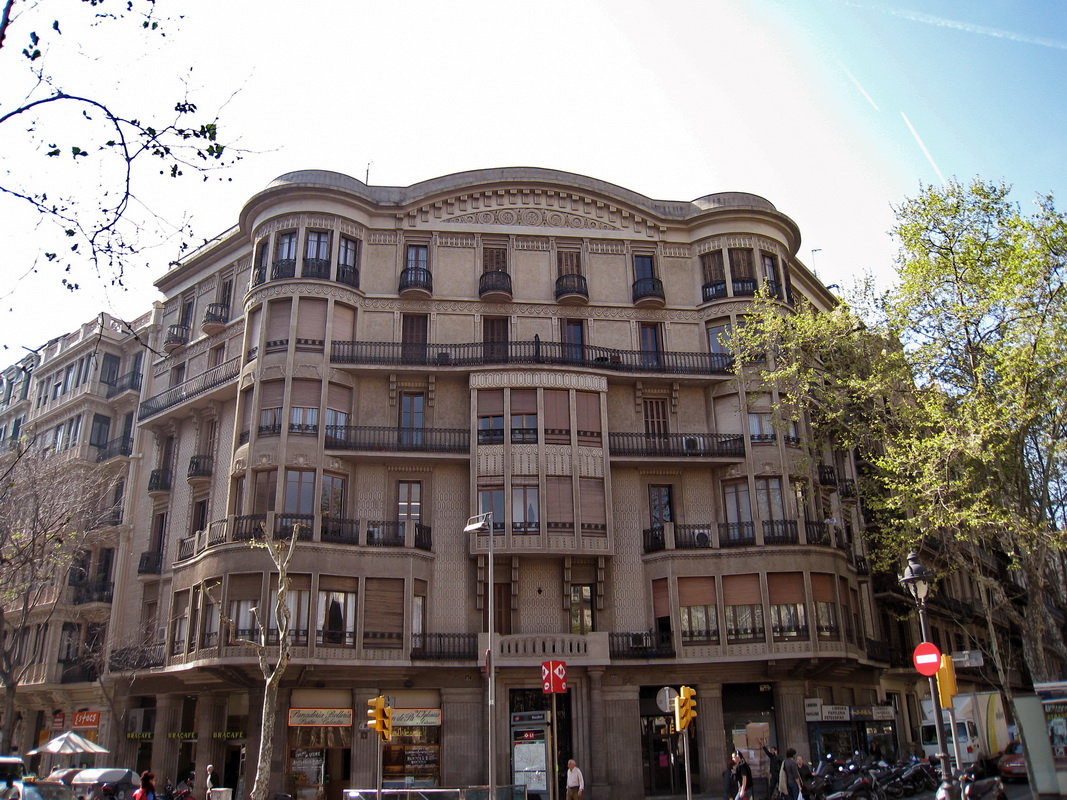
Photo: amadalvarez (via Wikimedia Commons) · CC BY 3.0
Buildings designed for public life
One of the most interesting characteristics of Noucentisme is its relationship with public spaces. Unlike other movements heavily focused on private residences or grand monuments, here we find schools, libraries, town halls, cultural facilities, and urban spaces designed to improve daily life. It is the architecture of a society that wants to educate, organize, and build community.
During this period, numerous public schools emerged, incorporating new design principles: spaciousness, natural light, and a clear pedagogical focus. Markets, gardens, and administrative buildings were also designed, prioritizing functionality without sacrificing aesthetics.
This moment coincides with a very clear desire to modernize Catalan cities and make them more livable.
Barcelona and the Noucentista legacy
Barcelona preserves some of the most visible examples of the movement, although they are often overshadowed by the touristic and visual power of Modernism. While Gaudí and the grand Modernist buildings continue to capture everyone's attention, Noucentisme left a quieter but very important mark on the city's urban transformation.
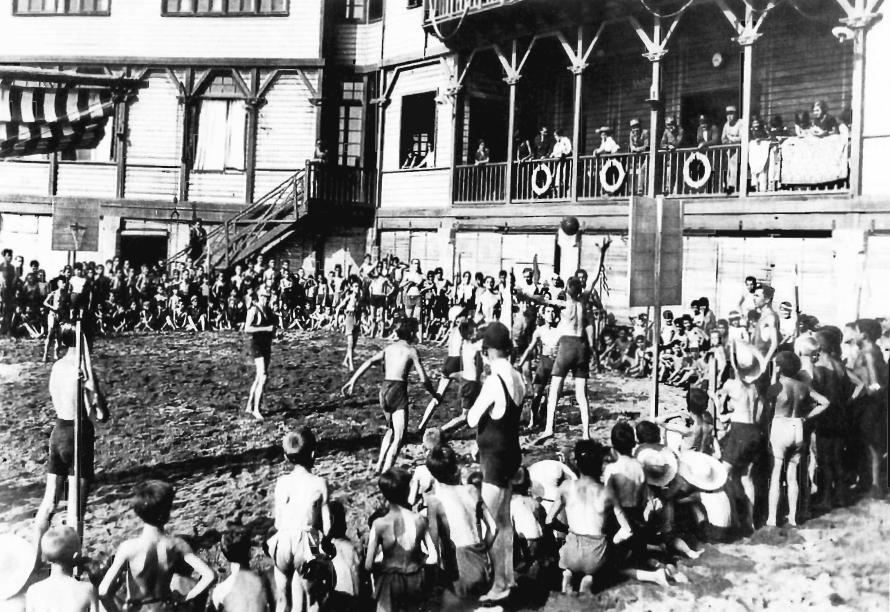
During this period, many public facilities began to reflect this new, more rational and balanced vision. The Escola del Mar, promoted by the Barcelona City Council, is one of the most symbolic examples of this desire to link architecture, education, and well-being. Several buildings in the Eixample district and spaces associated with the Mancomunitat de Catalunya also demonstrate this aspiration to build a more organized, functional, and culturally ambitious city.
Beyond the specific buildings, Noucentisme also influenced the way Barcelona was conceived: more harmonious squares, green spaces, and a new relationship between urban planning and quality of life that is still part of the city's DNA today.
The Mediterranean as inspiration
Noucentisme constantly looked towards the Mediterranean, but not only as a landscape. It conceived of it as a cultural ideal: light, balance, calm, and a leisurely way of life that connected with the classical values the movement admired.
This influence translates into brighter buildings, uncluttered facades, interior courtyards, porches, and open spaces that engage with the surroundings. There is no desire for grandeur, but rather to create pleasant, well-proportioned spaces designed to coexist with the climate and the pace of life in the region.
In coastal towns and medium-sized cities of Catalonia, you can still find examples of this discreet but elegant architecture, which may not seek to impress at first glance, but conveys a sense of harmony that is very difficult to ignore.
A discreet but very present legacy
Noucentisme often goes more unnoticed than other, more spectacular styles. It lacks the theatricality of the Baroque, the exuberance of Modernism, and grand, universally recognized monuments. But perhaps therein lies its strength.
It is an architecture that puts people at the center and considers everyday life: schools, libraries, public spaces, administrative buildings, and more organized cities. An architecture that understands that beauty can also be serene, functional, and profoundly human.
Even today, many early 20th-century buildings remain an integral part of Catalonia's everyday landscape, unobtrusively blending in. And perhaps this is their greatest legacy: demonstrating that architecture can also transform a country through calm, balance, and discretion.
Published by Oriol Rosselló Gil on 13 of july of 2026 at 07:52h

Events
Forest week in Sant Celoni
16 OctoberAmateur Theatre Showcase in Sant Gregori
16 OctoberEuropean Heritage Days in Collbató
16 OctoberRACC Costa Dorada Rally in Salou
From 16 to 17 OctoberZim Zam Cassà - Cassà de la Selva Urban Art Festival
From 16 to 17 OctoberFira Mediterrània de Manresa 2026
From 15 to 18 OctoberMoaré Terrassa Festival
From 16 to 18 October
Experiences







 Sustainable turism
 Biosphere