


Ulldecona
Ulldecona is a municipality in the Montsià region with a history deeply marked by its strategic role as a border territory. Located between the Principality and the Kingdom of Valencia, the town has been, throughout the centuries, a key point for passage, defense, and territorial organization, which is still reflected today in its urban structure and heritage.
The origins: the castle and the first settlement
The first charter of settlement for Ulldecona was obtained on April 3, 1222, and refers to the town located at Ulldecona Castle, a defensive stronghold of great importance in the context of the Christian Reconquista. This first settlement was situated on a high point designed for visual and military control of the surrounding territory.
During these early years, the area experienced periods of political instability, typical of a border territory still consolidating its identity. In this context, King James I established the Sénia River as the natural border between the Principality of Catalonia and the Kingdom of Valencia, a decision that would definitively shape the future of Ulldecona.
The move to the flat area and the birth of the current core
Having overcome this more turbulent period, the population gradually moved from the castle to the plain. This process was formalized with the second charter of settlement, dated April 12, 1273, at which time the original nucleus of the present-day town was formed, which was then called San Lucas de Ulldecona.
Ulldecona, along with Alcanar and La Sénia, was conceived as a border town. However, Ulldecona's urban structure seems designed, from the beginning, to accommodate a larger and more organized population, which distinguishes it from other nearby settlements.
Urban planning with Roman roots
The historic center of Ulldecona, which was walled until the 19th century, has a clearly ordered structure, with a layout reminiscent of the classical Roman city, based on two main perpendicular axes.
The first axis corresponded to the current Calle Mayor, which ran from the Portal de Tortosa (where the town hall stands today) to the Portal de Valencia, located in the current Plaza de Sales i Ferré. The second axis was formed by the current streets of San Lucas (or del Peso) and San Antonio, which connected the Portal de Morella with the Portal del Mar, also known as the Portal del Bebedero.
The rampart walk of the old wall was approximately 1,100 meters long and would coincide with the current streets Murada de Dalt and Murada de Baix, which still allow us to glimpse the original defensive perimeter of the town.
Evolution and hypotheses about the original nucleus
Despite this description, historical studies continue to work with the hypothesis that the first urban center may have been smaller than initially thought. This first settlement could have been located between the Casa del Pedido, on one side, and the streets of Pilar and Roger de Llúria (formerly Calle del Embut), on the other.
The oldest surviving plan of the town dates from the Peninsular War, and it shows no buildings outside the walls. However, it is very likely that the area was already densely populated and that many houses incorporated the walls as rear walls, a common practice in medieval towns.
Places of interest
Ulldecona Castle
Perched atop a strategic hill, Ulldecona Castle marks the origin of the municipality's first settlement. From here, the border territory between the Principality of Asturias and the Kingdom of Valencia was controlled. Today, it offers magnificent panoramic views of the Montsià region and provides insight into the town's defensive role.
Rock shelters of the Sierra de Godall
This group of rock shelters with cave paintings is one of Ulldecona's most important heritage treasures. Declared a World Heritage Site by UNESCO, they preserve representations of prehistoric life with human and animal figures. They are an exceptional testament to human presence in the area thousands of years ago.
Historic center
The historic center of Ulldecona retains the orderly layout of a medieval town with Roman influences. Its streets follow the old main axes that connected the gates in the town wall. Strolling through it allows you to discover the urban evolution of a town with a frontier past.
Church of Saint Luke
The church of Sant Lluc is closely linked to the founding of the present-day town of Ulldecona in the 13th century. It gives its name to the old village of Sant Lluc de Ulldecona and symbolizes the relocation of the population from the castle to the plain. It is a key element for understanding the origins of the municipality.
Order House
The Casa del Pedido is one of the most important historical buildings in the municipality. It is linked to the medieval administrative and manorial organization of the territory. Its location helps to define the possible first urban center of Ulldecona.
Walled-up walls and old gateways
Ulldecona was completely walled until the 19th century, with a perimeter of approximately 1,100 meters. The route of the old wall can still be followed today along Murada de Dalt and Murada de Baix streets. The old gates structured the access points and urban life of the town.
Events
Ulldecona cultural
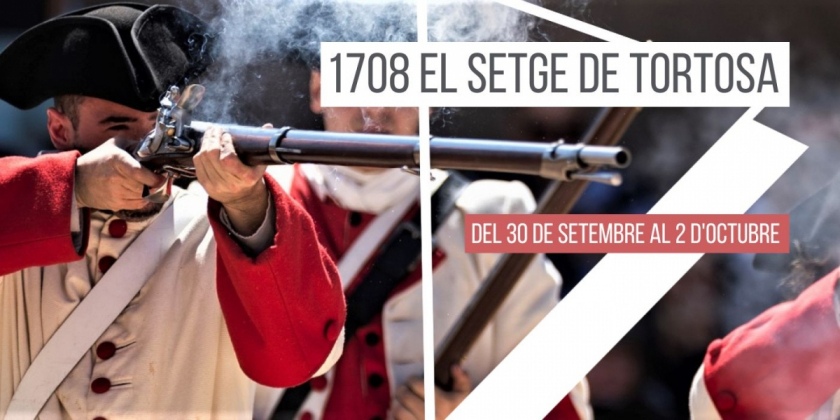
17 OctoberSant Lluc Fair and Festival in Ulldecona
From 17 to 18 OctoberSénia Wood and Furniture Crafts Fair
From 24 to 25 OctoberPrawn Gastronomic Days in La Ràpita
From 24 October to 22 NovemberEXPOCÍTRIC Alcanar - European Citrus Capital
From 14 to 15 NovemberAmposta Trade Fair
From 5 to 8 DecemberFeatured
Nearby routes
Grand Tour de Catalunya - Section 2. Meeting history: from Tarragona to Lleida
The Passions in Catalonia: tradition and sacred theatre
Ebro Delta, nature in its purest form
Sports tourist destinations of Catalonia
Hemingway in Tortosa
Baix Ebre Greenway
Water and life through the Ebro by electric car
Inside the Ebro river
The coronelas and their battalions in 1714
Literary route in the Modern Catalonia
News








 Sustainable turism
 Biosphere