


Santa Eulàlia de Ronçana
Santa Eulàlia de Ronçana is a municipality of 14 km² located in the westernmost part of the Vallès Oriental region, in the Tenes River basin, on the middle course of this tributary of the Besòs River. Hills, valleys, and small plains characterize its geography.
Santa Eulàlia also has other geographical features related to different places in the municipality: we find escarpments, deep and narrow hollows such as those of Can Maset, Can Just or Sant Simplici, as well as mountain ranges, plains and other relief elements.
Santa Eulàlia has never had a clearly defined town center that would allow for easy identification; its silhouette is not distinguishable from afar, and there is no single road leading to it. For many years, the population has lived scattered across the plains, mountains, and streams. The old, isolated farmhouses sheltered and protected the men and women who lived in them. For hundreds of years, people were identified first by the house they came from and then by the parish where they celebrated the most important events of their lives. Their identification with more impersonal structures was quite difficult, even though such structures existed.
In 1958, a process of urbanization and transformation began that is still ongoing. Before the 1960s, small urban centers already existed, or at least groups of houses that gave rise to the traditional neighborhoods of Santa Eulàlia around Rieral, La Sagrera, Sant Cristòfol, El Serrat, La Serra, La Vall, and El Bonaire.
The first residential homes were built in the 1930s, when some Barcelona families were captivated by the area. The true transformation of the town took place approximately forty years ago. During a period of economic boom, Santa Eulàlia began to become what it is today. Construction began on single-family homes and villas near the Tenes River, and shortly afterward, the first housing developments, such as Sant Isidre and Can Sabater, began to appear.
History
Santa Eulàlia de Ronçana is a municipality with a history spanning thousands of years, marked by its Roman and medieval past, agricultural tradition and a rich heritage of farmhouses and hermitages.
From the first settlers to the Roman era
The origins of Santa Eulàlia de Ronçana date back to prehistory, as evidenced by the remains of stone axes, arrowheads and flint tools found in the municipality.
Centuries later, the Iberians settled in the area, leaving behind evidence such as the Pla de Masmitjans settlement. During the Roman era, the fertility of the land and its proximity to Caldes de Montbui favored the construction of numerous rural villas, considered the forerunners of today's farmhouses.
A medieval past linked to the barony of Montbui
The first written reference to Santa Eulàlia dates from the year 932. During the Middle Ages, the parish of Santa Eulalia de Mérida became the center of local life.
In 1059, the territory became part of the barony of Montbui, to which it belonged for almost eight centuries. Santa Eulàlia played a prominent role, hosting meetings of the barony's representatives under the holm oaks of Can Burguès.
From this past, heritage elements such as the Church of Santa Eulalia, the Hermitage of San Cristóbal de Pallars and the Chapel of San Simplicio are preserved.
Land of farmhouses and agricultural tradition
With the disappearance of the barony in 1835, Santa Eulàlia began its journey as an independent municipality.
For centuries, agriculture was the main economic engine of the village. The farmhouses, many of medieval origin, are now one of its greatest heritage treasures. Can Brustenga, Can Burguès, Can Vendrell, and Can Puig de la Vall are just a few examples of this rural legacy.
The fields, vineyards, nuts and, later, dairy production have shaped the agricultural identity of the municipality.
From rural village to modern municipality
The 20th century brought great transformations. After the difficulties of the Civil War and the post-war period, Santa Eulàlia began to grow, especially from the 1950s onwards, thanks to its proximity to Barcelona and the appeal of its natural surroundings.
The old agricultural areas coexisted with new neighborhoods and urbanizations, eventually forming the current municipality.
Today, Santa Eulàlia de Ronçana preserves the essence of its rural past in an environment steeped in history and nature. Its farmhouses, hermitages, paths, and landscapes invite you to calmly discover one of the most charming corners of the Tenes Valley.
Places of interest
Chapel of Sant Cristòfol
The Chapel of Sant Cristòfol is an interesting example of Romanesque religious heritage that has survived to the present day after numerous transformations. This small church, with a history of…
Hazelnut trees of Can Burguès
The Can Burguès hazelnut groves are a prime example of traditional agricultural landscape and organic farming, where hazelnut cultivation is part of an activity that combines experience, respect…
Chapel of Sant Simplici
The Chapel of Sant Simplici, located in Santa Eulàlia de Ronçana, is an interesting example of Romanesque religious heritage. This small church, steeped in history and tradition, has undergone…
Pedró Cross
The Pedró Cross of Santa Eulàlia de Ronçana is one of the most unique elements of the municipality's historical and ethnological heritage. Located on the upper esplanade of the parish…
Church of Santa Eulàlia de Ronçana
The Church of Santa Eulàlia de Ronçana is one of the main landmarks of the municipality's historical, religious, and architectural heritage. Despite its Romanesque origins, the current building…
The Rector's Fountain
The Rector's Fountain is one of the traditional landmarks of Santa Eulàlia de Ronçana, a small space linked to the daily life and collective memory of the town. Located in the Sagrera neighborhood,…
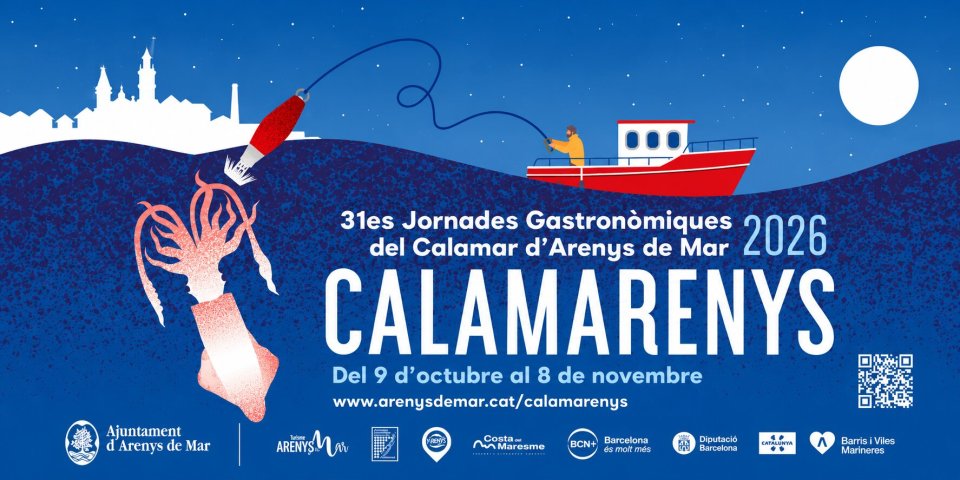
Events
Sant Menna, Sentmenat Winter Festival
From 6 to 8 November'La Moguda Gastronòmica' in Santa Perpètua de Mogoda
From 9 October to 8 NovemberPanoràmic Festival in Granollers, Barcelona, Terrassa and Vic
From 15 October to 27 DecemberChestnut tree and Halloween in Lliçà d'Amunt
7 NovemberNight of terror in Lliçà d'Amunt
7 NovemberMedieval Vilamagore in Sant Pere de Vilamajor
From 7 to 8 NovemberFarmhouse Route: "Between puppets and books" in Palau-solità i Plegamans
8 NovemberVilanova Batega! Popular Culture Day - Vilanova del Vallès
8 NovemberAutumn Concert Series in Santa Perpètua de Mogoda
8 NovemberAdventure with your family: Farmer and peasant for a day - Lliçà d'Amunt
14 NovemberSecond-hand market in Vilanova del Vallès
15 NovemberNearby routes
San Sebastián cultural walk in Bigues i Riells
The Coasts of Batlles in Riells del Fai
Masías and Refugees in the Ametlla del Vallès
Summer Modernism in the Ametlla del Vallès
Path of the natural parks
The route of the 3 mountains
Modernism Route of summer break in Vallès Oriental
A walk up the hill of Tagamanent
Tagamanent from the wells of Avencó de Aiguafreda
Monumental trees of Catalonia
News








 Sustainable turism
 Biosphere