


Sant Julià de Cerdanyola
Sant Julià de Cerdanyola is a municipality in the Berguedà region, located within the Alt Berguedà natural region. It sits at an altitude of almost 1,000 meters and is surrounded by beautiful mountain ranges and peaks, offering unique views and giving it a distinct character within the region. Sant Julià de Cerdanyola is bordered by the municipalities of La Nou de Berguedà, La Pobla de Lillet, and Castell del Areny.
Sant Julià de Cerdanyola had been part of the lands of the Monastery of Sant Llorenç near Bagà, but later became independent. In fact, its territory gave its name to the municipality that at that time included Guardiola de Berguedà, although in the 1930s the situation changed and Guardiola became the capital. Later, during the democratic period, Sant Julià de Cerdanyola separated from Guardiola and formed its own municipality in the mid-1990s.
Within the municipality of Sant Julià de Cerdanyola, we find a place called La Creu, which offers stunning views of the surrounding landscape. In this recreational area, there is an orientation table indicating, among other landmarks, the Pedraforca mountain, which can be seen from this vantage point.
In fact, several routes can be taken from Sant Julià de Cerdanyola, inviting you to explore the surrounding area. These include the Falgars area, the Sant Cristòfol plains, the Catllaràs mountain range, Sant Jaume de Frontanyà, Roc de la Clusa, Malanyeu, La Nou de Berguedà, and many others.
The most notable festival in Sant Julià de Cerdanyola is the Fia-Faia, celebrated on the night of December 24th. The Fia-Faia also takes place in Bagà on the same date; both festivals begin at different times so that people can attend both celebrations.
Places of interest
Church of Sant Julià de Cerdanyola
The church of Sant Julià de Cerdanyola is located in the heart of the town center, directly opposite an irregularly shaped square. This square is surrounded by a group of rural houses that likely formed part of an old slaughterhouse. Although the building dates from the 18th century, it may retain elements from earlier periods.
The interior of the church was completely destroyed during the Civil War, with the exception of the image of Our Lady of Mount Carmel. The current altar was built after the war and has been repainted and restored since then.
The Castle of Sant Julià de Cerdanyola
It is a two-story building, situated on a rise in the terrain. The roof is gabled, with the main facade facing south, opening onto an enclosed courtyard. This courtyard includes a pahisa (a type of covered walkway) that forms an angle with the house. The building has several additions attached to the east and west facades, the result of various renovations carried out over time.
The exterior walls are constructed of masonry with stones of various sizes, and the cornerstones are made of squared stone. The main facade features several newly constructed openings.
Sant Antoni Fountain
The Font de Sant Antoni is located on the right side of the road leading to the Falgars sanctuary. This fountain, built into a masonry wall, has a sink and a built-in, operable tap. At the top of the wall is a niche containing a ceramic tile panel depicting Saint Anthony of Padua.
On either side of the sink, perpendicular to the wall, are two long stone benches, perfect for relaxing. Barbecues with grills have been installed next to the fountain wall. The small plaza in front has been furnished with tables and chairs, providing a pleasant and shaded space thanks to the surrounding trees.
Fia-faia Sculpture
This sculpture consists of a large block of travertine stone that serves as the base for an imposing iron beam. Next to it, there is a plaque with the names of all the collaborators who made its creation possible.
Located on the street that leads to the Church Square - where the main festival is held - the sculpture has a dual function: it acts as a welcoming element for visitors and, at the same time, pays homage to the participants in the festival.
Events
The Berguedà mushroom kitchen
From 18 September to 22 NovemberMushroom Festival in Guardiola de Berguedà
From 17 to 18 OctoberFeast of Sant Galderic de Avià
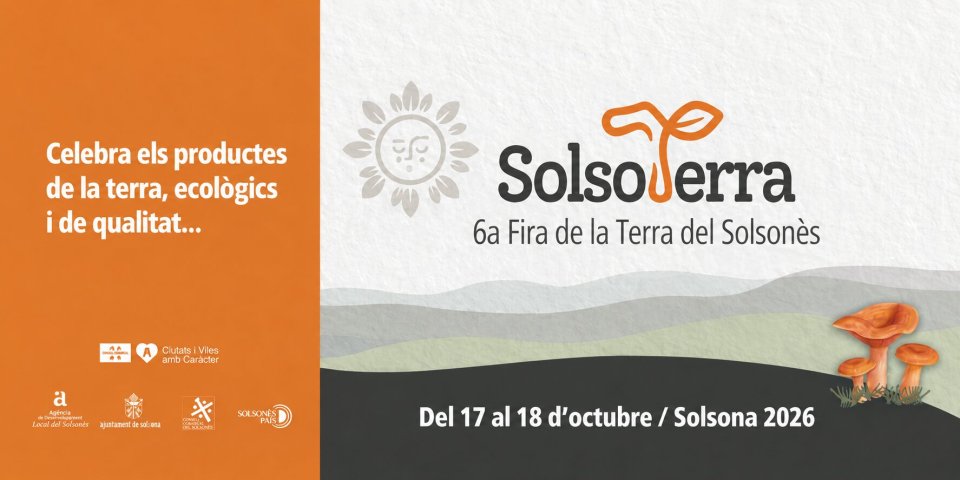
From 17 to 18 OctoberNovemberfest - The Hops and Craft Beer Festival of Avià
24 OctoberBerga Mushroom Festival
25 OctoberCycle of Healthy Walks in Guardiola de Berguedà
26 OctoberSaldes Craft Fair
31 OctoberReturn to La Maria, the Avià Mountain Race
From 14 to 15 NovemberGaming and Christmas Fair in Berga
6 DecemberNearby routes
The Fia-Faia, Christmas tradition
Picasso's Way from Berguedà to Cerdanya
The Romanesque in Alt Berguedà
Penyes Altes del Moixeró from Gréixer
Looking for mushrooms in Berguedà and Solsonès
Grand Tour of Catalonia - Section 4. Ode in nature: from La Seu d'Urgell to Figueres
Gaudí and the Berguedà
The Natural Park Cadí-Moixeró
The Way of the Cathars
Snowshoe route through Tosa de Alp from Coll de Pal
News








 Sustainable turism
 Biosphere