


Fogars de la Selva
The municipality of Fogars de la Selva is located in the southernmost part of the Selva region. It extends across the northeastern sector of the Montnegre massif, with Montgròs as its highest point (391 meters), and along the lower part of the Tordera river basin, in the area where the Santa Coloma stream flows into it.
The village has a large number of farmhouses scattered throughout the territory and has a long agricultural and forestry tradition, which was maintained well into the 1950s. To explain this legacy, the village has the Museu de la Pagesia, which shows how people lived in the countryside between the 17th and 19th centuries.
Currently, much of the territory is covered by pine, holm oak, and oak forests. In the flatter areas to the north and east, cereals, vineyards, orchards, and poplar groves are cultivated. Some copper and lead mines were formerly in operation, but are now abandoned.
In the mid-1970s, industry began to set up in Fogars, and in the mid-1990s, the town underwent an urban revolution.
Places of interest
Church of Sant Cebrià
It was built during the 19th century from the remains of the Església Vella, destroyed during the War of the French. Outside, a communidor can be seen, where the priest recited prayers and exorcisms and sprinkled holy water to the four winds to protect the town and crops from inclement weather.
Hermitage of the Mare de Déu de la Serra
The exact date of its construction is unknown, but it is believed to predate 1330. The portico consists of nine semicircular arches supported by columns. Before 1936, the chapel had been used as a school.
Hermitage of Sant Andreu de Ramió
The first record dates from 1185. Only the apse remains of the original church. Before the war, the bell tower had two bells that could be heard throughout the village.
Sant Corneli Volcano and Can Saboia Quarry
The main chimney is now a working mine, the Can Saboia Quarry, where basalt columns hidden underground are exposed. The side chimney once housed the Sant Corneli de Montells hermitage, dating back to 1200, which no longer exists.
Museu de la Pagesia
This cultural exhibit showcases how people lived in a traditional Catalan farmhouse (masia) during the 17th, 18th, or 19th centuries. Visitors can see a wide variety of period furniture, everyday objects, tools, and working implements, such as a wine press, a waterwheel, a flour mill, and a windmill.
Nearby routes
- Tordera Route: A trail that follows the course of the Tordera River and the Arbúcies stream to highlight and promote the natural, cultural, and intangible resources associated with the Tordera River and its basin. Suitable for hiking and mountain biking.
- Itineraries through the Parc del Montnegre and the Corridor
Events
Guided tour of Hostalric Castle
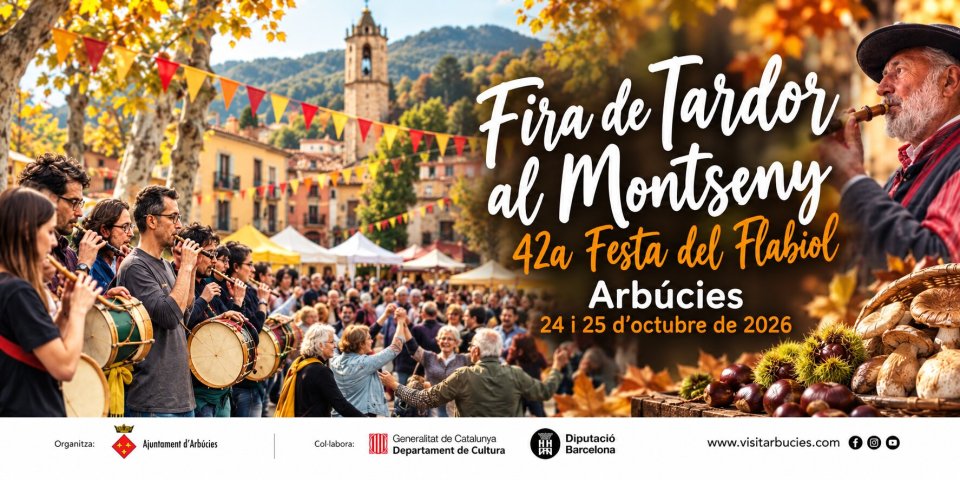
25 OctoberAutumn Fair in Montseny and Flabiol Festival in Arbúcies
From 24 to 25 OctoberForest week in Sant Celoni
From 23 to 25 OctoberSant Celoni Forest Fair
From 24 to 25 OctoberDramatized visit "La Maria invites you to come in" in Canet de Mar
25 OctoberIFBB World Fitness Championships in Santa Susanna
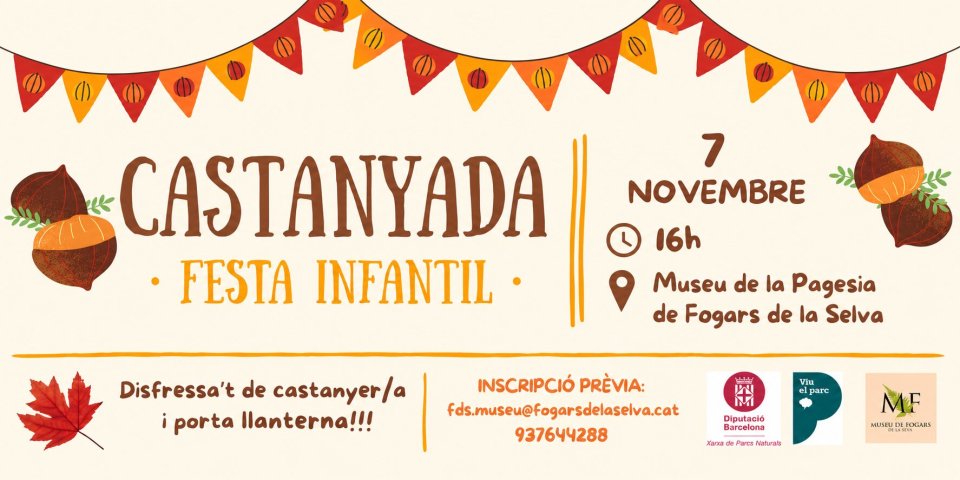
From 29 October to 2 NovemberHalloween in Fogars de la Selva
31 OctoberChestnut festival in Santa Susanna
1 NovemberAutumn Theater Season in Caldes de Malavella
1 NovemberChestnut festival in Vallgorguina
1 NovemberRatafía Fair in Santa Coloma de Farners
From 5 to 8 NovemberNearby routes
Ruta de la Tourdera: from Hostalric to Malgrat de Mar
Local trails of Hostalric
From Sant Celoni to La Batllòria through Tordera
Rediscover the Costa Brava
Route of the Castles of Sió
Mediterranean Trail
The sweetest route through La Selva, a route for those with a sweet tooth
The mystery of Camp dels Ninots
Sports tourist destinations of Catalonia
Hermitages route
News








 Sustainable turism
 Biosphere