


Collbató
Located in the Baix Llobregat region , Collbató is a town closely linked to the Montserrat mountain range. In fact, the town is considered one of the main gateways to the massif, which explains why so many people come both in passing and to stay and explore the surrounding area at their leisure. Its privileged location, combined with a spectacular landscape and a rich historical heritage, makes Collbató an ideal destination for lovers of nature, culture, and traditions.
An exceptional natural environment
Collbató boasts an exceptional natural environment, characterized by holm oak and oak forests, natural channels, strikingly shaped rocks, and caves that delve deep into the heart of the mountain. The rugged terrain and whimsical forms of the Montserrat massif create an almost magical landscape, ideal for hiking, family outings, or simply enjoying the silence and power of nature.
The roads surrounding the municipality allow you to discover little-known corners, natural viewpoints and places full of history, where the landscape and the memory of the territory go hand in hand.
A past with more than 4,000 years of history
The municipality of Collbató has been inhabited for over 4,000 years, as evidenced by the archaeological remains found in the area. These include fragments of Cardial pottery and, above all, evidence of the use of caves as shelters by the first inhabitants. Interestingly, centuries later, these same natural spaces would once again play a significant role when Mansuet Boxó, a local resident who became a bandit after being banished, hid there to escape justice.
This combination of prehistoric history and popular legend forms part of Collbató's identity narrative and contributes to making it even more unique.
The Salnitre Caves, an underground treasure
One of the most emblematic sites in the municipality is the Collbató Caves, also known as the Salnitre Caves. This network of underground galleries extends for about 500 meters inside the Montserrat massif and offers a fascinating tour among stalactites and stalagmites of spectacular shapes.
A visit to the caves is an essential experience to understand the geology of the area and the historical relationship between humans and this unique environment.
Religious and medieval heritage
On the way to the caves, you can visit the Hermitage of Our Lady of Health, built in the 19th century in the Neo-Gothic style. Nearby is the Fountain of Health, known for its sulphurous waters.
From the medieval past of the municipality, remains of the Castle of Collbató are still preserved, which allow us to imagine the old defensive structure, especially a part of the Romanesque-style watchtower.
The old town and cultural life
The town of Collbató retains the structure of its old medieval quarter, with narrow streets and houses that maintain their original 13th-century appearance. Among the most notable buildings are Can Vacarisas, the former residence of the mayor of Montserrat, and the manor house where the composer Amadeu Vives was born.
To delve deeper into the daily life of the past, it is highly recommended to visit the Museum of People's Things, located in a manor house and dedicated to displaying objects of rural and domestic use.
Musical tradition and unique craftsmanship
Collbató is also renowned for a unique craft: organ building. The Blancafort Organ Workshop is an international leader in this field. This tradition is particularly evident in the Parish Church of San Cornelio, which houses an impressive organ built by Gabriel Blancafort.
Places of interest
The Caves of Collbató (or Salnitre)
A network of underground galleries in the Montserrat massif, with spectacular stalactites and stalagmites. A must-see.
Hermitage of Our Lady of Health and Fountain of Health
Small 19th-century neo-Gothic hermitage located in a quiet setting, ideal as a stop during the excursion.
Source of Health
A very popular sulfur spring, historically linked to devotion and healing properties.
Collbató Castle
Remains of an ancient Romanesque fortification. The watchtower and the historical value of the complex are particularly noteworthy.
Old town and medieval houses
Narrow streets and medieval houses that preserve the essence of the village since the 13th century.
Parish Church of Saint Cornelius
Romanesque church with a monumental organ, an example of Collbató's connection with music and art.
Tourist Information Office
Located in the Molí de l'Oli Interpretation Centre, it is the information point for discovering Collbató and the Montserrat area. From here, visitors are guided on routes, heritage and activities in the municipality. It also features the Balcó de Montserrat, a viewpoint with privileged views of the massif.
Events
Moaré Terrassa Festival
From 16 to 18 OctoberFira Mediterrània de Manresa 2026
From 15 to 18 OctoberEmbarrats Fair in Sant Joan de Vilatorrada
From 16 to 18 OctoberEcoviure Fair in Manresa
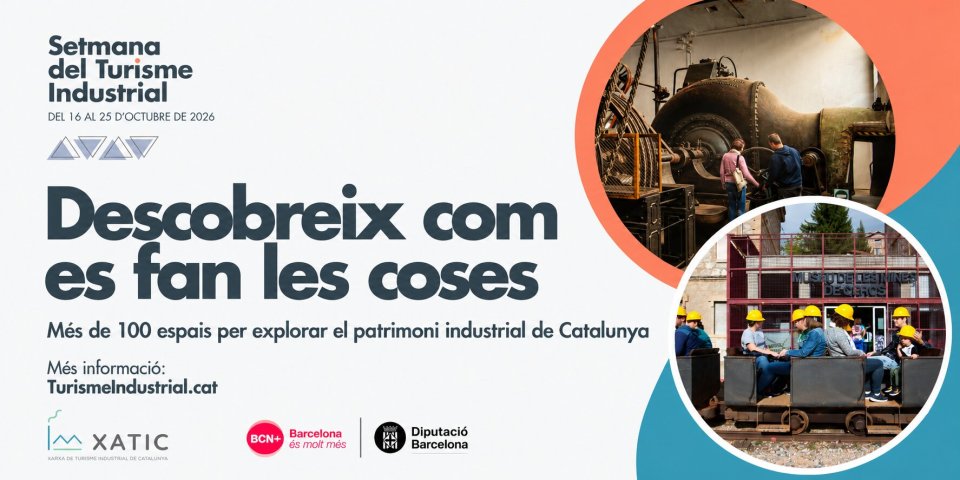
From 2 to 20 OctoberCatalonia Industrial Tourism Week 2026
From 16 to 25 OctoberSostibaix, the sustainable fortnight of Baix Llobregat
From 15 October to 1 NovemberPanoràmic Festival in Granollers, Barcelona, Terrassa and Vic
From 15 October to 27 DecemberScenic programming in Gelida
17 OctoberMARIDA'm: The secrets of two liquid golds of Catalonia, Sant Sadurní
17 OctoberPiera International Music Festival and Els Hostalets de Pierola
18 October"El Nostre Festival" - Llet Nostra
18 OctoberNearby routes
Montserrat, symbol of Catalonia
Sant Jeroni from the Montserrat Monastery. Walk along the Camí Vell and return to Sant Joan
At the foot of Cavall Bernat de Montserrat
The route of the 3 mountains
Grand Tour de Catalunya - Section 1. Vineyards with taste in the sea: from Barcelona to Tarragona
The Passions in Catalonia: tradition and sacred theatre
Path of the natural parks
Route from the porch of Santa Oliva to Sant Salvador de les Espases
Route from the Porch of Santa Oliva to the Collet de Sant Joan
Route of the three hermitages in Olesa de Montserrat
News
Iron architecture: the light and steam of industrial Catalonia
In the 19th century, the Industrial Revolution not only changed the way people worked and lived, but also profoundly transformed architecture. The arrival of new materials, such as cast iron, wrought iron, and glass, opened up possibilities…
Gothic Architecture: The light and height of medieval Catalonia
Gothic architecture marks a turning point in the history of Catalonia. It was the style that transformed cities, places of worship, and the way people built collectively. A style that changed not only the stone itself, but also the way people…








 Sustainable turism
 Biosphere