


Arenys de Munt
Arenys de Munt is located in the far northeast of the province of Barcelona.
From its beginnings, Arenys de Munt has been part of the Diocese of Girona. With an area of 22.05 km², it borders the municipalities of Sant Vicenç de Montalt, Dosrius, Vallgorguina, Sant Iscle de Vallalta, Canet de Mar, and Arenys de Mar. Within its municipal boundaries are the small villages of Torrentbò and Sobirans, as well as numerous farmhouses scattered throughout the territory and five residential developments.
Arenys de Munt was known as Sant Martí d'Arenys from its origins as a parish in the 9th century. Historically and culturally, Sant Martí d'Arenys has been more closely linked to the lands of Girona than to the regions of Barcelona. Throughout the Middle Ages and the Early Modern period, it formed part of the territory of Montpalau Castle, within the Viscounty of Cabrera and the County of Girona. In the 18th century, it was incorporated into the district of Girona, and it wasn't until the provincial division of 1833 that it became part of the province of Barcelona.
At the beginning of the 20th century, these lands were known as the Costa de Levante, as they were called by the people of Barcelona. Later, in 1936, the regional division officially named this territory Maresme. However, the natural region to which the towns of the former Montpalau district belong—from Arenys de Munt and Arenys de Mar to Tordera—is La Marina de la Selva. This connection is based on deep historical roots and close cultural, social, and religious ties.
The church of Sant Martí d'Arenys was built in the 16th century. Like many other churches in the area, it follows the late Gothic style, although it incorporates notable Renaissance elements. At the beginning of the Spanish Civil War, the valuable artistic heritage it housed was destroyed by fire.
Currently, notable paintings by Pere Serafí and two sculptures by Joan de Tours are preserved. Within the municipality , the hermitage of Santa Cecília de Torrentbò, a much-restored building, is also preserved. For many years , the Hermitage of Remei was an important center of popular devotion and the site of an annual gathering that brought together residents of Caldetes, Arenys de Mar, and Arenys de Munt.
The remains of the Sant Miquel hermitage are partially hidden among the vegetation near the stream, within the grounds of the Colomer de Sobirans farmhouse. Within the town itself , two fortified farmhouses from the 16th and 17th centuries, complete with their defensive towers, are preserved: Can Bellsolell de la Torre and Can Maiol de la Torre. Outside the town, Ca n'Amar de la Torre retains its intact fortified tower. All these towers have a square floor plan. Another notable building is the Escola Sant Martí, built between 1933 and 1937, a postmodernist work by the architect Enric Catà.
Arenys society stands out for its vibrant cultural dynamism.
Arenys de Munt boasts a vibrant, diverse, and active network of associations that constantly drives the town's cultural, sporting, social, and commercial life. Throughout the year, local organizations host a wide range of activities that contribute to the town's dynamism and strengthen social cohesion.
With more than seventy registered entities, the municipality stands out for the vitality of its initiatives, which enrich collective life and promote citizen participation.
At the same time, Arenys de Munt maintains a firm commitment to its history and traditions: it has highlighted the value of "relleno" (stuffing), revitalized the "bredes" (traditional fishing nets), promotes local products —with events such as the Fira Km AdM, which is held in May— and continues working to preserve its past and the memory of its illustrious figures.
Places of interest
The stream
La Riera is the central axis of Arenys de Munt, running through the town from the mountains to the sea. This sandy riverbed collects water from an extensive network of streams and brooks, creating a unique and open valley. Shops and restaurants line its banks, bringing it to life year-round. The landscape blends nature, agriculture, and everyday life.
The Church Square
Located in the heart of the village, the square is the main venue for fairs, festivals, and popular events. It is dominated by the Church of Sant Martí, built in the 16th century in the late Gothic style with Renaissance elements. Despite the damage it suffered during the Spanish Civil War, it still houses paintings by Pere Serafí and sculptures by Joan de Tours. It is an emblematic meeting point for locals and visitors alike.
Inside, we find a collection of votive offerings dedicated to Our Lady of Remei and an altarpiece by Pere Serafí. The church door is characterized by the presence of inlaid horseshoes, typical of churches dedicated to Saint Martin.
Monument to the Lacemaker
A sculpture by the Japanese artist Etsuro Sotoo, who has also worked on the sculptures for the Sagrada Familia. This large-scale piece, entitled "Angel of the Lacemaker," is a testament to the lacemaking tradition of Arenys. The thread rises from the cushion to the ground, taking root in the town.
Modernist Schools
A modernist-inspired building, designed by Enric Catà i Catà, who also designed the Palau Nacional de Montjuïc. These schools were built during the Republic, between 1933 and 1934, as a response to the desire to improve the educational system of the time.
Can Borrell
This former 16th-century farmhouse is a testament to the historical heritage of Arenys de Munt. It has now been converted into a municipal space and houses the headquarters of the Arenys de Munt Lace Makers Association.
Other places of interest
The Independence Monument
Arenys de Munt was a pioneer in holding popular consultations on independence in 2009. As a reminder of that historic moment, the Monument to Independence was inaugurated in Can Jalpí Park, a minimalist and imposing sculpture composed of a granite stone and four twisted iron beams, the work of sculptors Jaume Rodri and Pep Solé. This sculpture was funded by public contributions from all over Catalonia.
Can Jalpí Castle and Lake
An old farmhouse dating back to the 13th century, originally owned by the Tries family, who established family ties with the Jalpí family in the 17th century. The last descendant of the Jalpí family, Augusto Maria de Borràs i Jalpí, married Sofía de Algorta, a Basque lady who brought a dowry of many millions.
Thanks to this contribution and the creativity of Mr. Augusto, at the end of the 19th century the farmhouse was transformed into a majestic castle, and it also made it possible to promote important projects, such as the creation of power plants, an ice factory and a water and soda plant.
Oak of Guernica
An oak tree grown from a sapling of the authentic and well-known tree of the Biscayan city. It was brought to Arenys de Munt by Sofía Algorta de Abaroa, of Basque origin and wife of Augusto Borràs i Jalpí.
Can Jalpí Lighthouse
One of the only lighthouses built inland. It is yet another eccentricity of Augusto Borràs i Jalpí, who with this construction completed the remodeling of the old farmhouse, the gardens, the lake, and the artificial beach.
Montnegre and Corridor Park - Information Centre
The Arenys de Munt Information Centre, located in the central area of Can Jalpí Park, is part of the Montnegre i el Corredor Natural Park. It serves as a welcoming point for visitors wishing to explore this natural area. It offers information on routes, activities, and heritage sites. It is an ideal gateway to enjoying the surroundings.
Exhibition of vertebrate fauna Jordi Puigduví
Located in the La Central space, this permanent exhibition shows a wide representation of birds from Montnegre and the Corredor and from the plain of the riera.
The collection is named after Jordi Puigduví, a local resident who dedicated himself to its creation. It is considered one of the most outstanding in Catalonia for its variety and number of specimens. It offers an educational opportunity to learn about the local fauna.
Sanctuary of Lourdes
Built in 1924 near the village of Sobirans, the sanctuary is a replica of the grotto of Massabielle (Lourdes). It is dedicated to Our Lady of Lourdes and commemorates the Marian apparitions of 1858. The surrounding area is landscaped with outdoor dining spaces. It is a peaceful place that combines spirituality and nature.
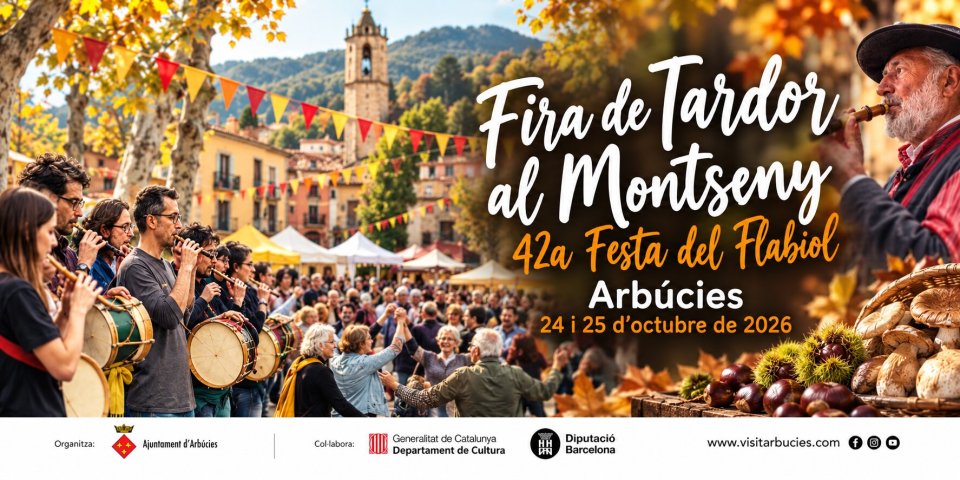
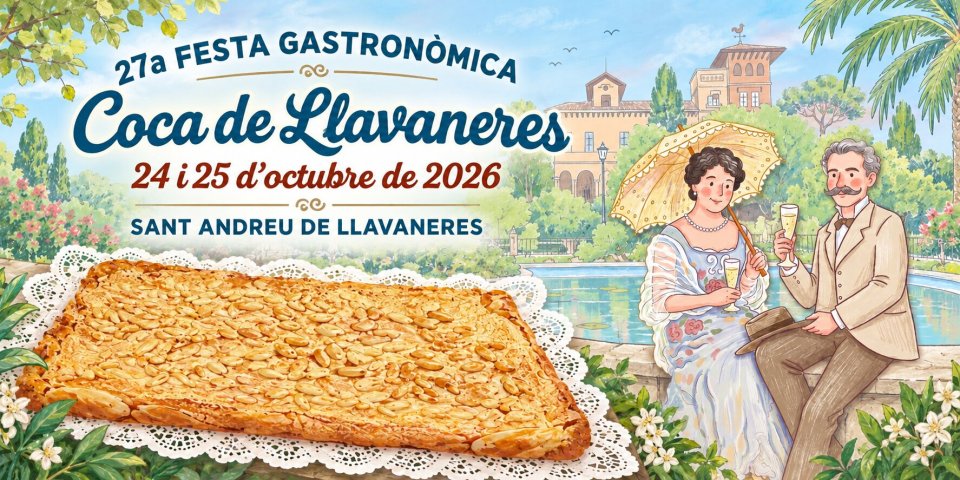
Events
Calamarenys - Arenys de Mar Squid Gastronomic Days
From 9 October to 8 NovemberTransmaresme Bike
24 OctoberAutumn Festivalet in Santa Susanna
24 OctoberGuided tour of Hostalric Castle
24 OctoberLlavaneres Coca Gastronomic Festival, Sant Andreu de Llavaneres
From 24 to 25 OctoberSant Celoni Forest Fair
From 24 to 25 OctoberGuided tours through Arenys de Mar
25 OctoberDramatized visit "La Maria invites you to come in" in Canet de Mar
25 OctoberGuided walk in the Montnegre and Corridor Park - Fogars de la Selva
25 OctoberIFBB World Fitness Championships in Santa Susanna
From 29 October to 2 NovemberGuided visits to the baroque altarpiece of Pau Costa, Arenys de Mar
31 OctoberNearby routes
Route for adventure parks in Catalonia
The cities of the dead, the most unique cemeteries in Catalonia
Route of Catalan art in the 18th century
A walk through Sinera, Salvador Espriu itinerary
Grand Tour de Catalunya - Section 5. From Surrealism to Modernism. From Figueres to Barcelona
Path of the natural parks
The modernist triangle in the Maresme
Following the work of Puig i Cadafalch along the coast
Caldetes' literary route
Mediterranean Trail
News







 Sustainable turism
 Biosphere