

The Candelaria Festivals are celebrations that take place in various municipalities in Catalonia around February 2nd, Candlemas Day. Particularly noteworthy are the Candelaria Fair in Molins de Rei and the Decennial Festivals of the Virgin of Candelaria, held every ten years in Valls.
In Calafell, the Candlemas celebration has a unique feature: instead of a procession with the Virgin of Candelaria, there is one with the Virgin of the Cave, a devotion deeply rooted in the town. This illustrates how each community adapts the festival to its local traditions.
Candlemas has religious and popular roots and is known for its diverse activities and traditions. The name Candlemas comes from the tradition, instituted by Pope Sergius I, of holding a candlelit procession.
Although originally celebrated on February 14th, forty days after Epiphany, this religious holiday now takes place forty days after Christmas and commemorates the presentation of Jesus at the Temple in Jerusalem. According to Jewish tradition, mothers were required to wait this forty-day period after childbirth for purification before presenting their baby to religious authorities; the forty days represented the waiting period before officially registering a newborn, a practice motivated by the high infant mortality rate of that era.
This ritual involved an offering and the blessing of wax candles. Candlemas is one of the oldest celebrations dedicated to the Virgin Mary, introduced by Pope Gelasius I in 496.
Despite its religious nature, this festival has earlier roots, possibly of pagan origin. Some believe it may have inherited ancient Roman customs associated with the Parentalia, which included candlelit processions. However, the meaning of Candlemas was entirely different, perhaps serving as a tribute to the souls of the deceased.
Until recently, churches commemorated this feast with processions similar to those believed to have been led by Mary after her forty-day period of prayer. These processions were primarily led by women, especially new mothers, carrying large, lit candles.
Candlemas is considered one of the many festivals of light, and it is believed that candles blessed on this day have protective virtues.
For all these reasons, and because it marks the end of the Christmas season, Candlemas holds a prominent place in the festive calendar. According to popular tradition, the Nativity scene and Christmas decorations should not be taken down until Candlemas, the day that symbolically closes the Christmas cycle.
Historically, February 2nd has also been considered a date to anticipate weather conditions, as it represents the exact midpoint between the beginning and end of winter, which is why the town has turned this day into a weather forecasting observatory.
Candlemas has also left behind some popular sayings:
"If the Candlestick weeps, the winter is gone; if the Candlestick rises, the fred is alive."
("If Candlemas cries, winter is out; if Candlemas laughs, the cold is alive")
"Quan la Candelera flora, l'hivern fora. And if not flora, neither dins nor fora."
("When Candlemas blooms, winter is over. And if it doesn't bloom, neither inside nor outside")
"Per la Candelera, l'os surt de l'ossera."
("On Candlemas, the bear comes out of the den")
""By the Candelera, the Sun runs along the road."
(By Candlemas, the sun is already running along the road)
Some old dictionaries list as the sole definition of "candelaria" a plant with yellow flowers to which medicinal properties were attributed. This coincidence with the proverb "When Candlemas blooms, winter is over" reinforces the possible symbolic connection between light, flowering, and the end of winter.
Events
Finished
Candelaria Festival in Calafell
24 January …Calafell celebrates the Fiesta Mayor de la Candelaria once again! The Fiesta Mayor de la Candelaria is a winter festival that, after being lost for a time, was revived in 1992. This festival concentrates its events in the old town of the municipality…
Finished
Candelaria festivities in l'Ametlla de Mar
From 31 January to 4 FebruaryL'Ametlla de Mar is having a Major Festival! The population celebrates the Major Festival of Candelaria, and as in all similar celebrations, the main motivation is religious devotion to the Patroness, the Virgin of Candelaria. Although in modernity…
Finished
Winter Festival (Candelaria Festival) of Castelló d'Empúries
From 31 January to 2 FebruaryOnce again, Castelló d'Empúries celebrates the Candelaria Festival, the municipality's Winter Festival, one of the most traditional festivals in the municipality that has a very complete program of events and activities designed…
Finished
Molins de Rei Candelaria Fair
From 30 January to 1 FebruaryThe tradition of Candlemas is not limited to religious sentiment, but extends into various aspects of Catalan society, with gastronomy playing a prominent role. This festival, celebrated in Molins de Rei, is a perfect example of how popular…

Events
JazzTardor Lleida
From 26 to 27 NovemberNovember 25th, Day against violence against women in Mont-ras
From 22 to 27 NovemberNational Film and Video Competition in Navàs
From 16 to 29 NovemberInclús Festival in Barcelona
From 23 to 29 NovemberMost, International Wine Film Festival in Penedès and Priorat
From 25 to 29 NovemberMajor Festival of Sant Andreu de Tona
From 21 to 30 NovemberSquid Gastronomic Days in Salou
From 20 November to 6 December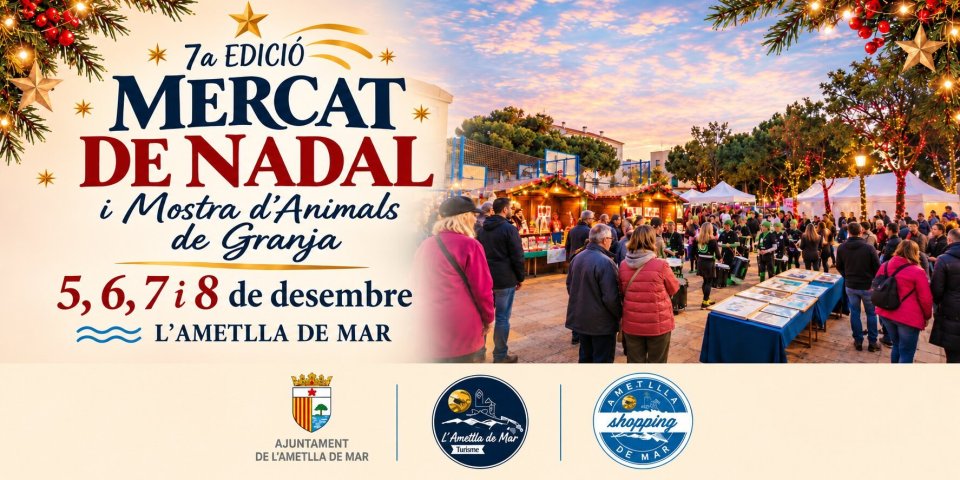
News






 Sustainable turism
 Biosphere