


Holy Week is one of the most important celebrations in the Christian calendar, and in Catalonia, it is observed with great devotion and tradition. This week, which culminates on Easter Monday, is filled with ceremonies and religious events that commemorate the passion, death, and resurrection of Jesus Christ.
During Holy Week , the Passion plays are celebrated, dramatic theatrical performances that recall the Gospel episodes of the life of Jesus Christ; some of the most important are the Passion of Esparreguera or the Passion of Olesa.
When is Holy Week celebrated in Catalonia in 2026 and what are the most important days?
Holy Week is celebrated from Sunday, March 29 to Monday, April 6, 2026. However, schools and educational centers begin their holidays a few days earlier, from Monday, March 27th to April 6th.
Palm Sunday, the beginning of Holy Week
Holy Week celebrations in Catalonia begin on Palm Sunday with the blessing of palms and olive branches, which are taken to churches and hung in homes for protection. From then on, a week full of religious events, processions, and theatrical performances takes place. One of the most important events held on this day is the Procession of the Little Donkey in Barcelona 's Old Town (Ciutat Vella).
Although in most municipalities Holy Week begins on Palm Sunday, in some municipalities of Catalonia it begins on Good Friday, which corresponds to the Friday before Palm Sunday, the celebration is dedicated to the Virgin of Sorrows.
Holy Thursday
The celebration continues with Holy Thursday, which commemorates the Last Supper of Jesus Christ before his crucifixion. Some important events held in Catalonia on this day include the Dance of Death in Verges and the Procession of the Mysteries in Badalona. or the Night of Silence in Mataró.
Good Friday
One of the most significant events of Holy Week in Catalonia is the Stations of the Cross, which takes place on Good Friday. This ceremony, representing Jesus Christ's journey to the cross, is celebrated in churches and also in public places, where the faithful walk a route that simulates the Way of Calvary. Cities like Tarragona celebrate the Good Friday Procession of the Holy Burial, in which more than 4,000 people currently participate, belonging to guilds, brotherhoods, and congregations that carry the floats in this procession. The floats are preceded by the armed men who break the silence with the sound of their drums. It was declared a "Traditional Festival of National Interest" by the Generalitat of Catalonia in 1999 and reclassified in 2010 as a "Heritage Element of National Interest."
Holy Saturday
Holy Saturday is a day of mourning, commemorating the passion and death of Jesus Christ, and the world prepares for his resurrection. For the Catholic Church, it is a day on which no sacraments are administered.
Easter Sunday
Without a doubt, the most important event of all the demonstrations that take place during Holy Week is Easter Sunday, a day of joy that commemorates the resurrection of Jesus Christ, three days after his death and crucifixion.
Easter Monday
In Catalonia, Easter Monday, the day after Easter Sunday, marks the end of Holy Week. It is also a public holiday in Catalonia, and families gather to prepare and eat the "Mona de Pasqua," a traditional cake with chocolate as its main ingredient, which godparents give to their godchildren.
Holy Week is a unique festival that draws thousands of people to the streets. The best way to preserve this traditional celebration is by experiencing it firsthand!
Events
The Passion of Castellvell del Camp
1 March …The Passion of Castellvell del Camp is back! A Passion in small format. An innovative setup. A more intimate and human story. An agile and modern staging with cinematic rhythm. The Teatr'Era of Castellvell del Camp is a theater group born from…
The Passion of Cava
6 March …From La Cava - Deltebre, Baix Ebre region and in the very heart of the Ebro Delta, La Pasión de La Cava represents the life and passion of Jesus Christ, Our Lord. From its first performance, in 1956, to the present day, several generations…
The Passion of Cervera
7 March …The Cervera Passion was born in 1477, thus becoming the oldest representation in all of Europe. Currently, you can see a fully consolidated tradition, which offers the viewer a quality theatrical work, with a fast-paced rhythm, thanks to the…
FIRAPASIÓN of Esparreguera
From 7 to 8 MarchThe 7th edition of FIRAPASSIÓ! will take place in Esparreguera on March 7th and 8th. The event will follow the same format as in recent years and will include a trade fair area. This fair will be located in the streets of Arbres, Plaça…
Holy Week in La Selva del Camp
13 March …Holy Week in La Selva del Camp is the town's most deeply rooted traditional festival, and its events, maintained by local residents, particularly the Brotherhood of the Blood, have been a source of cultural, participatory, and tourist interest.…
The Passion of Olesa de Montserrat 2026
15 March …The Passion of Olesa: a show like you've never seen before! If there's one place where tradition has been modernized and made accessible to everyone, young and old, it's the Passion Play of Olesa. A performance whose roots go back to 1538,…
The Passion of Esparreguera 2026
15 March …The Passion of Esparreguera is a show with great dramatic and technical complexity, which manages to convey to the modern viewer the essence of characters with two thousand years of history. The grandeur of the theater (1,700 seats), the large…
Family activity: Operation Easter at Món Sant Benet
21 March …Experience Easter at Món Sant Benet: we'll hunt for colorful eggs and prepare a delicious Easter cake as a family! And you, what tradition do you follow? Do you celebrate Easter cake or do you prefer the colored egg hunt, typical of…
The Passion of Llinars del Vallès
From 21 to 22 March …Who was Jesus? What did he say? What did? What circumstances led to his murder... The Till-Tall theater group presents a modern, simple, feminine and emotional passion that will bring you closer in a simple way to the most outstanding moments…
The Passion of Ulldecona
22 March …A dynamic theatrical performance about the life and work of Jesus, where the sequencing of scenes will immerse the viewer in a story full of tenderness, despair, emotion, tension, joy… that will leave no one indifferent. More than 500…
Holy Week in Olesa de Montserrat
From 24 March to 12 April …Holy Week in Olesa de Montserrat features a full program that combines tradition, culture and citizen participation around the Mysteries, one of the most unique and deeply rooted elements of the municipality. The preliminary events include…
Holy Week in Tortosa 2026
From 26 March to 3 AprilHoly Week is one of the events of the year that most people take to the streets of Tortosa! Tortosa is the setting for the most massive and spectacular events that make up Holy Week in Terres de l'Ebre. Beyond the religious sense, many people…
Cervera Easter Festival 2026
From 26 March to 4 AprilHoly Week is a period full of traditions! During this time, Catalan families celebrate various customs that have endured through the years. Palm fronds and palm fronds adorned with ribbons and sweets, candies with baskets to collect snacks,…
The Passion of Mataró, in the last days of Jesus
From 27 to 28 MarchThe Passion Play of the Armats of Mataró is a reenactment that was once very popular in the Sala Cabanyes. In 1983, the Armats (members of the Armats group) revived the event, and for over 30 years now, the Passion Play has been performed…
Holy Week in Port de la Selva
28 March …Don't miss Holy Week in Port de la Selva! Experience the spirit of Holy Week with a series of special activities in El Port de la Selva, a place that combines tradition, culture and adventure. Port de la Selva celebrates Holy Week with a varied…
The Passion of Vilanova i la Geltrú
28 March …The Passion of Vilanova i la Geltrú is an understandable and attractive work for all ages! In 2017, the first performance of The Passion premiered in Vilanova i la Geltrú. "Aquell qui dona testimoni" is the new Passion that was…
Holy Week in l'Espluga de Francolí
From 28 to 29 March …Holy Week in l'Espluga de Francolí, Vimbodí and Poblet, Prades and other parishes of the Pastoral Unit will be celebrated with a wide program of religious and traditional events taking place from March 28 to April 6. During these…
The Passion of Sant Climent Sescebes
28 March …The Passion of Sant Climent Sescebes has two characteristics that make it different from any other Passion. The place where it is performed, l'Horta d'en Cusí, is a natural outdoor space that gives it a realism and credibility that…
Holy Week in Palma d'Ebre
28 March …Holy Week in Palma d'Ebre is a set of events that are carried out with the selfless collaboration of all the residents of the town to celebrate the Passion, death and Resurrection of Jesus. Starting with the people who prepare the "hair" that…
Holy Week in Maçanet de Cabrenys
From 28 to 29 March …Live Holy Week in Maçanet de Cabrenys! The cultural offerings include plays, cello and piano concerts, and family shows, while religious traditions remain strong with the Stations of the Cross, the blessing of palms, and the Easter vigil.…
Holy Week in La Llacuna
29 March …La Llacuna celebrates Holy Week with a lot of events! In La Llacuna, Holy Week means religious ceremonies, singing of caramelles, collecting blood... Palm Sunday, Good Friday with the celebration of the Via Crucis, are the most notable events,…
Holy Week in Sant Hilari Sacalm
From 29 March to 4 AprilSant Hilari Sacalm becomes a vibrant stage for culture during Holy Week! During Holy Week, Sant Hilari Sacalm offers a diverse program designed for all ages, combining tradition, culture, gastronomy, and outdoor activities. The town transforms…
Holy Week in Mataró
29 March …Mataró celebrates Holy Week with a program full of events and proposals! Mataroni Holy Week is one of the most notable in Catalonia. It includes a dozen events, including processions and parades of the different brotherhoods and brotherhoods…
Holy Week in Montblanc
From 29 March to 5 AprilMontblanc 's Holy Week is one of the oldest celebrations in the area. There is evidence of the existence of the Congregation of the "Puríssima Sang" as early as 1601, an organization that still organizes the festivities today. The nerve…
Procession of the Armed in Vic
29 MarchThe Procession of the Armed of Vic, also known as the Penitence Procession, is a tradition that dates back to 1750. Organized by the Venerable Congregation of the Mare de Déu dels Dolors, this procession takes place every Palm Sunday…
Holy Week in Vallfogona de Riucorb
29 March …Live Holy Week inVallfogona de Riucorb! Vallfogona de Riucorb celebrates Holy Week with a program that combines tradition, culture, and activities for all tastes. The events begin with a mass in the parish church, which leads into a weekend…
Holy Week in Prats de Lluçanès
29 March …Prats de Lluçanès celebrates Holy Week with twenty proposals for all ages. The City Council, in collaboration with various local organizations, presents a week full of celebrations that directly involve a religious component,…
Minutes of Holy Week in Camprodon
29 March …Camprodon is preparing for another Holy Week marked by tradition, reflection, and community participation. Once again, the town will host several religious events that form part of its cultural and spiritual heritage, with the Good Friday Procession…
Holy Week in Sant Vicenç dels Horts
29 March …Holy Week in Sant Vicenç dels Horts will be celebrated from March 27th to April 5th and will include various religious and cultural events that are part of a tradition with over 400 years of history in the town. This celebration is organized…
Via Crucis of Castelló d'Empúries
29 March …On Palm Sunday and Good Friday the Living Via Crucis ofCastelló d'Empúries is celebrated! With more than two decades, the via crucis, or way of the cross, already marks an uninterrupted tradition where a hundred people, all of…
The Passion of the Bisbal d'Empordà 2026
29 MarchEach Passion Play is a product of its time and grows with the community that represents it. Ours maintains the beloved music that has united generations, but renews the text so that it remains vibrant and relevant. We wanted a Passion Play…
Auto Sacramental in Sant Vicenç dels Horts
31 March …The Auto Sacramental of Sant Vicenç dels Horts is a unique jewel. A popular theatrical manifestation that dates back at least to the 16th century, when the Baron of Cervelló was interested in having performances in his Barony,…
The Verges Procession 2026
2 AprilThe Verges Procession, Heritage Festival of National Interest, with special mention to the Dance of Death and Caracoles street. It is the theatrical representation of the life and passion of Jesus Christ. The events begin in the afternoon with…
Experience industrial tourism this Easter with XATIC!
2 April …This Holy Week, the Xarxa de Turisme Industrial de Catalunya (XATIC) invites you to discover the territory in a different way. Holy Week is the perfect time to take a break, disconnect from your routine, and discover new experiences with family…
The Passion of Vilalba dels Arcs
2 April …A social version of the Passion of Jesus! The Passion of Vilalba dels Arcs brings us closer to the social and cultural reality that Jesus Christ lived during the last days of his life, from the entry into Jerusalem to the crucifixion. The play,…
Living Via Crucis of L'Escala
3 AprilThe living Via Crucis that takes place in L'Escala, wants to rediscover and reveal the importance that cultural and religious manifestations have had in all peoples and throughout all times. The streets and places of our town are the places…
Holy Week in La Granadella
From 3 to 5 AprilLa Granadella celebrates Holy Week once again, with the now traditional "Desclavament"! This town of Les Garrigues, with about 700 inhabitants, is dedicated to the representation of Lo Desclavament on Good Friday night and the Encuentro procession…
Holy Week in Bossòst 2026
3 April …Once again, Bossòst dresses up in tradition to celebrate its unique Holy Week processions. The town comes alive to share moments of deep emotion and collective identity. Almost 200 volunteers year after year join this event, proudly…
Procession of the Holy Burial of Tarragona
3 AprilDiscover the Holy Burial Procession of Tarragona, one of the most solemn and emotional events of Holy Week in Tarragona, declared a Heritage Festive Element of National Interest by the Generalitat of Catalonia. This historic procession, held…
"Els Esclops d'en Pau" in Viladrau
3 April"Els Esclops d'en Pau" is a tradition deeply rooted in Viladrau! In Viladrau, the tradition is linked to Good Friday and it is said that the sound of tacos reminds us of the storm when Jesus died on the cross. Others point to the riots that…
Living Via Crucis in Sant Hilari Sacalm
3 AprilFor more than three centuries, Sant Hilari Sacalm has celebrated its Living Via Crucis on Good Friday, preserving the processional tradition passing it on from father to son, and it has become a popular event so important that it even surpasses…
The Passion of Vilassar de Mar, Christ has died for us
3 AprilThe passion, death and resurrection of Christ in a set of plastic scenes interpreted, basically by young people and narrated, many of them based on the adaptation of texts from the book “Plegarias” by Michel Quoist, where there…
The Passion of Vila-sacra
4 AprilWe invite you to come and experience the Passion of Vila-sacra! A unique passion, portrayed in a unique Romanesque setting, accompanied by the singing of the Coral Veus Blanques choir and with the collaboration of the Armats de Vila-sacra.…
The Passion of Cunit
From 4 to 5 AprilOf the extensive annual program of the Ateneu Cultural Alba de Cunit, an entity founded in 1994 and organizer of the performance, La Pasión is the flagship due to its importance and difficulty: more than 40 people on stage who are not…
The Passion of Constantí
5 AprilThroughout the old town of Constantí, different scenes from the Passion of Jesus Christ are reenacted! Constantí has had its own Passion of Christ since 2019, promoted by the Associació d'Amics del Teatre de Constantí…
The Passion of Argentona
11 AprilThe performance of The Passion of Argentona began following a great tradition of theater in the Parish Center, a centuries-old tradition that began with the shepherds, but over the years different performances were carried out around the passion.…
The Passion of Clot
11 AprilDon't miss the Passion of Clot (Barcelona)! The representation of the first Passion of Jesus documented in the Christian Community of the Jesuits of Sant Pere Claver del Clot dates back to 1933; That year "Jesus of Nazareth" (1894) by Àngel…
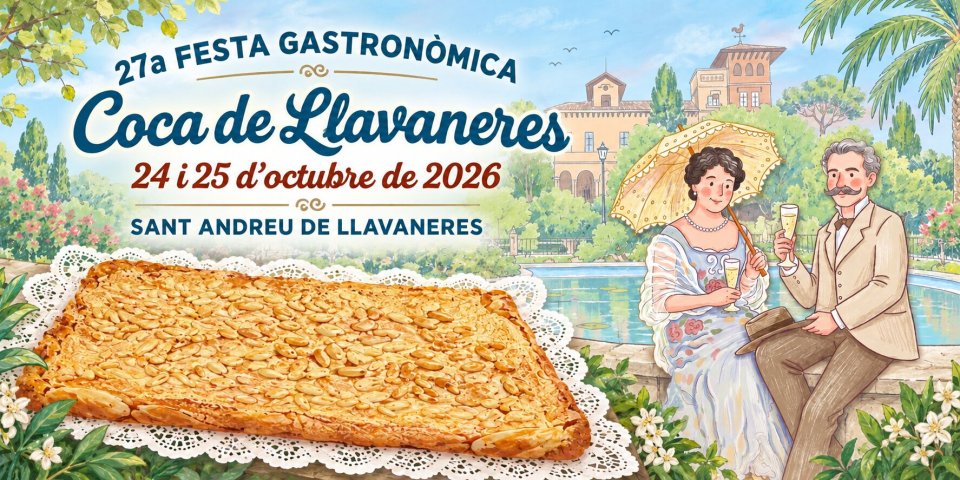
Events
Forest week in Sant Celoni
16 OctoberAmateur Theatre Showcase in Sant Gregori
16 OctoberEuropean Heritage Days in Collbató
16 OctoberZim Zam Cassà - Cassà de la Selva Urban Art Festival
From 16 to 17 OctoberRACC Costa Dorada Rally in Salou
From 16 to 17 OctoberEmbarrats Fair in Sant Joan de Vilatorrada
From 16 to 18 OctoberFish and Rice Gastronomic Days
From 9 to 18 October
News








 Sustainable turism
 Biosphere