


Reial Monestir de Santa Maria de Vallbona
Municipalities
An extraordinary space where the passage of time is shared with the female religious community. With eight hundred years of uninterrupted monastic presence, it is the most unknown and fascinating treasure on the Cistercian Route.
Santa Maria de Vallbona de les Monges is a Cistercian monastery located in the municipality ofVallbona de les Monges, in the Urgell region. The first references to the monastery date back to the year 1153, but it was not until 1176 when it was fully integrated into the Cistercian order.
This is the only female monastery on the Route and also the one that has maintained a monastic community uninterruptedly for more than 850 years, except during times of war, of course.
Vallbona is a beautiful monastery. Despite its small size, it stands out for its unique beauty and is a clear example of the importance of women during medieval times.
In its history we find a list of abbesses who came from the Catalan nobility. Inside the monastery, it is worth noting the two Gothic bell towers, the largest of which rests on the nave of the church. One of the most relevant characteristics of the monastery is the possibility of being able to stay thanks to its careful accommodation. It was declared a historical-artistic monument in 1931.
The church is a clear example of the transition from Romanesque to Gothic. It has a Latin cross plan with a single nave and three rectangular apses with sculptural decoration. Each gallery of the cloister presents a different style: Arabic, Romanesque and Gothic. The chapter house (14th century) houses an image of the Virgin of Mercy (15th century).
Guided tour hours:
- The monastery offers guided tours of the areas open to the public at various time slots. Check the calendar.
- There is the possibility of arranging visits for groups of 25 people or more outside of those days; To do so, contact the telephone number 973 33 02 66 or the mobile phone 639 759 442 or [email protected] in advance.
* Closed: non-holiday Mondays, December 25 and 26 and January 1 and 6. Good Friday closed only in the afternoon.
Nearby routes
Grand Tour de Catalunya - Section 2. Meeting history: from Tarragona to Lleida
Bot, Cambrils, Capafonts, Cornudella de Montsant, Deltebre, El Perelló, El Pinell de Brai, Falset, Gandesa, Guimerà, L'Ametlla de Mar, L'Espluga de Francolí, La Sénia, Les Borges Blanques, Lleida, Miravet, Montblanc, Salou, Tarragona, Tortosa, Ulldecona, Vallbona de les Monges
I want to do this route by electric vehicle! This route is designed to be done by electric vehicle, although it can be done with any other car. Along the route we will suggest municipalities that have charging points and places of interest…
The Cistercian Route, a genuine combination of nature, heritage and landscape
Aiguamúrcia, Vallbona de les Monges, Vimbodí i Poblet
The Cistercian Route is a fascinating journey that takes you back to medieval times through three historic monasteries in Catalonia: the Poblet Monastery, the Santes Creus Monastery and the Vallbona de les Monges Monastery. With a tour through…
Cistercian Route: gastronomy in Vallbona de les Monges
Agramunt, Guimerà, Llorac, Maldà, Tàrrega, Vallbona de les Monges, Verdú, Vilagrassa
On this route we suggest you visit the Monastery of Santa María de Vallbona de las Monjas, a female monastery that is included in the Cistercian Route. We will also make interesting proposals to get to know some of the most charming…
Sanctuary of Santa Maria de la Bovera
Guimerà
Building monasteries and shrines is no stranger in a land like Catalan. It is true that these constructions are present throughout the country, but we must recognize that in the area of confluence of the province of Lleida and Tarragona there…
Urgell Canal pedal route
Arbeca, Balaguer, Castellserà, Juneda, Les Borges Blanques, Linyola, Mollerussa, Penelles, Preixana, Tàrrega, Torregrossa, Vila-sana, Vilanova de Bellpuig
Discover Lleida's plans by pedaling through the Urgell Canal, the most important hydraulic infrastructure work in the history of Catalonia, which changed the appearance of the landscape, the way of life of the people, promoting the development…
Return to Vallfogona de Riucorb
Vallfogona de Riucorb
This fantastic route around Vallfogona de Riucorb takes us to know the diversity of landscapes of the Corb valley, with dry areas and others more humid.
Events
Catalonia Industrial Tourism Week 2026
From 16 to 25 OctoberSanta Ursula Fair in Valls
From 16 to 25 OctoberGuided tours of the old town of Verdú
17 OctoberAntiques and Arts Market of Tàrrega
17 OctoberPresent and future of the peasantry in Catalonia under debate, Castell de Concabella
17 OctoberLes Garrigues Amateur Comic Theatre Showcase
From 17 to 18 OctoberVent Fair of El Pla de Santa Maria
From 17 to 18 October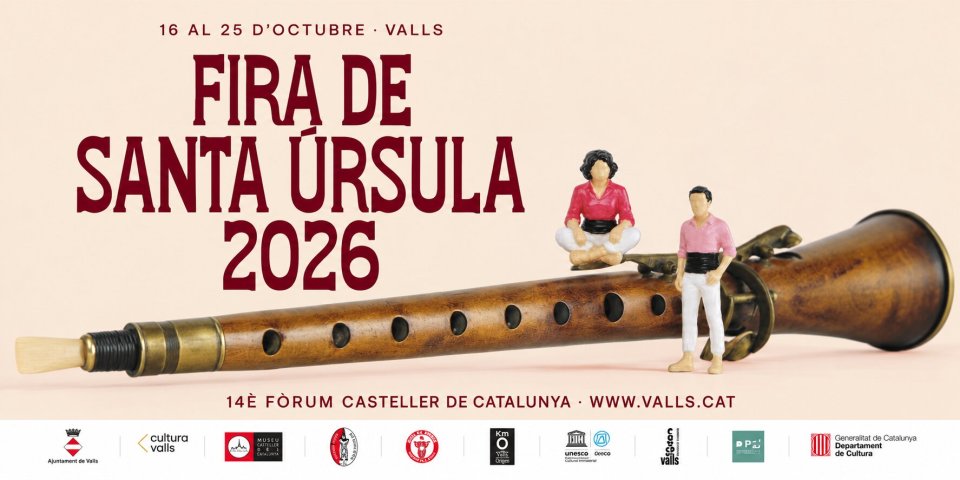
News
Gothic Architecture: The light and height of medieval Catalonia
Gothic architecture marks a turning point in the history of Catalonia. It was the style that transformed cities, places of worship, and the way people built collectively. A style that changed not only the stone itself, but also the way people…
Iron architecture: the light and steam of industrial Catalonia
In the 19th century, the Industrial Revolution not only changed the way people worked and lived, but also profoundly transformed architecture. The arrival of new materials, such as cast iron, wrought iron, and glass, opened up possibilities…








 Sustainable turism
 Biosphere