


Museu Trias de la Galeta
Municipalities
Do you want to experience the history of Trias and his entire life making cookies?
The Trias de la Galeta museum is the fruit of the Trias family's deep love for one thing: making biscuits of the highest quality. Since 1908, their work in the world of biscuits has generated a legacy of objects and documents. This heritage is the basis of the collection that is on display free of charge to the public.
The museum is located next to the factory where Trias biscuits are produced. It is not possible to visit it for reasons of safety and food control, but during the week you can observe its activity through large windows that offer a panoramic view of the production system.
Visit
During your visit to the Trias de la Galeta museum, we will take you on a tour that includes:
- An approach to the flour and confectionery past of Santa Coloma de Farners.
- Themed spaces decorated with original clothing and machines.
- The office of Joaquim Trias, founder of the company.
- The artisanal production of the first Trias products.
- Reconstruction of the old Trias bakery and drugstore of the Trias family.
- Collection of tin boxes and the world of cookies.
The visit also includes viewing an audiovisual and a cookie tasting.
Schedules
The opening hours are from Monday to Thursday from 8 AM to 6 PM and Friday from 8 AM to 2 PM.
Last visit at 12pm and 5:30pm.
Admission to the museum is free and the tour lasts approximately one hour.
If the group is larger than 25 people, the possibility of taking a guided tour is offered free of charge. On weekends, access will be allowed to groups with a minimum of 45 people who have booked in advance.
If anyone wants to take home a souvenir of the experience, there is a shop at the exit where you can find the full range of products that Trias makes.
For more information and reservations, you can call 972 84 12 13 or send an email to: [email protected].

Nearby routes
The route of the bandit Serrallonga
Anglès, Osor, Sant Hilari Sacalm, Santa Coloma de Farners, Viladrau
Probably many of you have heard of Serralonga adopted the nickname Joan Ferrer Sala. Known as the Robin Hood Catalan and this character is known as the man who robbed the rich to give everything to the poor. Currently, it is considered a patriotic…
The sweetest route through La Selva, a route for those with a sweet tooth
Amer, Anglès, Arbúcies, Breda, Caldes de Malavella, La Cellera de Ter, Riudarenes, Sant Hilari Sacalm
Surely the phrase from the French Brillat-savarin sounds familiar to you: "Tell me what you eat and I will tell you how you are". We could adapt it on this occasion and say: "Tell me what you eat and I'll tell you where you are." Who has not…
The mystery of Camp dels Ninots
Caldes de Malavella, Sils
Despite being unknown to many tourist routes in the province of Girona, more focused on coastal areas, El Camp dels ninots (field of the dolls) is one of the most important archaeological sites in Catalonia, and in the Iberian Peninsula in…
Urban route: Caldes de Malavella in Time of Wars (1936-1945)
Caldes de Malavella
The population of Caldes de Malavella was involved, by degree or by force, in the great warlike events of the mid-20th century: the Spanish Civil War, World War II, and the immediate postwar period. As expressed in the first Caldes tourist…
Route through the sources and heritage of Caldes de Malavella
Caldes de Malavella
On this route we suggest you get to know the thermal springs and heritage of Caldes de Malavella in depth. Are you up for it?
Walk through San Mauricio and the Castillo de la Malavella
Caldes de Malavella
Caldes de Malavella could not exist without a legend on the back of its history. A place as fantastic as Caldes, whose origins are lost in time, where the earth has made miraculous waters flow and who knows if it is also of fantastic origin,…
Events
Forest week in Sant Celoni
16 OctoberZim Zam Cassà - Cassà de la Selva Urban Art Festival
From 16 to 17 OctoberMajor Festival of the Aplec del Remei in Santa Maria de Palautordera
From 15 to 18 OctoberAutumn Theater Season in Caldes de Malavella
17 OctoberGuided tour of Hostalric Castle
17 OctoberGuided walking tour through Tossa historic centre in English
17 OctoberGuilleries Fair in Sant Hilari Sacalm
From 17 to 18 October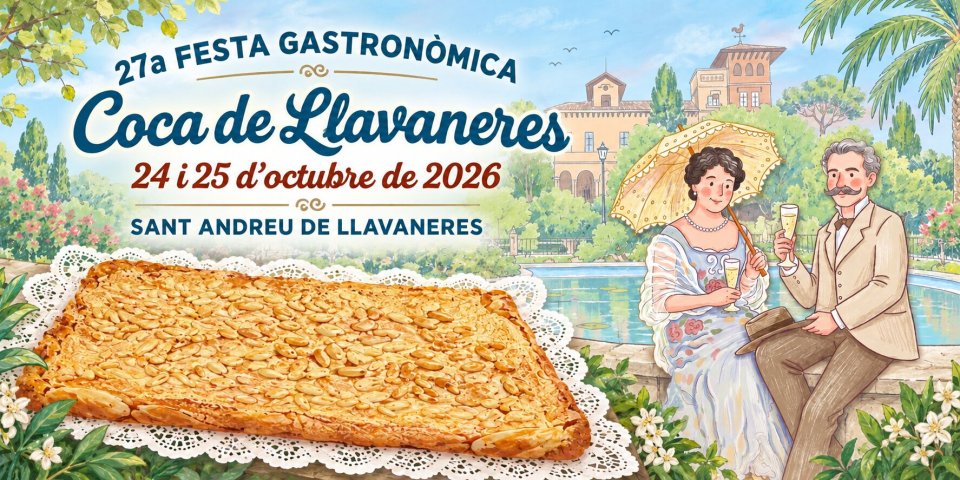
News
Gothic Architecture: The light and height of medieval Catalonia
Gothic architecture marks a turning point in the history of Catalonia. It was the style that transformed cities, places of worship, and the way people built collectively. A style that changed not only the stone itself, but also the way people…
Iron architecture: the light and steam of industrial Catalonia
In the 19th century, the Industrial Revolution not only changed the way people worked and lived, but also profoundly transformed architecture. The arrival of new materials, such as cast iron, wrought iron, and glass, opened up possibilities…








 Sustainable turism
 Biosphere