


Museu Memorial de l'Exili
Municipalities
The Exile Memorial Museum (MUME), located in La Jonquera, is a space dedicated to historical memory that commemorates the exile caused by the Spanish Civil War (1936–1939). The museum stands out as a benchmark among Girona museums for its work in preserving and disseminating the history of the Republican exile.
The MUME aims to explain and promote understanding of the 1939 exodus and to explore all the consequences of that historical event: the internment of refugees in French concentration camps, the deportation and separation of families across France, the departure of thousands of refugees to Latin America, the deportation of many exiles to Nazi extermination camps, and the struggle that many of them later undertook to recover freedom in Spain.
The museum presents, with historical rigor and a clear educational purpose, the diverse and turbulent journeys taken by tens of thousands of people during that period of exile.
The fate of exiled people helps us understand our past and, at the same time, reflect on the humanitarian crises of our own time, led by millions of refugees from across the five continents who, for various reasons, have been forced to leave their homes.
At MUME, we approach the understanding of exile —both its past and its legacy in the present— through multiple resources: the permanent exhibition, temporary exhibitions, the Art and Memory program, the visit to the Canta-Mina Negrín mine in La Vajol, the Walter Benjamin Colloquium in Portbou, as well as guided itineraries through key memory sites across the Girona region and Northern Catalonia.
Surroundings
La Jonquera, located in the Alt Empordà region, is a strategic point near the border with France, making it an emblematic place to understand the magnitude of the 1939 exile.
Its location allows visitors to better contextualize the historical events related to the Republican exile.
Museu Memorial de l'Exili suggests…

Nearby routes
The exile in the Jonquera, the route of the republicans towards France
Agullana, La Jonquera, La Vajol
The Civil War, that lasted from 1936 to 1939, meant the confrontation between the supporters and the opposers to the democratic government of the Republic. The conflict ended with the victory of opponents to the Republic, this end meant that…
La Muga Nature Trail, from the Mediterranean Sea to the Pyrenees
Boadella i les Escaules, Cabanes, Castelló d'Empúries, Peralada, Pont de Molins, Sant Llorenç de la Muga
The Muga Nature Trail follows the course of the Muga River and connects different Natural Areas of Girona, such as the Alta Garrotxa Area of Natural Interest (EIN), the Salinas EIN, the Muga Penyasegats EIN and the Natural Park of the Aiguamolls…
Route Maçanet de Cabrenys - Las Salinas
Maçanet de Cabrenys
This itinerary links two of the most important Long Distance Trails, the GR-11 and its French counterpart the GR-10, which connect the Mediterranean Sea with the Atlantic, from the Basque Country to Catalonia. The one-way distance is about…
Fau Trail: a nature and heritage route in Montseny
Albanyà, Maçanet de Cabrenys
This route takes us to the Hermitage of Our Lady of Fau, in Albanyà. This is a fairly difficult route, with a cumulative elevation gain of 536 meters, offering spectacular panoramic views of Maçanet de Cabrenys. The route is 8.7…
Old Road from Maçanet de Cabrenys to Tapis
Maçanet de Cabrenys
This itinerary crosses the old road from Maçanet de Cabrenys to Tapis, used for years by the locals to move from one town to another. Although part of the road has served as the axis of the new road that joins the two towns, the old…
Route through the Carena del Roc de Fraussa from the Sanctuary of Las Salinas
Maçanet de Cabrenys
Difficulty: Easy. No special difficulty. Some small climb to climb the Rocs de la Fraussa and El Contador. Unevenness: 594 m of accumulated positive unevenness. Time: total: 4h. Kilometers: 9 km. Variants: Another alternative to this route…
Events
Llançà in autumn, September and October
From 1 September to 31 OctoberVisit: The Romanesque paintings of Santa Eulàlia, a treasure of the Empordà
24 OctoberThe Chestnut Festival in Port de la Selva
31 OctoberChestnut Fair in Maçanet de Cabrenys
7 NovemberGuided tour: Medieval Peralada
14 November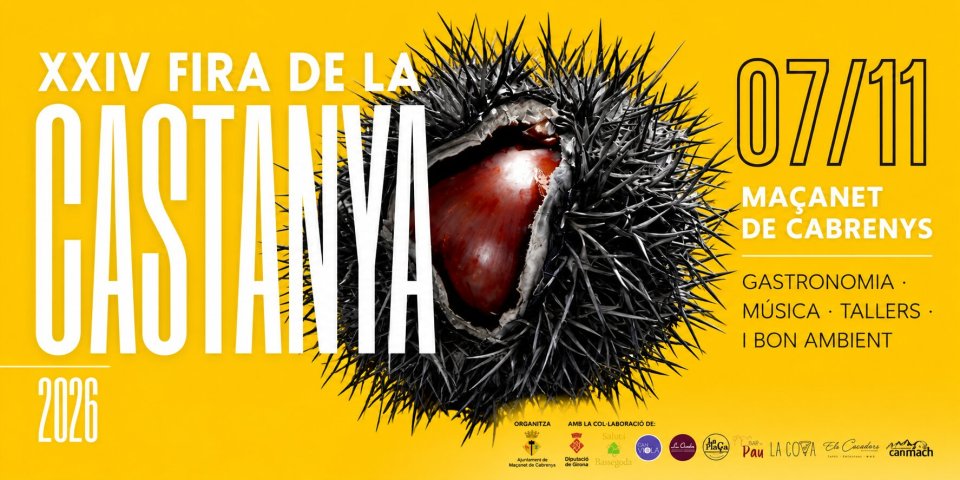
News
Gothic Architecture: The light and height of medieval Catalonia
Gothic architecture marks a turning point in the history of Catalonia. It was the style that transformed cities, places of worship, and the way people built collectively. A style that changed not only the stone itself, but also the way people…
Iron architecture: the light and steam of industrial Catalonia
In the 19th century, the Industrial Revolution not only changed the way people worked and lived, but also profoundly transformed architecture. The arrival of new materials, such as cast iron, wrought iron, and glass, opened up possibilities…








 Sustainable turism
 Biosphere