


Museu Etnològic del Montseny
Municipalities
The Montseny Ethnological Museum, considered one of the best ethnographic museums in Catalonia, is a center for the exhibition, conservation, dissemination and research of the cultural heritage of the Montseny massif.
The 15 permanent exhibition rooms show the material testimonies of the communities that have inhabited Montseny, from prehistory to the middle of the 20th century. You will find the spectacular Mural del Bosque; the world of craft trades; the recreation of the Cal Xic café; a bus from 1923, a symbol of the Arbucian bus body industry.
visit him
They will offer you experiences and activities so that everyone can learn and explore elements of the cultural, social and natural heritage of our territory: El Montseny.
activities for everyone
The Ethnological Museum of Montseny wants to make its contents reach the maximum number of people of different ages, educational levels, social conditions and physical or mental abilities. For this reason, they propose a series of itineraries, workshops, visits and educational activities to disseminate the cultural aspects of the Montseny massif, giving a vision of the different uses of the mountain, from a historical, traditional and current perspective.
The duration of the itineraries and workshops can be a full day or half a day. The museum offers the possibility of combining the offer and adjusting hours to suit your needs.
Documentation
The Documentation Area of the Ethnological Museum of Montseny, La Gabella, contemplates all types of information and documentation in different supports and formats.
Schedule
- Tuesday to Friday: from 10:30 a.m. to 1:30 p.m. and from 5:00 p.m. to 7:30 p.m.
- Saturday: from 10:30 a.m. to 2:00 p.m. and from 4:30 p.m. to 7:00 p.m.
- Sunday: from 10:30 a.m. to 2:00 p.m.
Nearby routes
The sweetest route through La Selva, a route for those with a sweet tooth
Amer, Anglès, Arbúcies, Breda, Caldes de Malavella, La Cellera de Ter, Riudarenes, Sant Hilari Sacalm
Surely the phrase from the French Brillat-savarin sounds familiar to you: "Tell me what you eat and I will tell you how you are". We could adapt it on this occasion and say: "Tell me what you eat and I'll tell you where you are." Who has not…
The route of the bandit Serrallonga
Anglès, Osor, Sant Hilari Sacalm, Santa Coloma de Farners, Viladrau
Probably many of you have heard of Serralonga adopted the nickname Joan Ferrer Sala. Known as the Robin Hood Catalan and this character is known as the man who robbed the rich to give everything to the poor. Currently, it is considered a patriotic…
From Osor to Sant Miquel de les Formigues
Osor, Sant Hilari Sacalm
Osor is a municipality in the district of La Selva, the term is a magnificent valley with unique beauties that can be seen performing pleasant walks. Osor Valley is characterized by rugged terrain that is surrounded by the mountains of the…
Route for adventure parks in Catalonia
Arenys de Munt, Barcelona, Cerdanyola del Vallès, Dosrius, Esterri d'Àneu, Llívia, L’Esquirol, Mataró, Molló, Porrera, Prullans, Salou, Sant Hilari Sacalm, Santa Susanna
Jumping from one tree to another, fly like a bird, feel the air and caress the cheeks, seeing everything from above, feel that indescribable feeling of living a unique experience and realize that all this have only the possibility of repeating…
Route through Susqueda
Sant Hilari Sacalm, Susqueda
We propose a visit to the municipality of Susqueda where we will enter the heritage of the small municipality and we will learn about its origins and secrets. Are you accompanying us?
The Vigatans' Covenant
Barcelona, Capçanes, La Seu d'Urgell, Les Masies de Roda, Manlleu, Perafita, Roda de Ter, Sant Hilari Sacalm, Santa Eulàlia de Riuprimer, Sort, Torrelles de Foix, Vic
After Felipe V in 1702 are proclaimed as king of the Spanish monarchy and disagreeing various territories, including Catalonia, England, Holland, Portugal and the Austrian Empire, in 1703 these proclaimed Carlos III of Austria as monarch. In…
Events
Alfaro Year in Sant Andreu de Llavaneres
16 OctoberAmateur Theatre Showcase in Sant Gregori
16 OctoberMajor Festival of the Aplec del Remei in Santa Maria de Palautordera
From 15 to 18 OctoberModernist Conferences in la Garriga
From 16 to 18 OctoberCatalonia Industrial Tourism Week 2026
From 16 to 25 OctoberCalamarenys - Arenys de Mar Squid Gastronomic Days
From 9 October to 8 NovemberPanoràmic Festival in Granollers, Barcelona, Terrassa and Vic
From 15 October to 27 December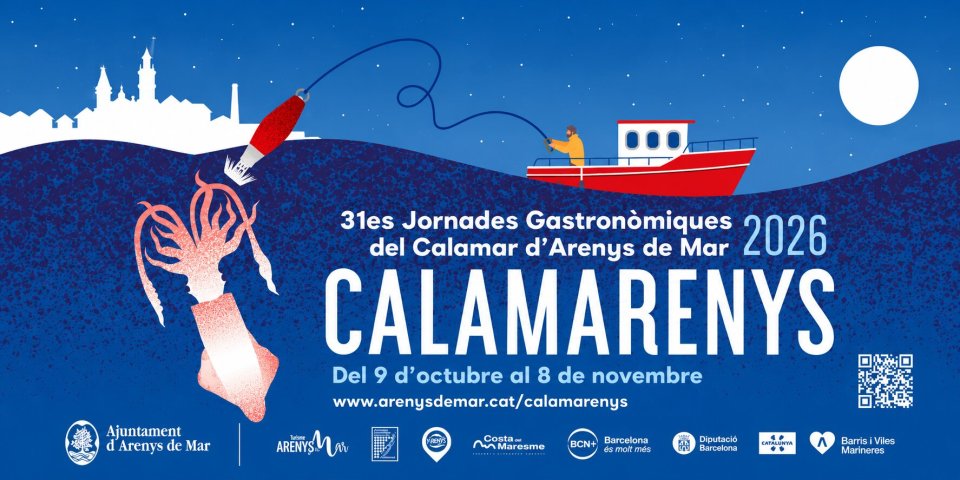
News
Gothic Architecture: The light and height of medieval Catalonia
Gothic architecture marks a turning point in the history of Catalonia. It was the style that transformed cities, places of worship, and the way people built collectively. A style that changed not only the stone itself, but also the way people…
Iron architecture: the light and steam of industrial Catalonia
In the 19th century, the Industrial Revolution not only changed the way people worked and lived, but also profoundly transformed architecture. The arrival of new materials, such as cast iron, wrought iron, and glass, opened up possibilities…








 Sustainable turism
 Biosphere