


Museu de les Aigües
Municipalities
The Water Museum, located in Cornellà de Llobregat, is a unique space that combines industrial heritage, science, and sustainability to offer an educational and recreational experience centered around water. Housed in the historic Cornellà Power Plant, a water extraction and pumping plant inaugurated in 1909, the museum is still in operation and supplies water to more than three million people in the Barcelona metropolitan area.
LOCATION
It occupies the modernist buildings of the Central Cornellà, the plant that Aigües de Barcelona opened in 1909 to extract water from the Llobregat aquifer and thus cover Barcelona.
Today, the Cornellà Power Plant continues to perform the same function it did a century ago, and the original steam hydraulic system coexists with modern pumping stations. Thus, the Museum is also, at the same time, a working industry, a place where past and present intertwine over a common substrate: groundwater.
But above all, the Museum is a living space, designed to bring forth the diverse manifestations and approaches to water, through a range of exhibitions and activities for all audiences.
Educational activities
Through education, we aim to move toward a more sustainable and environmentally friendly society that values the importance of water in our lives. For this reason, we have created a program tailored to different educational levels.
The program encourages contextualized work on the entire water cycle, sustainability, and the Sustainable Development Goals linked to future water challenges.
The Water Museum offers a wide range of activities for different ages and interests:
- Guided tours: discover how the plant works and the history of Barcelona's water supply.
- Family workshops: hands-on experiences to learn about water in a fun way.
- Educational activities: program adapted to different school levels to work on the water cycle and sustainability
- Digital Experiences: Virtual tours, interactive games, and online activities to explore the museum from home.
The Cornellà de Llobregat Water Museum offers an educational and recreational experience centered around water, combining industrial heritage, science, and sustainability in a unique modernist setting.
Museu de les Aigües suggests…
Hacdosoh 3.10!!! - Museum of Waters
Museu de les AigüesThrough a series of modules, this activity invites families to discover the world of water through play and experimentation. Each module offers a different approach that helps children understand where water is found, how much there is, and…
Explorer Backpack - Water Museum
Museu de les AigüesThis activity is designed for families who want to discover the Water Museum in a fun and shared way. Using a backpack full of materials—binoculars, magnifying glasses, old photographs, and a booklet with a map and explanations—children…
Nearby routes
A stroll through the gardens surrounding Barcelona
Cornellà de Llobregat, Esplugues de Llobregat, Gavà, Sant Feliu de Llobregat, Sant Joan Despí, Sant Just Desvern
The gardens are areas where it is grown, pleasure, diverse vegetation orderly and combined with other elements such as fountains and sculptures. These gardens, as they called once before the adoption of the French word "garden", have a long…
May 18: International Museum Day in Barcelona
Barcelona, Cornellà de Llobregat
This time a very different route, a route that you will do yourself according to your interest! As you already know, May 18 is International Museum Day (organized by ICOM), which is why different activities are carried out (workshops, guided…
The Baix Llobregat, a trip through history
El Papiol, Gavà, Sant Boi de Llobregat, Sant Climent de Llobregat, Sant Joan Despí, Santa Coloma de Cervelló, Torrelles de Llobregat
The route offers you this month femTurisme lies south of the Baix Llobregat, a region full of historical heritage, natural and monumental, but often absorbed and forgotten by the tourist attractions and events of Barcelona. The proposed route…
Itinerary Jujol in Sant Joan Despí
Sant Joan Despí
In Sant Joan Despí we find one of the most important legacies of the architecture of Josep Maria Jujol Gibert. He can be considered "such an artist" because he was able to master architecture by imposing a new style by applying it to…
The main characters in the the siege of 1714
Barcelona, Lleida, Moià, Sant Boi de Llobregat, Sant Hilari Sacalm, Sort
The story is not written on paper with the help of a pen. The story is drawn with the facts, actions, decisions and actions that people do. And the site of Barcelona September 11, 1714, like many other historical events, was created as well.…
Trying the 1714 food
Barcelona, Cardona, Cervera, Els Prats de Rei, La Seu d'Urgell, Lleida, Manresa, Moià, Sant Boi de Llobregat, Talamanca, Vic
The 1714 was a year that marked the Catalan region: culture, traditions, people and also gastronomy. This was important because it was the fuel that gave strength to the fighters of the battles. It gave them strength or weakened, the carrying…
Events
Sitges - International Fantastic Film Festival of Catalonia
From 8 to 18 OctoberCatalonia Industrial Tourism Week 2026
From 16 to 25 OctoberSostibaix, the sustainable fortnight of Baix Llobregat
From 15 October to 1 November'La Moguda Gastronòmica' in Santa Perpètua de Mogoda
From 9 October to 8 NovemberPanoràmic Festival in Granollers, Barcelona, Terrassa and Vic
From 15 October to 27 DecemberThe Castañera in La Pedrera!
17 OctoberScenic programming in Gelida
17 October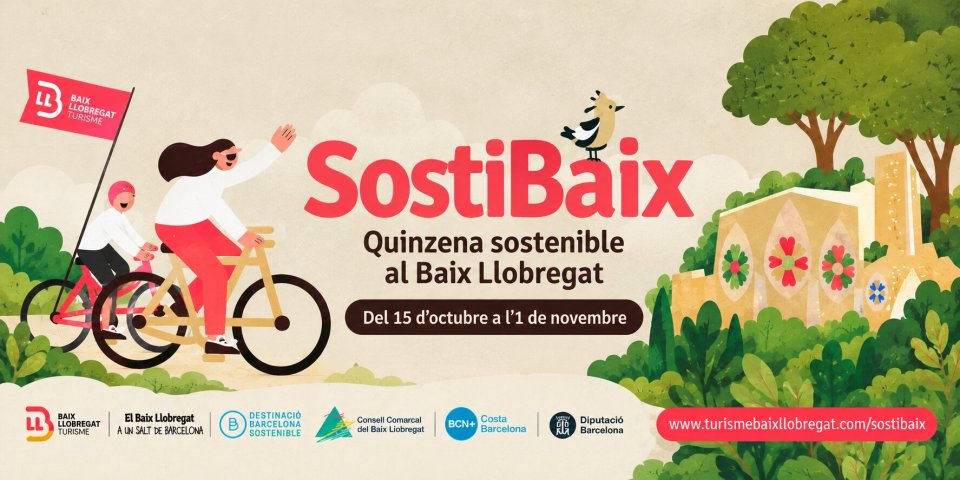
News
Iron architecture: the light and steam of industrial Catalonia
In the 19th century, the Industrial Revolution not only changed the way people worked and lived, but also profoundly transformed architecture. The arrival of new materials, such as cast iron, wrought iron, and glass, opened up possibilities…
Gothic Architecture: The light and height of medieval Catalonia
Gothic architecture marks a turning point in the history of Catalonia. It was the style that transformed cities, places of worship, and the way people built collectively. A style that changed not only the stone itself, but also the way people…








 Sustainable turism
 Biosphere