

Museu Apel·les Fenosa
Municipalities
The Apel·les Fenosa Museum, inaugurated on July 12, 2002, is located in a 16th-century Renaissance-style building, built on one of the gates that formed part of the walled enclosure of the town and is the oldest civil building in El Vendrell.
The building
The building was the summer home and workshop of the sculptor Apel·les Fenosa and the engraver and photographer Nicole Florensa, who acquired it in 1958. The premises of the Apel·les Fenosa Foundation preserve both the permanent collection and the different rooms where the Fenosa family and their friends, great intellectuals and artists of the time, spent the summers, which have been kept intact, as well as their garden.
The building is listed as a Cultural Asset of National Interest (BCIN). Throughout its history, it has been the residence of various families who owned the stately home, such as the Nin and Guimerà families, but it also served as a notary's office and a school at different times, reflecting the lives of its notable inhabitants. Its two exterior façades on Carrer Major and Carrer del Portal—the latter dedicated to Maria Anna Guimerà— are particularly noteworthy, as is the view from within the garden, where the imposing tower can be appreciated.
Collections
The collections include a selection of original sculptures in clay, plaster, and bronze, as well as explanations of the casting process. There is also a garden featuring large-scale sculptures, some of the artist's most outstanding works. Apel·les Fenosa produced a significant body of work comprising hundreds of sculptures of varying sizes, drawings, and prints. His sculptures evolved through several stages, from figurative to anthropomorphic, culminating in a personal abstraction of bodies and narratives.
Apel·les Fenosa was born in Barcelona in 1899 and settled in France in 1920 after fleeing military service. In Paris, the city where he lived for most of his life, he held his first exhibition in 1924 at the Galerie Percier, where the catalogue's foreword was written by Max Jacob. There he met and befriended renowned artists, writers, and intellectuals such as Picasso, one of his main collectors, Paul Éluard, Jean Cocteau, Tristan Tzara, Maria Helena Vieira da Silva, and others, many of whom also spent summers at his house in El Vendrell.
Fenosa exhibited individually or collectively in Paris, London, Barcelona, Madrid, Prague, New York, Tokyo, Osaka, Casablanca, Carrara, etc. and obtained important distinctions at the end of his life, such as the Gold Medals of the Generalitat of Catalonia and the City of Barcelona (1982 and 1987) and the Legion of Honour from the French Ministry of Culture (1983).
Nearby routes
Grand Tour de Catalunya - Section 1. Vineyards with taste in the sea: from Barcelona to Tarragona
Aiguamúrcia, Barcelona, Cabra del Camp, Cardona, El Vendrell, Monistrol de Montserrat, Mura, Navès, Sant Fruitós de Bages, Sant Llorenç de Morunys, Sant Sadurní d'Anoia, Sitges, Solsona, Súria, Tarragona, Vilafranca del Penedès
I want to do this route by electric vehicle! This route is designed to be done by electric vehicle, although it can be done with any other car. Along the route we will suggest municipalities that have charging points and places of interest…
150 years of the railway from Tarragona to Martorell
Altafulla, El Vendrell, Gelida, L'Arboç, La Granada, Martorell, Sant Sadurní d'Anoia, Santa Margarida i els Monjos, Subirats, Tarragona, Torredembarra, Vilafranca del Penedès
2015 marked the 150th anniversary of the arrival of the railroad that connected the lands of Penedés and Tarragona with Barcelona. This construction involved the connection, by rail, of two of the Catalan capital, Tarragona and Barcelona,…
Pau Casals route for El Vendrell
El Vendrell
The figure of Pau Casals is unique. It is a figure able to lead us to very important moments in the history of Catalonia. Pau Casals is not simply a cellist. It is the cellist for execel·lència of our lands and possibly the world.…
A tour of the capitals of xató
Calafell, Cubelles, Cunit, El Vendrell, La Bisbal del Penedès, Sant Pere de Ribes, Sitges, Vilafranca del Penedès, Vilanova i la Geltrú
History of the Xató Route Since 1997, the towns of the historic Penedès region have celebrated the Xató Route, which aims to popularize this dish, which is usually consumed from November to April, and to learn about the…
On the road through the capitals of Xató
Calafell, Canyelles, Cubelles, Cunit, El Vendrell, Sant Pere de Ribes, Sitges, Vilafranca del Penedès, Vilanova i la Geltrú
Catalonia is a territory that, among many other things, stands out for its gastronomy. Mediterranean cuisine with all its flavors and smells. That is why there are many routes with this theme. In the regions of Alt i Baix Penedès and…
A tour for golf players in Catalonia
Calafell, Caldes de Malavella, El Catllar, Girona, Gualta, Mont-roig del Camp, Pals, Peralada, Puigcerdà, Sant Cugat del Vallès, Sant Julià de Ramis, Santa Cristina d'Aro, Sitges, Tarragona
Golf is a sport that started practicing in the fifteenth century. Its origins come from Scotland, the entertainment that had the Scottish shepherds, who with batons beat pebbles they had to reach a target. In Catalonia the game came later in…
Events
Canyelles Welcomes Autumn
From 23 to 25 OctoberClownic Festival in Torrelles de Foix
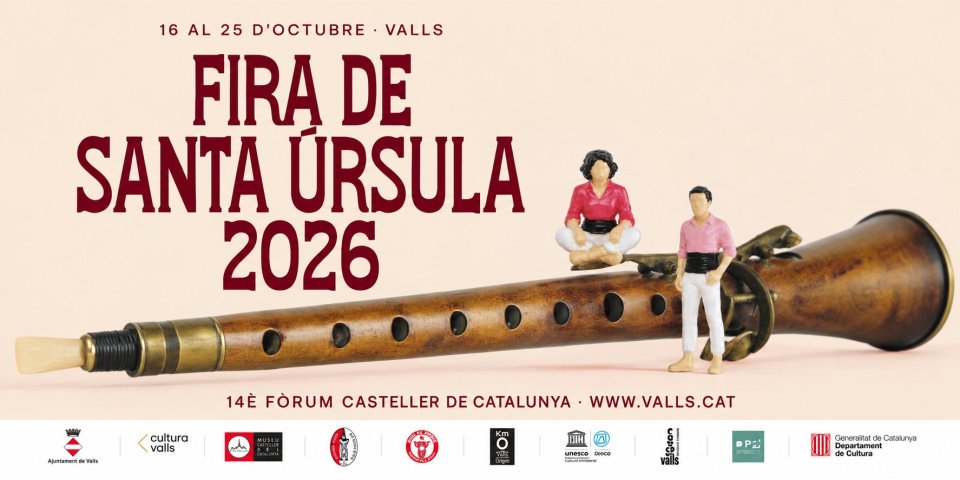
From 23 to 25 OctoberSanta Ursula Fair in Valls
From 16 to 25 OctoberHalloween Festival in Masllorenç
30 OctoberSant Martí Festival in Altafulla
From 31 October to 1 NovemberCrafts and Brocanters Market in Santa Margarida i els Monjos
1 NovemberMost, International Wine Film Festival in Penedès and Priorat
From 5 to 15 November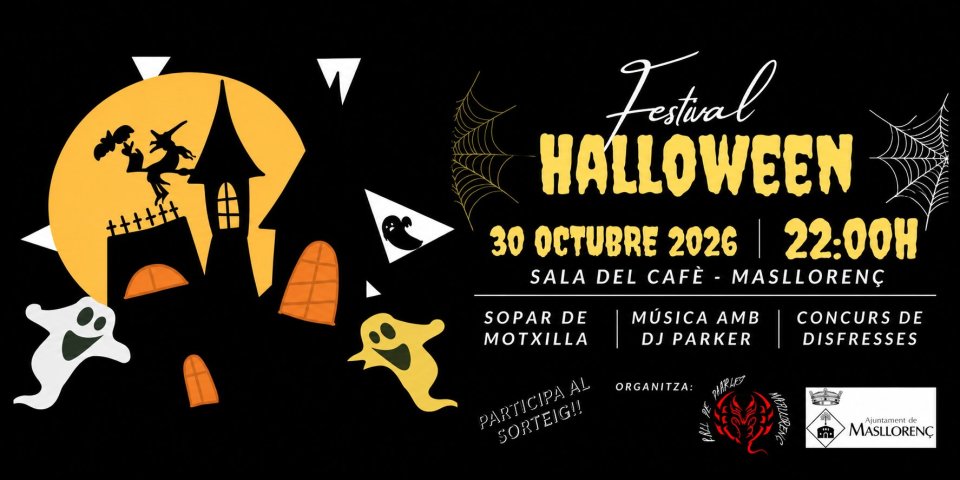
News
Gothic Architecture: The light and height of medieval Catalonia
Gothic architecture marks a turning point in the history of Catalonia. It was the style that transformed cities, places of worship, and the way people built collectively. A style that changed not only the stone itself, but also the way people…
Iron architecture: the light and steam of industrial Catalonia
In the 19th century, the Industrial Revolution not only changed the way people worked and lived, but also profoundly transformed architecture. The arrival of new materials, such as cast iron, wrought iron, and glass, opened up possibilities…






 Sustainable turism
 Biosphere