


Mina de petroli dels "Francesos" de Riutort
Municipalities
At the end of the 19th century, Catalan industrialists, realizing the country's limitations in obtaining energy resources, placed their hopes in the exploitation of Catalan coal deposits and, more specifically, in obtaining oil from the treatment of different types of rocks.
Since the beginning of the 20th century, the existence of requests for the exploitation of bituminous marls in the Riutort area was known. It was the Frenchmen Jules León Clavier y Gosselet and Philippe Petit Brice who, through their company, Compañía Minera de Riutort, created in 1906, began the construction and exploitation of the mine. Due to the nationality of the new owners, the Riutort oil mine has since been known as the "French mine".
In the 340 meters of the Riutort Oil Mine, between the main, transversal and secondary galleries, and during the 10 years that it was in operation (1906-1916), approximately 3,500 tons of bituminous marl were extracted, which gave an average that did not exceed 70 liters of oil per ton. Initially, oil was extracted from the layers of bituminous marl that emerged outside, but later, in order to obtain greater yield, the bituminous marl was searched through a system of galleries.
The material was extracted from the mine with animal-drawn carts along a 600 mm wide track, to be dried and thus extract all the water and humidity it may contain. This is when the resulting product was introduced into rotating kilns that distilled the raw material and converted it into a low-quality bituminous oil, used mainly for lighting petroleum or kerosene lamps, for greasing or for paving the roads. streets. The difficulty represented by the distillation of the extracted mineral, due to its subsequent conversion into low-quality bitumen, and the little use it received, meant that shortly after starting exploitation, the extractive activity had to be stopped.
The restoration process of the mine mouth and part of the 340 meters of galleries, turn this mine into a visitable resource that allows you to see the different layers of marl and limestone, and how the oil gushes out, feeling the characteristic smell of hydrocarbons.
ARRANGEMENT AND GUIDED VISITS
- Saturday mornings at 10:00, 11:30 and 13:00.
- Sundays and holidays at 10:00, 11:30 and 13:00
*Outside these hours, visits arranged in advance.
Discover it!
Nearby routes
The Fia-Faia, Christmas tradition
Bagà, Sant Julià de Cerdanyola
Started in December we are very close to the Christmas party, the streets are decorated and popular traditions resurface again recalling the practices that our ancestors exercised. In Catalan popular festivals are often closely linked with…
Picasso's Way from Berguedà to Cerdanya
Bellver de Cerdanya, Gósol, Guardiola de Berguedà, Saldes
In the spring of 1906 the painter Pablo Picasso, encouraged by a friend who knew the town, settled in Gósol. For two and a half months, the people and landscapes of this corner of Berguedà inspired the artist's work. The journey…
The Romanesque in Alt Berguedà
Berga, Borredà, Guardiola de Berguedà, La Pobla de Lillet, Sant Jaume de Frontanyà, Vilada
Alt Berguedà area is known for its natural environment: mountains, forests, mushrooms, etc., but this time we will look at us with new eyes. We will do a historical and artistic look is that this space also includes an important and…
Penyes Altes del Moixeró from Gréixer
Guardiola de Berguedà, Riu de Cerdanya, Urús
Often overshadowed by its taller neighbors (El Cadí and La Tosa), El Moixeró is a mountain range that we have passed through the Cadí Tunnel many times but which is worth discovering from above. A route with a demanding…
Grand Tour of Catalonia - Section 4. Ode in nature: from La Seu d'Urgell to Figueres
Bagà, Banyoles, Bellver de Cerdanya, Besalú, Camprodon, Castellar de n'Hug, Figueres, Guardiola de Berguedà, Llívia, Meranges, Olot, Puigcerdà, Ribes de Freser, Ripoll
I want to do this route by electric vehicle! This route is designed to be done by electric vehicle, although it can be done with any other car. Along the route we will suggest municipalities that have charging points and places of interest…
Looking for mushrooms in Berguedà and Solsonès
Avià, Bagà, Berga, Capolat, Casserres, Castellar de n'Hug, Cercs, Gironella, Guardiola de Berguedà, L'Espunyola, La Pobla de Lillet, Olvan, Prats de Lluçanès, Puig-reig, Saldes, Sant Llorenç de Morunys, Solsona, Vilada
Mushroom hunting has become a national sport in its own way and we have to enjoy our forests. Go to look for mushrooms and is a general obsession, and this is great news because it means that citizens of this country appreciates and loves the…
Events
The Berguedà mushroom kitchen
From 18 September to 22 NovemberMushroom Festival in Guardiola de Berguedà
From 17 to 18 OctoberFeast of Sant Galderic de Avià
From 17 to 18 OctoberNovemberfest - The Hops and Craft Beer Festival of Avià
24 OctoberBerga Mushroom Festival
25 OctoberBunquerada Popular Walk in Montellà and Martinet
25 OctoberCycle of Healthy Walks in Guardiola de Berguedà
26 October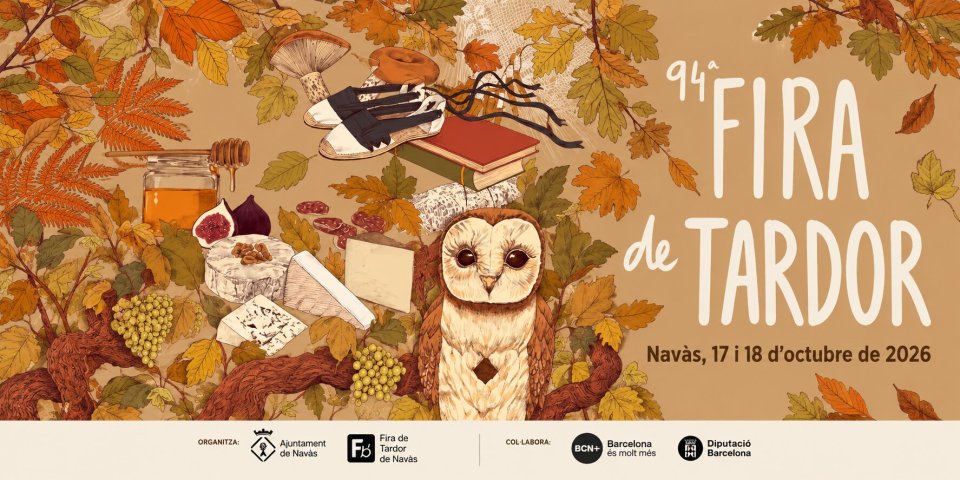
News
Gothic Architecture: The light and height of medieval Catalonia
Gothic architecture marks a turning point in the history of Catalonia. It was the style that transformed cities, places of worship, and the way people built collectively. A style that changed not only the stone itself, but also the way people…
Iron architecture: the light and steam of industrial Catalonia
In the 19th century, the Industrial Revolution not only changed the way people worked and lived, but also profoundly transformed architecture. The arrival of new materials, such as cast iron, wrought iron, and glass, opened up possibilities…








 Sustainable turism
 Biosphere