


La Passió d’Ulldecona
Municipalities
500 years of history
In 2012, a unique document from 1512 was discovered in the Chapter and Diocesan archives of Tortosa, certifying that religious performances were already taking place in Ulldecona more than 500 years ago.
In the Parish Archive of Ulldecona, within the Book of Resolutions of the Clergy of Ulldecona (1558-1840), a manuscript was found, a Descent from the Cross, which was studied by Jaume Romeu Figueras in 1962 and duly treated in his work The Texts on the Davall. The document in question is a text of 248 verses that formed part of a set of acts or paintings on the Passion of Christ.
Recently, performances of this fragment of the manuscript, in Old Catalan, have been performed, which is known as the act of the Descent from the Cross.
70 years of performances
The current Passion of Ulldecona was born in 1955, by Josep M. Rafí i Poblet using various texts.
- In 1964, the text by Josep M. Junyent Quintana premiered.
- In 1993, a new text was premiered in Catalan, written by Jaume Vidal i Alcover, combining the Passion in Catalan and Spanish ever since.
- In 2014, a new version by playwright Ignasi Roda i Fàbregas based on the work by Junyent Quintana premiered.
Finally, in 2016, the stage, dramatic, and literary aspects were unified by the different authors, using the same text in both the Catalan and Spanish versions.
Currently, the Ulldecona Passion Play is made up of 150 people, divided between actors, actresses and technicians, who make possible every spring, without interruption, the performance of the greatest show produced in our region.
A Passion that is close, dynamic, with emotions on the surface and modernized every year with the latest technologies, which will transport the viewer to the center of the greatest story ever told.
Nearby routes
Grand Tour de Catalunya - Section 2. Meeting history: from Tarragona to Lleida
Bot, Cambrils, Capafonts, Cornudella de Montsant, Deltebre, El Perelló, El Pinell de Brai, Falset, Gandesa, Guimerà, L'Ametlla de Mar, L'Espluga de Francolí, La Sénia, Les Borges Blanques, Lleida, Miravet, Montblanc, Salou, Tarragona, Tortosa, Ulldecona, Vallbona de les Monges
I want to do this route by electric vehicle! This route is designed to be done by electric vehicle, although it can be done with any other car. Along the route we will suggest municipalities that have charging points and places of interest…
The Passions in Catalonia: tradition and sacred theatre
Cervera, Esparreguera, Olesa de Montserrat, Sant Hilari Sacalm, Ulldecona, Verges
Catalonia is a country with a wide range of customs and traditions. Almost every month of the year there is a holiday to celebrate that takes us back in time and revives some part of our historical and cultural legacy. In this case, the beginning…
Ebro Delta, nature in its purest form
Alcanar, Amposta, Deltebre, La Ràpita, Sant Jaume d'Enveja
The Ebro delta, with 320 square kilometers, is the most important wetland area in Catalonia and the first aquatic habitat in the western Mediterranean. The route we propose will allow you to discover an area of extraordinary biological wealth,…
Sports tourist destinations of Catalonia
Amposta, Banyoles, Blanes, Calella, Cambrils, Castelldefels, Castelló d'Empúries, Girona, L'Hospitalet de Llobregat, La Seu d'Urgell, Lloret de Mar, Naut Aran (Salardú), Salou, Santa Susanna, Sort
Catalonia has a strong sporting tradition, which remains in force today, because each year there are over 40 international championships. The organization of these championships, among which we can highlight the celebration of the 1992 Olympics…
Literary route in the Modern Catalonia
Barcelona, Santa Cristina d'Aro, Tortosa, Vallfogona de Riucorb
The literary moment of 1714 is surrounded by everything that had lived until then and later that live not only in literary terms but also in political and social terms. This means that during the modern era have ups and downs in this field.…
After the Nova Planta laws
Barcelona, Girona, Lleida, Solsona, Tarragona, Tortosa, Vic
After a war there are always catastrophic: people killed, injured, destruction of buildings, etc. But we should not consider only tangible harm. Also keep in mind all that is not seen, but felt that over the years the catastrophe left clear…
Events
Festast, Food Fair of the Terres de l'Ebre in Tortosa
From 6 to 8 NovemberUlldecona cultural
7 NovemberGastronomic days of the Clementina of Alcanar
From 13 November to 13 DecemberEXPOCÍTRIC Alcanar - European Citrus Capital
From 14 to 15 NovemberChristmas Fair in the Old Town of Tortosa
From 4 to 6 DecemberAmposta Trade Fair
From 5 to 8 December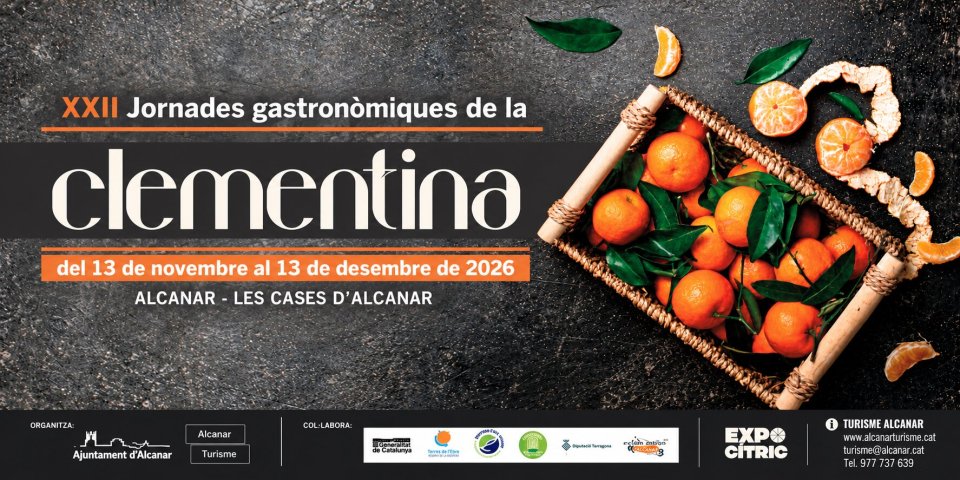
News
Gothic Architecture: The light and height of medieval Catalonia
Gothic architecture marks a turning point in the history of Catalonia. It was the style that transformed cities, places of worship, and the way people built collectively. A style that changed not only the stone itself, but also the way people…
Iron architecture: the light and steam of industrial Catalonia
In the 19th century, the Industrial Revolution not only changed the way people worked and lived, but also profoundly transformed architecture. The arrival of new materials, such as cast iron, wrought iron, and glass, opened up possibilities…







 Sustainable turism
 Biosphere