


Hotel Celler Buil & Giné
Municipalities
Six generations of viticulture in the Priorat to 'grow' high quality wines always respectful of its origins. They are thin, elegant and versatile. His winery is located next to Gratallops and is the only one in the region with open to the public seven days a week, 362 days a year doors. We also have products Priorat shop, restaurant and a small hotel. They all work with the philosophy of creating a true experience to every person who visits us.
wine tourism
We open our doors to all wine lovers to enjoy an authentic experience around wine, culture and gastronomy. We have our own shop, with our wines and other products of the best quality, tasting room, restaurant, hotel, rooms accommodating up to 200 people, and multi-functional terraces with spectacular views. We offer all the possibilities that imagination might suggest, always surrounded by wine.
We invite you to discover all our enoturísticas proposals and, if not encuentráis yours, contact us: as you design it !
hotel
If you are looking for a unique experience, a different and unique accommodation, we offer the possibility of staying in a winery, a different accommodation will allow you to have more direct contact with the world of wine, while the tranquility that it offers, differentiating and conventional hotels, giving an exclusive and personal to those lovers of nature touch, gastronomy and of course, wine lovers. All aixòamb a quality equivalent to a 4 * hotel.
Restaurant
In our restaurant "Friends", nestled high in the cellar, we offer a modern gastronomy, quality, market and seasonal products, which always gives priority to food of our region. All presented with a touch of peculiarity of our chef Marc Pi, Priorat passionate about cooking.
Nearby routes
Wine lands Priory
Falset, Gratallops, La Morera de Montsant, Porrera
When we refer to the territory of the Priory tarraconense inevitably also we do it from his wine because, despite being a region of small dimensions, enjoys international prestige as a wine reference. The reality today in this region makes…
Route for adventure parks in Catalonia
Arenys de Munt, Barcelona, Cerdanyola del Vallès, Dosrius, Esterri d'Àneu, Llívia, L’Esquirol, Mataró, Molló, Porrera, Prullans, Salou, Sant Hilari Sacalm, Santa Susanna
Jumping from one tree to another, fly like a bird, feel the air and caress the cheeks, seeing everything from above, feel that indescribable feeling of living a unique experience and realize that all this have only the possibility of repeating…
Sundials in Porrera
Porrera
This town, located east of the region of Priorat, in Tarragona, is known for two reasons. One, by the wine lands in which it sits, to the valley of the river Cortiella, which guarantees a rich vines and the existence of five renowned wineries…
Grand Tour de Catalunya - Section 2. Meeting history: from Tarragona to Lleida
Bot, Cambrils, Capafonts, Cornudella de Montsant, Deltebre, El Perelló, El Pinell de Brai, Falset, Gandesa, Guimerà, L'Ametlla de Mar, L'Espluga de Francolí, La Sénia, Les Borges Blanques, Lleida, Miravet, Montblanc, Salou, Tarragona, Tortosa, Ulldecona, Vallbona de les Monges
I want to do this route by electric vehicle! This route is designed to be done by electric vehicle, although it can be done with any other car. Along the route we will suggest municipalities that have charging points and places of interest…
The Vigatans' Covenant
Barcelona, Capçanes, La Seu d'Urgell, Les Masies de Roda, Manlleu, Perafita, Roda de Ter, Sant Hilari Sacalm, Santa Eulàlia de Riuprimer, Sort, Torrelles de Foix, Vic
After Felipe V in 1702 are proclaimed as king of the Spanish monarchy and disagreeing various territories, including Catalonia, England, Holland, Portugal and the Austrian Empire, in 1703 these proclaimed Carlos III of Austria as monarch. In…
Route through the Baix Camp
Alforja, Arbolí, Botarell, Capafonts, Colldejou, L'Argentera, La Febró, Prades, Pratdip, Riudecols, Vilanova d'Escornalbou
The Baix Camp hides four small countries side by side, four well differentiated landscapes with a thousand and one mountains that constitute a natural amphitheater overlooking the sea: the rocky Mediterranean mountain of the Sierra de Llaberia,…
Events
Day "No Jubilem la Memòria" in La Figuera
From 17 to 18 OctoberLes Garrigues Amateur Comic Theatre Showcase
From 17 to 18 OctoberCatalonia Industrial Tourism Week 2026
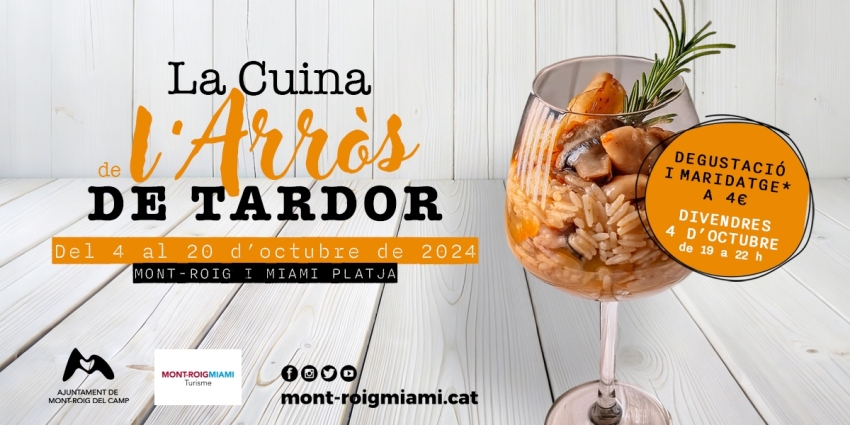
From 16 to 25 OctoberGastronomic rice days in Mont-roig del Camp and Miami Platja
From 9 to 25 October"Tardor Musical" (Musical Autumn) in Mont-ral - Farena
24 OctoberPratdip Llegendari
From 31 October to 1 NovemberFrame Film Festival, Itinerant Short Film Festival in Ascó
From 14 to 15 November
News
Gothic Architecture: The light and height of medieval Catalonia
Gothic architecture marks a turning point in the history of Catalonia. It was the style that transformed cities, places of worship, and the way people built collectively. A style that changed not only the stone itself, but also the way people…
Iron architecture: the light and steam of industrial Catalonia
In the 19th century, the Industrial Revolution not only changed the way people worked and lived, but also profoundly transformed architecture. The arrival of new materials, such as cast iron, wrought iron, and glass, opened up possibilities…








 Sustainable turism
 Biosphere