

Centre d’Interpretació el Camp de les Lloses
Municipalities
The Archaeological Park of Camp de las Lloses is made up of its site in the process of being excavated and turned into a museum, and the Interpretation Center where a collection is exhibited that tells us about the daily life of the population that lived 2,100 years ago.
Visitors can access the site and enjoy the offer of visits, workshops and activities. The site corresponds to one of the first Roman towns in Catalonia; After the conquest of the territory, Rome began its organization through the creation of a large network of road infrastructures.
The Campo de las Lloses (125-75 BC) became important due to its relationship with one of the first Roman roads from the late period, that of the governor Mani Sergi, built by the army established in the place that frequented the seat because there were located the metallurgical workshops that manufactured the weapons and tools of the soldiers themselves.
In the museum you can enjoy a collection of metal pieces that exemplify the practice of a mixed metallurgy dedicated to the work of bronze and iron. Objects related to ceramic tableware, goldsmithing, writing.
If you come in the park, we will discover together the life of a community that is changing its Iberian cultural ways of life towards the new Latin ways. You will know the uses and customs of a people that is being romanized. Language, commerce, food and commerce, thought and their beliefs. Funeral rituals.
A playful discovery from a gender perspective.
All visits, workshops and activities are adapted to the type of public and the ages of the participants: school, university, cultural and family tourism.
Workshops and guided tours
Daily life workshop "We stop a Table in La Romana"
Workshop on the Roman army: "life in the camp"
Construction workshop: "We make adobes at the site to rebuild the houses"
Archeology and anthropology workshop
Guided routes (tourist train option):
- "The Tona Water Route"
- "The birth of the medieval town of Tona"
- "Tona's Democratic Memory Route"
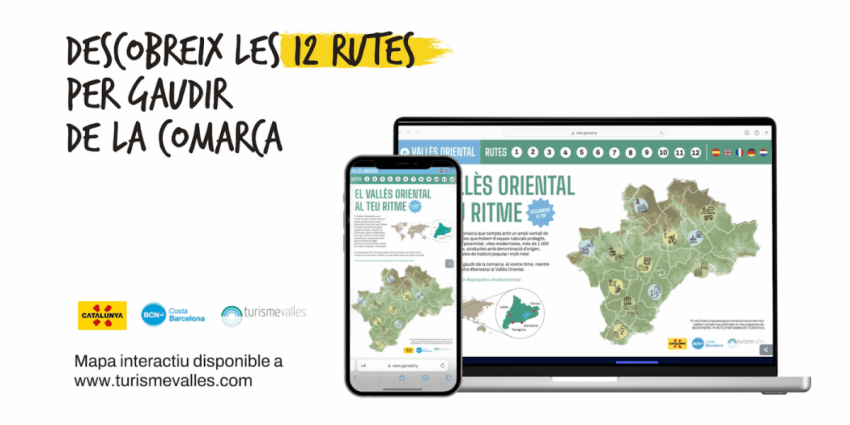
Nearby routes
Fairs, cowherd boys, games and theater to celebrate Christmas
Barcelona, Calaf, Corbera de Llobregat, Espinelves, Tona, Vic, Vilafranca del Penedès
With December comes the cold and the desire to be at home near the fireplace or heating, but these dates allow us to discover Christmas traditions that are celebrated in Catalonia. Surely one or the other will fall near your home for a weekend…
Sanctuary of the Virgin of Help of Balenyà
Balenyà
Today we propose a visit to the Sanctuary of the Virgen de la Ayuda de Balenyà, in Osona. The Balenyà Heritage Map says that the first documentary news of the church dates back to the year 955, when the house of Sant Fruitós…
Route through Santa María de Sauva Negra in Balenyà
Balenyà
Santa Maria Savall, are today forgotten and damaged ruins, in the 9th century but, it was a church and at the same time it housed a small convent of dadas, people who without making profession, gave their person and their goods to the Community.…
Route Forest of Casanoves - El Querol in Collsuspina
Collsuspina
We propose a route to know the heritage of Collsuspina. The route Bosque de Casanoves - El Querol is designed to be done on foot or by bicycle, it has a circular route and little difficulty, starting and ending in the main square of the town.…
Route to the hermitage of Sant Cugat de Gavadons in Collsuspina
Collsuspina
On this route, the surroundings of Collsuspina will discover the hermitage of Sant Cugat de Gavardons and its viewpoint, as well as many other attractions in the area. It is a circular route, little difficult, designed to do on foot or by bicycle.…
Condal Pyrenees: a tour of the medieval Catalan identity
Berga, Besalú, Cardona, Castell de Mur, El Brull, Girona, Isona i Conca Dellà, La Guingueta d'Àneu, La Seu d'Urgell, La Vall de Boí, Ripoll, Sant Joan de les Abadesses, Seva
Condal Pyrenees route is the path of Catalan history, because it is not understood one without the other. He haunted medieval times when Catholics were struggling to halt the Muslim advance through the peninsula. This confrontation made the…
Events
Panoràmic Festival in Granollers, Barcelona, Terrassa and Vic
From 15 October to 27 DecemberForest week in Sant Celoni
30 OctoberPopular chestnut tree in Sant Julià de Vilatorta
31 OctoberThe Houses and Streets of Fear in Sant Julià de Vilatorta
31 OctoberThe Witches' Dance of Viladrau
31 OctoberMontseny Autumn Fair
31 OctoberFes-ta Bruixa (Witches' Festival) in Sant Feliu Sasserra
31 October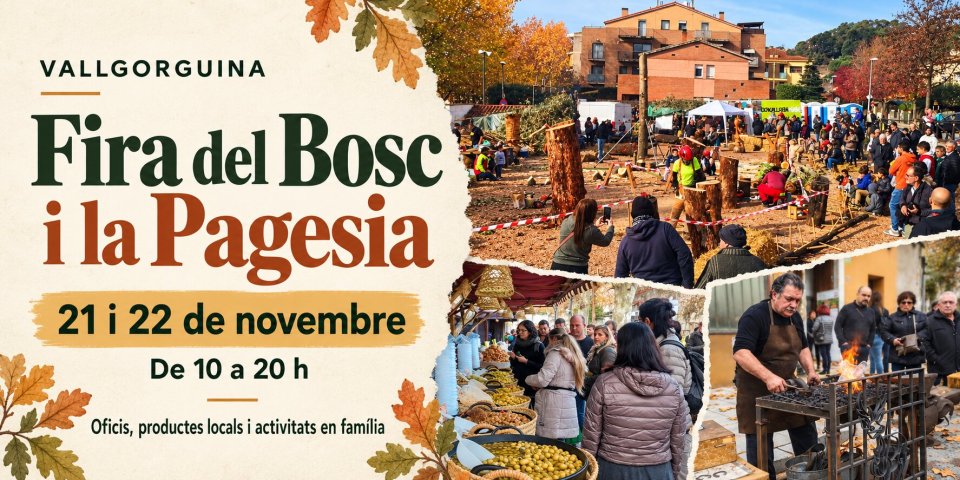
News
Gothic Architecture: The light and height of medieval Catalonia
Gothic architecture marks a turning point in the history of Catalonia. It was the style that transformed cities, places of worship, and the way people built collectively. A style that changed not only the stone itself, but also the way people…
Iron architecture: the light and steam of industrial Catalonia
In the 19th century, the Industrial Revolution not only changed the way people worked and lived, but also profoundly transformed architecture. The arrival of new materials, such as cast iron, wrought iron, and glass, opened up possibilities…







 Sustainable turism
 Biosphere