


Castell de Ciutadilla
Municipalities
The Guimerà Castle Tower is a monument of strange and imposing architectural beauty, and at the same time it is the cradle of one of the most preeminent lineages in Catalonia, the Guimerà family. This tower, dating from the 16th century, is a slender and almost square construction, which rises majestically on the rock, defining with its presence the silhouette of both the castle and the town of Guimerà.
{##20px##} text-message flex flex-col items-start whitespace-pre-wrap break-words [.text-message+&]:mt-5 juice:w-full juice:items-end overflow-x-auto gap-2" dir="auto" data-message-author-role="assistant" data-message-id="3db5d518-04fd-4a60-b8c5-447ae0e35733"> {##3px]">
The tower is not only a key piece in the castle's architecture, but also acts as a watchdog over the valley of the River Corb. Its elevated position makes it one of the most outstanding viewpoints in the Urgell region, offering unparalleled panoramic views of the surroundings.
Historically, the Torre del Castell de Guimerà has great importance. In the 16th century, Gispert de Guimerà transformed this old military fortress into a magnificent Renaissance palace. This conversion marked a significant change in the function and appearance of the castle, going from a purely defensive structure to a place of noble residence with all the comforts and luxuries of the time.
The castle and its tower are witnesses of the power and influence of the Guimerà family, one of the most illustrious lineages in Catalonia. The Guimeràs had a prominent role in the history of the region, and the castle is a reflection of their social and economic position. The Renaissance palace created by Gispert de Guimerà not only strengthened the defensive character of the castle, but also gave it an air of grandeur and refinement.
Today, the Torre del Castell de Guimerà and the castle complex are considered monuments of cultural and historical interest. Its imposing presence continues to capture the attention of visitors and scholars, offering a window into the glorious past of the Urgell region. Its stones and walls preserve the stories of a time when the castle was not only a defense site, but also a center of social and political life.
In summary, the Torre del Castell de Guimerà is much more than a stone structure; It is a symbol of the history and legacy of the Guimerà family, and an architectural jewel that continues to fascinate everyone who visits it.

Nearby routes
Cistercian Route: gastronomy in Vallbona de les Monges
Agramunt, Guimerà, Llorac, Maldà, Tàrrega, Vallbona de les Monges, Verdú, Vilagrassa
On this route we suggest you visit the Monastery of Santa María de Vallbona de las Monjas, a female monastery that is included in the Cistercian Route. We will also make interesting proposals to get to know some of the most charming…
Sanctuary of Santa Maria de la Bovera
Guimerà
Building monasteries and shrines is no stranger in a land like Catalan. It is true that these constructions are present throughout the country, but we must recognize that in the area of confluence of the province of Lleida and Tarragona there…
Grand Tour de Catalunya - Section 2. Meeting history: from Tarragona to Lleida
Bot, Cambrils, Capafonts, Cornudella de Montsant, Deltebre, El Perelló, El Pinell de Brai, Falset, Gandesa, Guimerà, L'Ametlla de Mar, L'Espluga de Francolí, La Sénia, Les Borges Blanques, Lleida, Miravet, Montblanc, Salou, Tarragona, Tortosa, Ulldecona, Vallbona de les Monges
I want to do this route by electric vehicle! This route is designed to be done by electric vehicle, although it can be done with any other car. Along the route we will suggest municipalities that have charging points and places of interest…
The Cistercian Route, a genuine combination of nature, heritage and landscape
Aiguamúrcia, Vallbona de les Monges, Vimbodí i Poblet
The Cistercian Route is a fascinating journey that takes you back to medieval times through three historic monasteries in Catalonia: the Poblet Monastery, the Santes Creus Monastery and the Vallbona de les Monges Monastery. With a tour through…
Literary route in the Modern Catalonia
Barcelona, Santa Cristina d'Aro, Tortosa, Vallfogona de Riucorb
The literary moment of 1714 is surrounded by everything that had lived until then and later that live not only in literary terms but also in political and social terms. This means that during the modern era have ups and downs in this field.…
Return to Vallfogona de Riucorb
Vallfogona de Riucorb
This fantastic route around Vallfogona de Riucorb takes us to know the diversity of landscapes of the Corb valley, with dry areas and others more humid.
Events
Catalonia Industrial Tourism Week 2026
From 16 to 25 OctoberGuissona SegaMots Festival
From 23 to 25 OctoberGuided tours of the old town of Verdú
24 OctoberThe Fantàstics concert in Sidamon
24 OctoberCattus Day in Guissona
24 OctoberCastaween in Fondarella
31 OctoberFun November in Guissona
7 November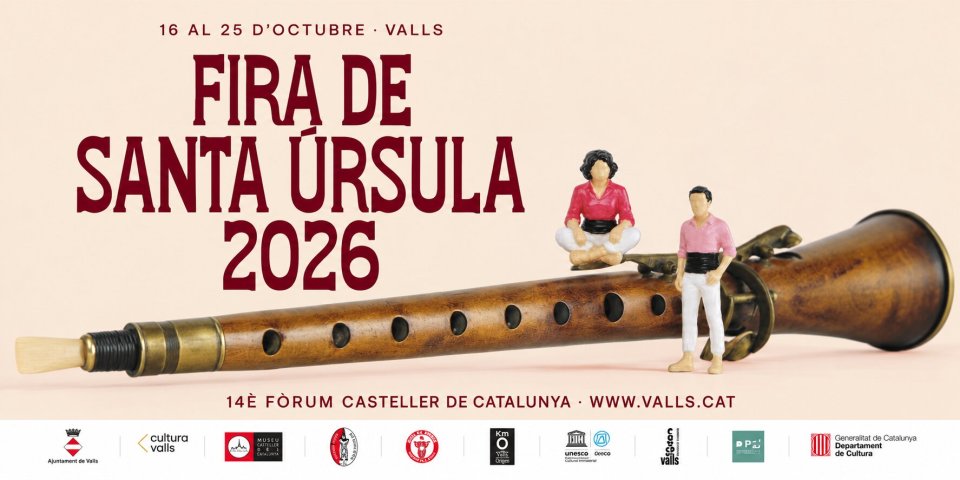
News
Gothic Architecture: The light and height of medieval Catalonia
Gothic architecture marks a turning point in the history of Catalonia. It was the style that transformed cities, places of worship, and the way people built collectively. A style that changed not only the stone itself, but also the way people…
Iron architecture: the light and steam of industrial Catalonia
In the 19th century, the Industrial Revolution not only changed the way people worked and lived, but also profoundly transformed architecture. The arrival of new materials, such as cast iron, wrought iron, and glass, opened up possibilities…








 Sustainable turism
 Biosphere