


Càmping El Pont de Barcelona
Municipalities
The El Pont campsite is located in the heart of the Guilleries region, bordering the Sau Reservoir. It stands out, among other things, for the shade provided by its fir trees.
It is a cozy and pleasant environment to share with its guests.
Accommodations
Bungalows
The bungalows are perfectly equipped. They have heating, a shower, a toilet, a TV, a refrigerator, a microwave, and all the necessary cooking utensils. So you only need to bring sheets and towels.
* Dogs are welcome, as long as they sleep in their own house.
The Masia Hostel
Ideal for hikers, cooks, horseback riding, mountain biking, corporate training sessions, seminars...
The old Malafogassa Bridge Farmhouse, like the bridge itself, dates back to the 15th century. Every effort has been made to ensure comfort without altering its original structure. It has heating, hot water, two bathrooms, a fireplace, a barbecue, and a large outdoor space. It can accommodate up to 30 people. Sheets and towels are required.
*Dogs are welcome, as long as they sleep in their own house.
It has an area and a shed for horses… in case you come on a route.
Activities
Camping El Pont offers all kinds of activities and a whole world of adventures to enjoy in nature: horse riding on the premises, canoeing, climbing, archery, mountain biking, mini golf, fishing, and much more.
They also have rooms for summer camps and esplais.
Facilities
Restaurant and Shop
The campsite has a restaurant where you can eat by the fire and enjoy a little after-dinner conversation. It offers homemade food, pizzas, bread, and cold cuts...
There is also a small shop for anything you might need.
Swimming pool and recreation areas
Their activities will ensure you have a wonderful time at the campsite, whether in a group or as a couple.
Nearby routes
Paths of the Bishop and Abbot Oliba
Artés, Casserres, Folgueroles, L'Estany, L’Esquirol, Manresa, Navarcles, Olesa de Montserrat, Sant Pere de Torelló, Santa Maria de Besora, Tavertet, Vic, Vilanova de Sau
The Barcelona regions of Osona and Bages, and the Girona region of Ripollès, are the protagonists of this route that takes the name of a capital figure in the history of Catalonia, the Bishop and Abbot Oliba. The route (173 km and +)…
Tour of the Shelters of the Santa Eugènia de Berga Aerodrome
Calldetenes, Sant Julià de Vilatorta, Santa Eugènia de Berga
The Vilatorta Aerodrome is a prominent point with great historical and tourist importance for the Santa Eugenia de Berga region. The aerodrome was born in 1938 and became a privileged witness to the efforts of the republican government to create…
Monumental trees of Catalonia
Cànoves i Samalús, Castellar del Riu, Espinelves, Horta de Sant Joan, L'Aleixar, Rubí, Sant Sadurní d'Anoia, Subirats
The monumental trees of Catalonia are those that are preserved and protected due to their particularity and species, thanks to a decree approved in 1987. Since then, more than two hundred and seventy trees scattered throughout the territory…
Fairs, cowherd boys, games and theater to celebrate Christmas
Barcelona, Calaf, Corbera de Llobregat, Espinelves, Tona, Vic, Vilafranca del Penedès
With December comes the cold and the desire to be at home near the fireplace or heating, but these dates allow us to discover Christmas traditions that are celebrated in Catalonia. Surely one or the other will fall near your home for a weekend…
Entering the valley of Sau - Collsacabra
Agramunt, Folgueroles, Rupit i Pruit, Tavertet
At the eastern end of the Osona, just 50 km from the Mediterranean Sea, lies a natural region crescent shape that appeals to many for their attractive looks. We refer the Valley of Sau - Collsacabra. The most identifiable elements of this landscape…
Route of the Iberians Ausetans
El Brull, Folgueroles, Roda de Ter
The Iberians (the name the Greeks gave to the people of the Peninsula) came to this land in the Neolithic period (5000-3000 BC) and today its origin remains unclear. Some currents consider that came from the eastern Mediterranean regions. Other…
Events
Major Festival of the Aplec del Remei in Santa Maria de Palautordera
From 15 to 18 OctoberModernist Conferences in la Garriga
From 16 to 18 OctoberGuided tour of Hostalric Castle
17 OctoberGuilleries Fair in Sant Hilari Sacalm
From 17 to 18 OctoberSant Lluc Fair in Olot
From 17 to 18 OctoberGuided tour of Vic on Sundays in October
18 OctoberViladrau Chestnut Fair
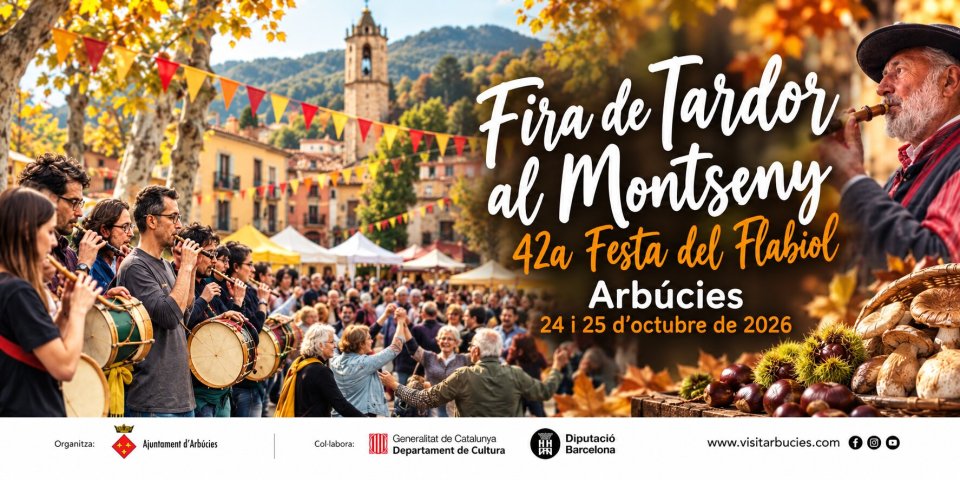
From 24 to 25 October
News
Gothic Architecture: The light and height of medieval Catalonia
Gothic architecture marks a turning point in the history of Catalonia. It was the style that transformed cities, places of worship, and the way people built collectively. A style that changed not only the stone itself, but also the way people…
Iron architecture: the light and steam of industrial Catalonia
In the 19th century, the Industrial Revolution not only changed the way people worked and lived, but also profoundly transformed architecture. The arrival of new materials, such as cast iron, wrought iron, and glass, opened up possibilities…








 Sustainable turism
 Biosphere